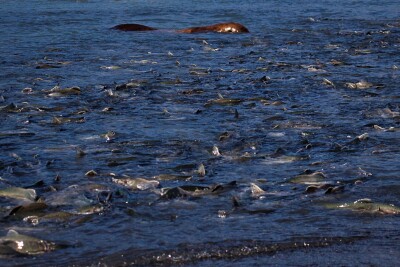
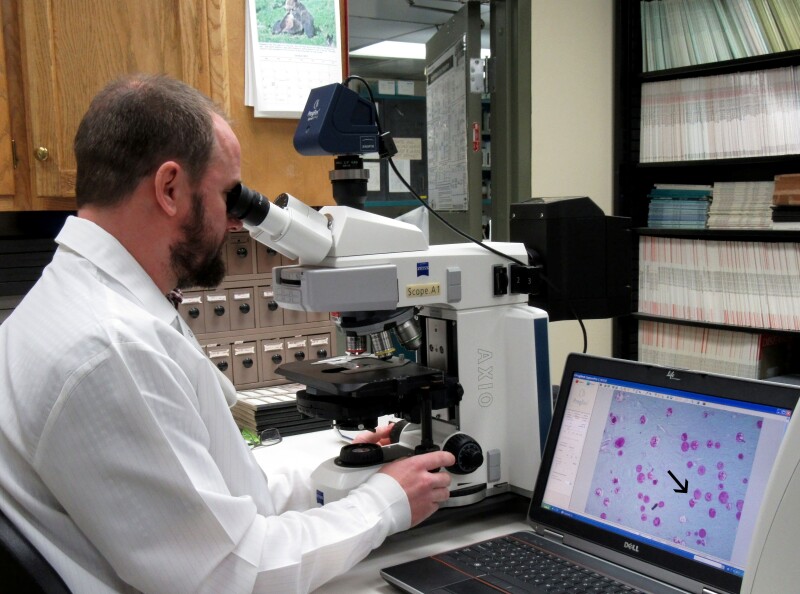
Researchers studying pathogens adversely impacting Northwest Pacific salmon say there are still many knowledge gaps to fill, but that overall the impact on prespawn mortality (PSM) varies from region to region and year to year.
They are advocating for continuing research to prioritize factors leading to PSM.
Their review of major and minor pathogens of adult Pacific salmon in freshwater in the Pacific Northwest, published in January in the online journal Pathogens, said factors including water quality and climate conditions, are playing a role.
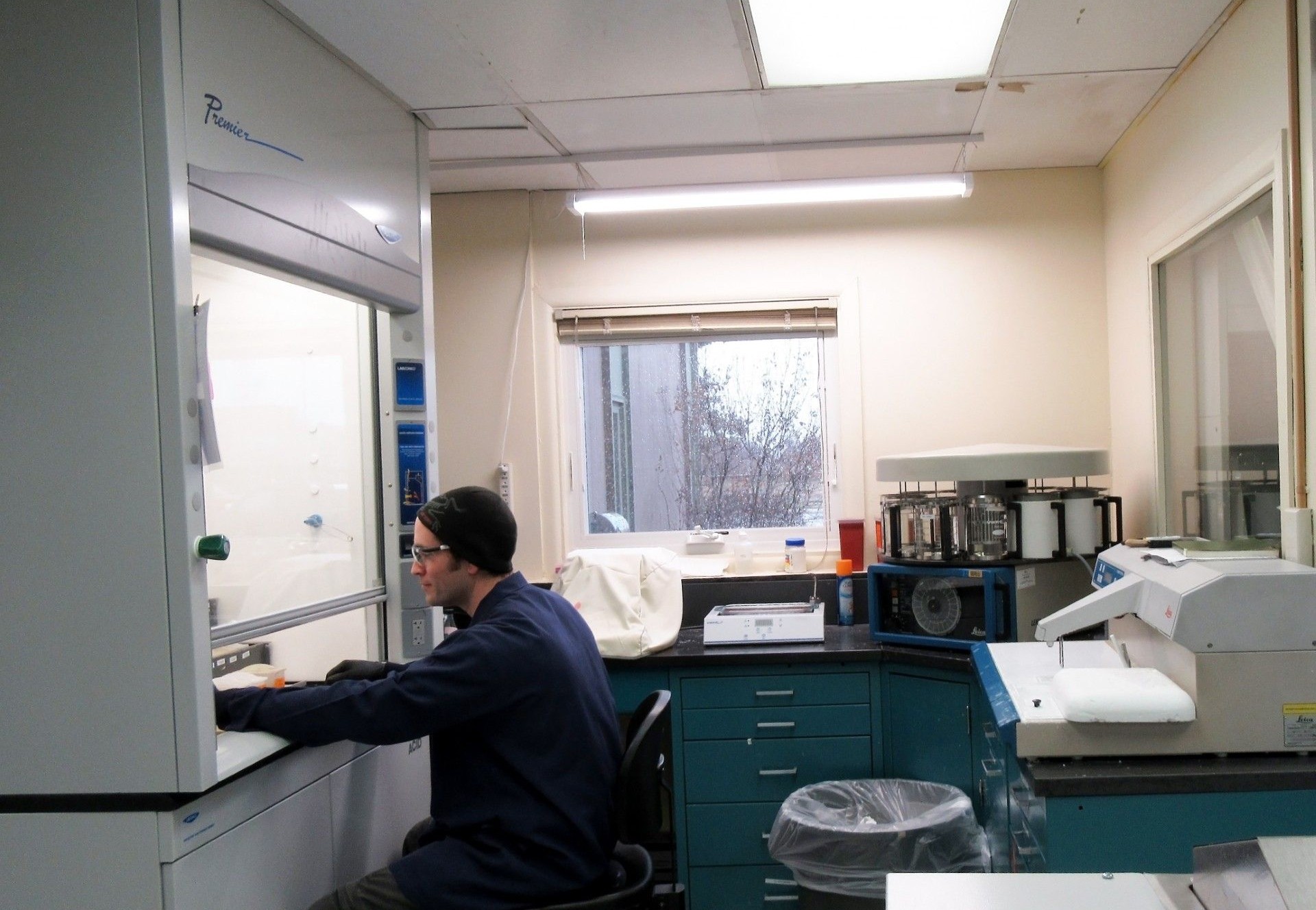
"Regarding PSM, to some degree it is a normal phenomenon across all Pacific salmon species and throughout the Pacific Northwest," said Tamsen Polley, lead author of the study. "However, it can be detrimental to population survival when it is excessive, said Polley, an assistant professor in the Department of Veterinary Sciences and diagnostic anatomic pathologist at the University of Wyoming and Wyoming State Veterinary Laboratory.
"Strategies for reducing PSM associated with pathogens require very different approaches when dealing with this problem in fish from rivers versus when PSM occurs in hatcheries," Polley said. "For the latter, holding fish in cooler water or treating with specific drugs is often helpful."
Climate change may protect or exacerbate these pathogens and there is no blanket treatment, the review noted. "In general sexually mature, freshwater stage adult fish tend to survive until spawning better in cooler water," Polley said.
The review focused on viruses, bacteria, microparasites and macroparasites during the spawning freshwater life stage of Pacific salmon. "Because these fish are anorectic at this life stage, we did not analyze any data on predation behaviors," she said. "This would involve the juvenile and ocean-run stages."
Polley said she hopes the review will draw attention to regional areas of concern from California, Oregon, Washington and Alaska to British Columbia.
Understanding pathogen impacts during the spawning life stage is crucial for salmon population sustainability given that after they spawn Pacific salmon die. Thus the terminal phase is critical for reproductive success and the continuation of these ecologically, economically and culturally vital species.
The study identified the most important pathogens as four varieties of bacteria, but added that some regions have additional major problems, including ichthyophonus in Alaska, ASE and C shasta bacteria in Oregon and
Ichthyophthirius multifiliis bacteria in California.
Regarding management, there is no "one size fits all" but in general the
review recommends having an adequate understanding of the pathogens in normal and PSM fish for a given population and outbreak, to elucidate links to these pathogens and disease and moribundity and to identify factors exacerbating these infections and associated diseases.
In addition, climate changes associated trends of reduced water flows and elevated temperatures in many watershed in this region, are likely to exacerbate the impacts of pathogen infections, the review said.
"The general trend is warming temperatures are a factor that make fish diseases worse," said Alaska Department of Fish and Game pathologist Jayde Ferguson, in Anchorage, another contributor to the review.
How pathogens get into the salmon varies because pathogens are transmitted in several ways, including from the water itself, the food chain, from fish to fish and from female fish into the egg, he said.
ADF&G will use funds from federal earmarks acquired by Alaska's congressional delegation for new studies on about 16 endemic pathogens in stocks of concern over the next two to three years. Testing is to include screening samples of stocks of concern and a general fish health assessment, such as determining condition factor and general overall health of the fish such as fin and eye quality, color of different organs and noting any abnormalities. "We also plan on measuring fat with a fat meter and performing thiamine testing on some stocks, Ferguson said.
Those plans are still being firmed up, but in the coming year are expected to include Chinook salmon stocks in the Arctic-Yukon-Kuskokwim region and Kenai River Chinook and Copper River sockeye salmon in Southcentral Alaska.
Another study, financed through the Alaska Sustainable Salmon Fund, looked at various prey, where they are coming from and what pathogen issues they are causing. That three-year grant focused on work on Ichthyophonus in Yukon Chinook salmon.
Research has confirmed that Yukon Chinook have a thiamine (vitamin B1) deficiency, which can be caused by the enzyme thiaminase in prey breaking down the thiamine in otherwise healthy fish, but have not yet found the prey source with thiaminase that the Chinooks are consuming. Anchovies eaten by Chinook salmon in California have been identified as the source of thiaminase
for those stocks, but there are no anchovies in Alaska.
ADF&G's Fish Health Program is a regulatory diagnostic program that monitors and controls finfish and shellfish diseases statewide via diagnostic surveys, developing fish disease policies and advising state and federal authorities on fish disease issues. It offers education and outreach services to the public and future generations of stakeholders by informing user groups on fish/shellfish diseases and tissue abnormalities in Alaska, including a no-cost consultation and diagnostic service. These services include examination of wild and hatchery finfish and shellfish for bacteria, viruses, fungi, protozoa, other parasites and non-infectious diseases. The lab is affiliated with several fish health laboratories nationwide for additional specialized testing when required.
They have a published field guide on common fish diseases in Alaska online.
 (1).jpg.small.400x400.jpg)