


As the Atlantic States Marine Fisheries Commission prepares to revisit Atlantic menhaden management later this year, an economic study is adding momentum to shift more of the coastwide quota toward bait fisheries, while recent debate in Virginia continues to highlight disagreements over research and management of the species.
The Theodore Roosevelt Conservation Partnership (TRCP) issued a release on June 24 about a study by Southwick Associates that estimated that recreational fishing trips using Atlantic menhaden as bait generated approximately $1.5 billion in total economic output and supported more than 7,200 jobs nationwide in 2025.
According to the study, anglers spent roughly $804 million on fishing trips involving menhaden bait while using the species during an estimated 13.9 million fishing days along the Atlantic Coast. Of those trips, approximately 2.5 million occurred in New England, with another 6.3 million in the Mid-Atlantic and 5.1 million in the South Atlantic.
"Atlantic fishing trips involving menhaden generate more than $1.5 billion in annual economic output," said Ben Scuderi, lead economist at Southwick Associates. "That figure represents the full spectrum of spending that occurs for fishing trips where menhaden are used as bait, from direct purchases of equipment, food, fuel, and the many other items needed for a day of fishing, to the downstream effects that spending has on retailers, manufacturers, and countless other businesses."
The report arrives ahead of several major Atlantic States Marine Fisheries Commission decisions expected this fall. In November, the commission’s Atlantic Menhaden Management Board is scheduled to establish a new coastwide total allowable catch for the 2027-28 fishing season and may also decide whether to begin formally reconsidering how state menhaden quotas are allocated.
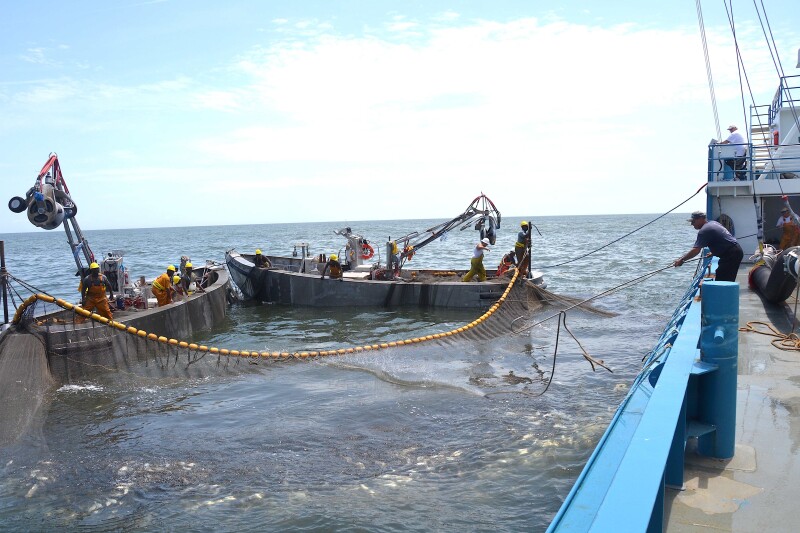
Current allocations are largely based on historical harvests, leaving Virginia with roughly 75 percent of the coastwide quota, most of which supplies the state’s reduction fishery. TRCP argued the new research demonstrates that the value of menhaden extends well beyond reduction fishing.
"As the ASMFC considers updating the menhaden state allocation system, properly weighing the importance of menhaden as bait in recreational and commercial fisheries is essential," said Mike Waine, Atlantic fisheries policy director for the American Sportfishing Association. "Atlantic tackle retailers, charter businesses, and recreational anglers generate hundreds of millions of dollars through the use of menhaden as bait, but those investments have not resulted in meaningful consideration of the recreational sector's needs."
In an email to National Fisherman, TRCP noted the study only examined recreational fishing and did not include the value of Atlantic menhaden used as bait in commercial fisheries, including Maine's lobster fishery and coastal crab fisheries.
The organization says it intends to advocate for reallocating more menhaden to the bait fishery, including additional quota for Maine lobstermen and other New England fishermen, while reducing allocations supporting Virginia’s reduction fishery.
The study comes one day after National Fisherman reported on a separate dispute surrounding menhaden management in Virginia.
Virginia lawmakers recently finalized the state's 2026-28 budget without approving funding for proposed Chesapeake Bay menhaden research after several research-related bills failed during the legislative session.
Following criticism from the Chesapeake Bay Foundation that industry pressure contributed to the funding's exclusion, Omega Protein and Ocean Harvesters issued a statement denying any involvement in the General Assembly's budget decision.
The companies said they support additional research and pointed to ongoing work through the Science Center for Marine Fisheries, a collaborative research program involving scientists, government researchers and fishing industry partners.
Ocean Harvesters and Omega Protein also argued that future management decisions should be guided by science rather than politics. The companies also emphasized that any future changes to coastwide or Chesapeake Bay harvest limits should consider potential impacts on workers, businesses, bait supply and coastal communities that depend on the fishery.
While the new TRCP study does not recommend a specific quota allocation, the organization says it provides managers with economic information that has largely been absent from previous allocation discussions.
Those discussions are expected to intensify ahead of the ASMFC's November meeting, where both future catch limits and the possibility of reopening state quota allocations could significantly influence the direction of Atlantic menhaden management.