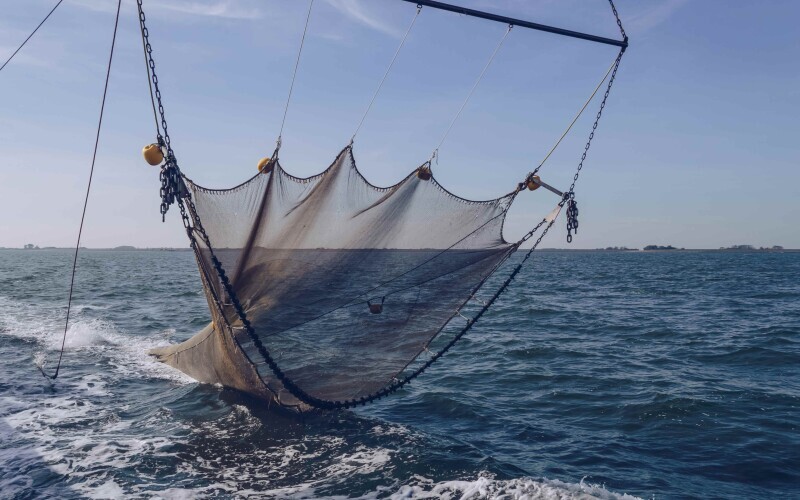
A new study released by a global seafood alliance contends that bottom trawling undermines local food systems by displacing small-scale fisheries, degrading coastal habitats and diverting nutritious fish away from local diets.
The study, released on April 1, by the Transform Bottom Trawling Coalition, determined that over 99 percent of bottom trawling occurs within national waters, often in shallow coastal areas also relied upon by small-scale fishers, who make up more than 90 percent of the global marine fishing workforce.
Bottom trawling overall accounts for approximately 26 percent of global marine fisheries catches.
Another concern is that fish rich in micronutrients are increasingly exported to higher-income markets or reduced into fishmeal and aquaculture feed, limiting access for coastal communities. And women, who dominate many fish processing and trading roles, lose access to fish and income when industrial landings shift away from local beaches and small ports, the study concluded.
Researchers said that evidence from southern Brazil shows that enforcing a 12-nautical-mile trawling exclusion zone has helped rebuild fish stocks, improved access to affordable local protein and reduced conflicts between fleets.
The Transform Bottom Trawling Coalition was launched in 2021 to combat the most destructive forms of industrial fishing and sustainable fisheries. It was convened by Blue Ventures, a charity based in the United Kingdom, and operates in the Indian Ocean, Southeast Asia and the Caribbean, with sites in Madagascar, Belize, Indonesia and Timor-Leste. It also manages projects in Comoros, Kenya, Mozambique and Tanzania.
As of June 2024, the coalition had grown to include 95 organizations from 44 countries. They work to establish inshore exclusion zones for small-scale harvesters, prohibit bottom trawling in all marine protected areas, end subsidies for destruction bottom trawling and to stop the expansion of trawling into new areas.
The key question, the report said, is not simply how much fish is caught, but who eats it, in what form and at what cost. Protecting food security requires shifting the narrative from "production volume" to "nutritional equity," demanding the strict enforcement of inshore exclusive zones (IEZs), freezing trawling footprints and discontinuing subsidies which drive overcapacity.
The report calls for moving beyond binary debates, often structured around two opposing, mutually exclusive viewpoints over whether bottom trawling should be permitted or prohibited. Instead, governance approaches must be grounded in locally defined priorities and community participation, the report said.
The report recommended that decision-making assess the extent to which local people participate in, benefit from, or are excluded from bottom trawl fisheries, and how these dynamics align with community goals, identified by a set of priorities including food provisioning, nutritional contribution, employment, cultural value and economic linkages.
In some areas, like rural Alaska, cultural and economic values are more complicated to assess because