

Since 1976, Skipsteknisk has been designing some of the world’s most advanced fishing vessels.
When it comes to building any size boat, precision is key. But when it comes to building the world's fishing giants, the need for precision is multiplied exponentially and multidimensionally. Skipsteknisk, a world-famous Norwegian naval design and engineering firm, is among the few companies that can handle the demands of designing the big boats that land 60 percent of the world’s fish.
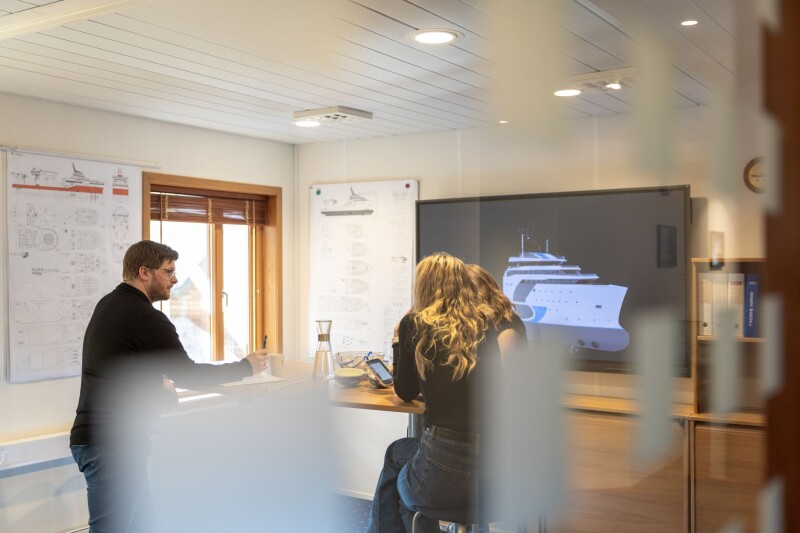
According to Vegard Hjelvik, the new head of sales at Skipsteknisk, projects often begin as conversations. “We usually start with discussions with the boat owner,” says Hjelvik. “We have a lot of experience, but fishermen are the specialists, and we need to understand what they want to do. Once we have a concept, we can create a three-dimensional model on the computer and walk the owner through it, virtually.” Hjelvik notes that Skipsteknisk has used Rhino software and is now using Revit and AutoCAD. “A lot of our software is using AI now,” says Hjelvik. “It makes the process faster and more efficient, but it doesn’t take the place of going out to the yards and talking to everyone involved.”
Once a client signs with Skipsteknisk, they start looking for shipyards that can pre-qualify to build the boat. “We have to work together with the yard, the boat owner, and also with the suppliers,” says Hjelvik. “If, for example, Carsoe is installing the factory, we have to look at when they will be available, and when the material and machinery will be available.”
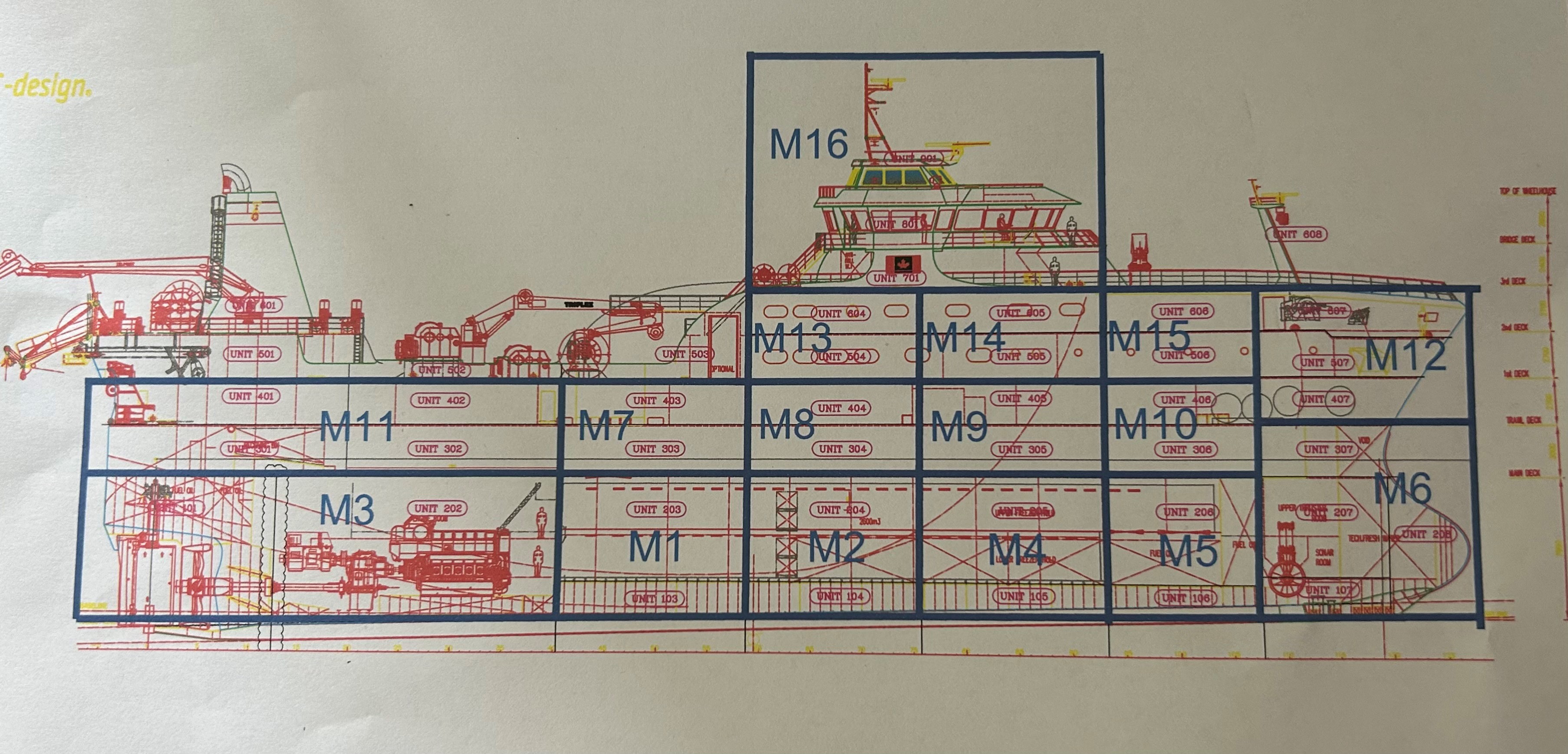
The Hjelvik notes that many countries have yards capable of handling the big project. “Here in Europe, we know most of the yards very well, and we have worked a lot with Tersan in Türkiye,” he says. We have built 25 boats there. We just finished one and have three more starting, including a longliner with a moonpool.”
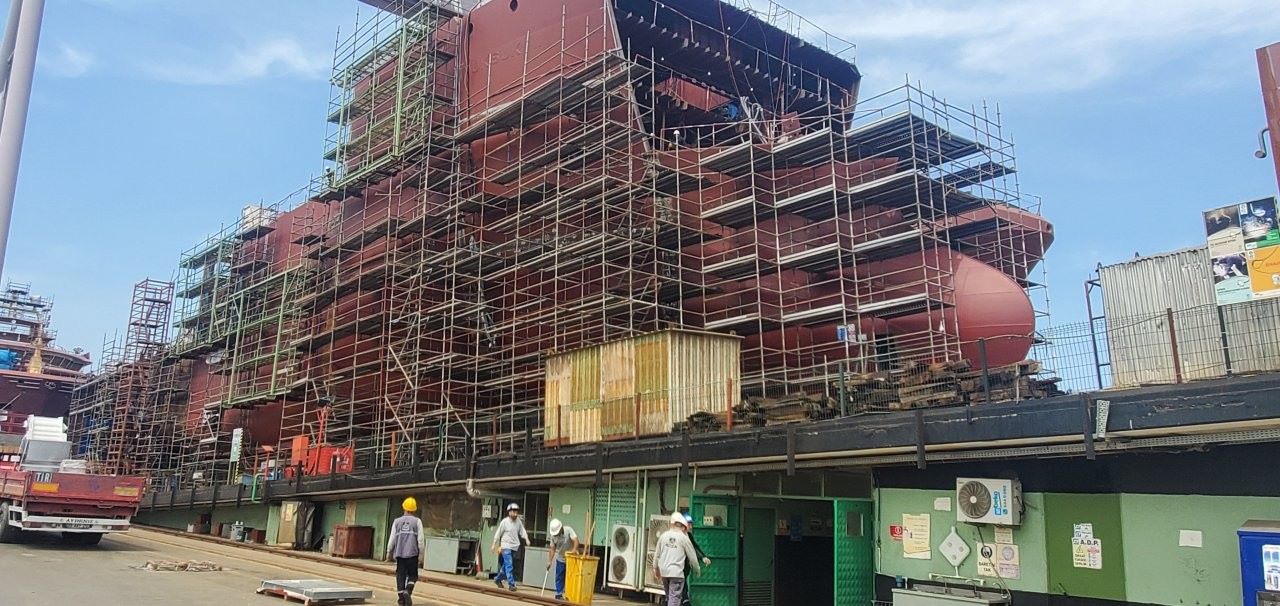
The process of aligning all the moving parts before actual construction can begin is complicated, especially if the design incorporates ideas like moonpools. “For our ST model trawlers, we do much of the preliminary work at no cost to the client,” says Hjelvik. “Those hulls are similar and adapted to meet the specific requirements for the owner.”
Longliners, lobster, and crab boats are another story. “All of those are different,” says Hjelvik. “Our moonpool designs, for example, are becoming increasingly popular for vessels hauling static gear in harsh conditions. They are safer and more comfortable for the crew.”
The Canadian fishing company, Clearwater Fine Foods, issued a press release in October 2025 announcing that it would be building an innovative new 40.9-meter lobster boat designed by Skipsteknisk. “That one will be built in Denmark,” says Hjelvik. “We went over to Canada and presented them with the moonpool idea, and they decided to use it. So, for that, we had to charge for concept development, because, as I said, it was all new.”
With concepts and designs complete and a yard contracted to build the boat, the process can proceed in a number of ways, according to Hjelvik. “In the case of the Clearwater lobster boat, the Hull is currently being built in Poland and will be completed at Hvide Sande in Denmark.”
Tersan, on the other hand, has grown into a multi-location shipbuilding giant over the years. “Tersan does everything there,” says Hjelvik. “Once we complete the design, we send it to them, and they create the CNC files and cut all the steel in-house. Over the years that we have been working with them, they have steadily increased their capacity.”
Tersan’s main location is situated in Yalova, Türkiye, less than a 2-hour ferry ride southeast of Istanbul. The yard occupies 3.4 million square feet and employs around 5,500 people, over a hundred of them in R&D. As Hjelvik noted, Tersan is making continuous efforts to upgrade its capacities and stay at the forefront in terms of technology and construction techniques.
“For the most part, the client pays the yard, and it’s actually the yard that pays us,” says Hjelvik. “That’s how we do it with all the yards building our designs.” While Skipsteknisk shops around many countries for yards that can build the boats it designs, for U.S. fishing companies that want to upgrade, their options are limited to a few U.S. yards.
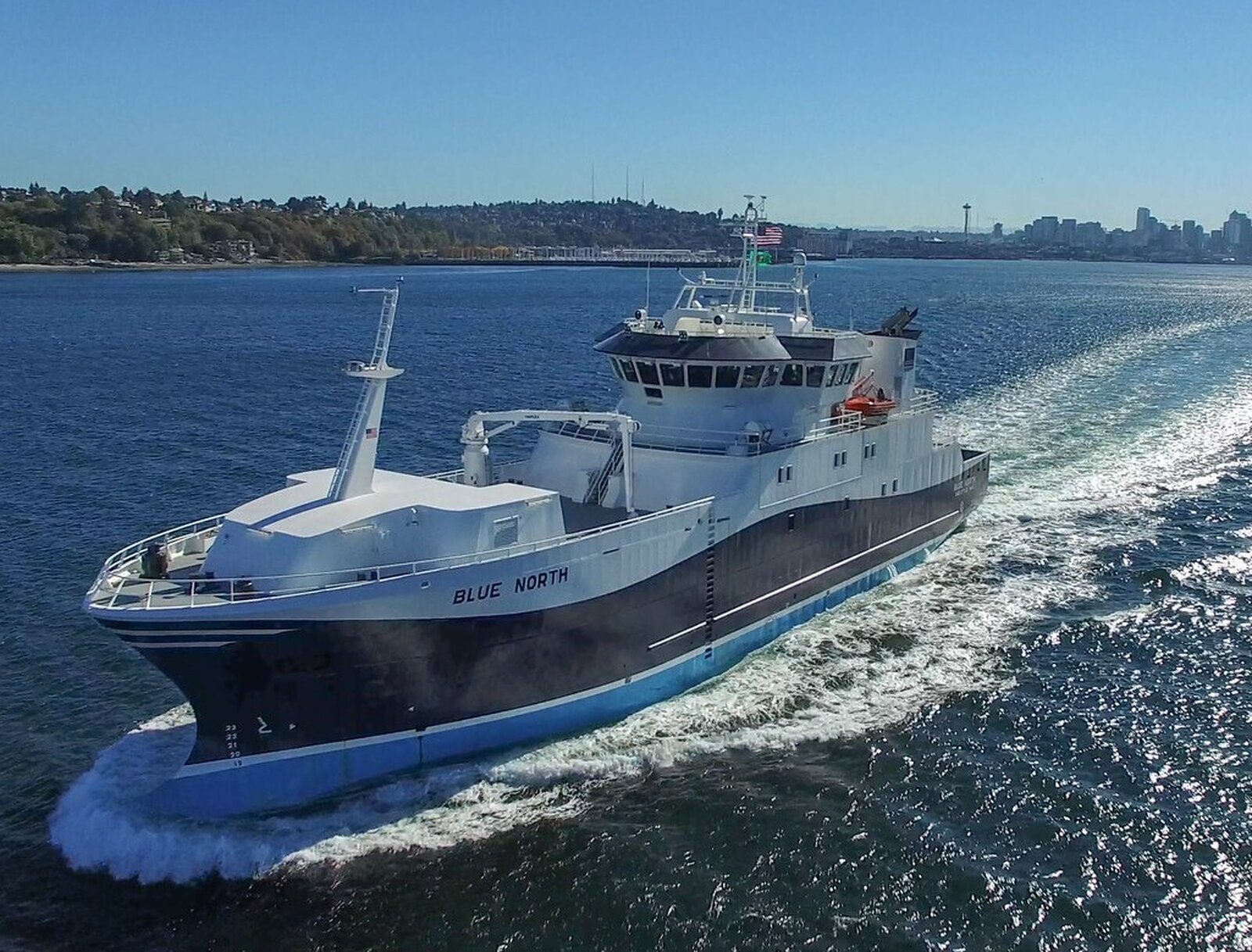
Because Skipsteknisk hulls are designed to maximize fuel efficiency, among other objectives, they often require molded steel hull shapes and use bulb flats for strength. Many U.S. yards that build simpler designs using tried-and-true construction methods do not have the capacity to build Skipsteknisk designs. “We’ve worked with a couple of U.S. yards. We did the Araho with Eastern Ship Building in Panama City, Florida,” says Hjelvik, who keeps a model of the Araho in his office. “We did the Blue North and America’s Finest with Dakota Creek in Anacortes, Washington, and the North Star at Eastern.” The Blue North, a 191-foot longliner launched in 2016, was the first Skipsteknisk moonpool vessel built in the U.S.
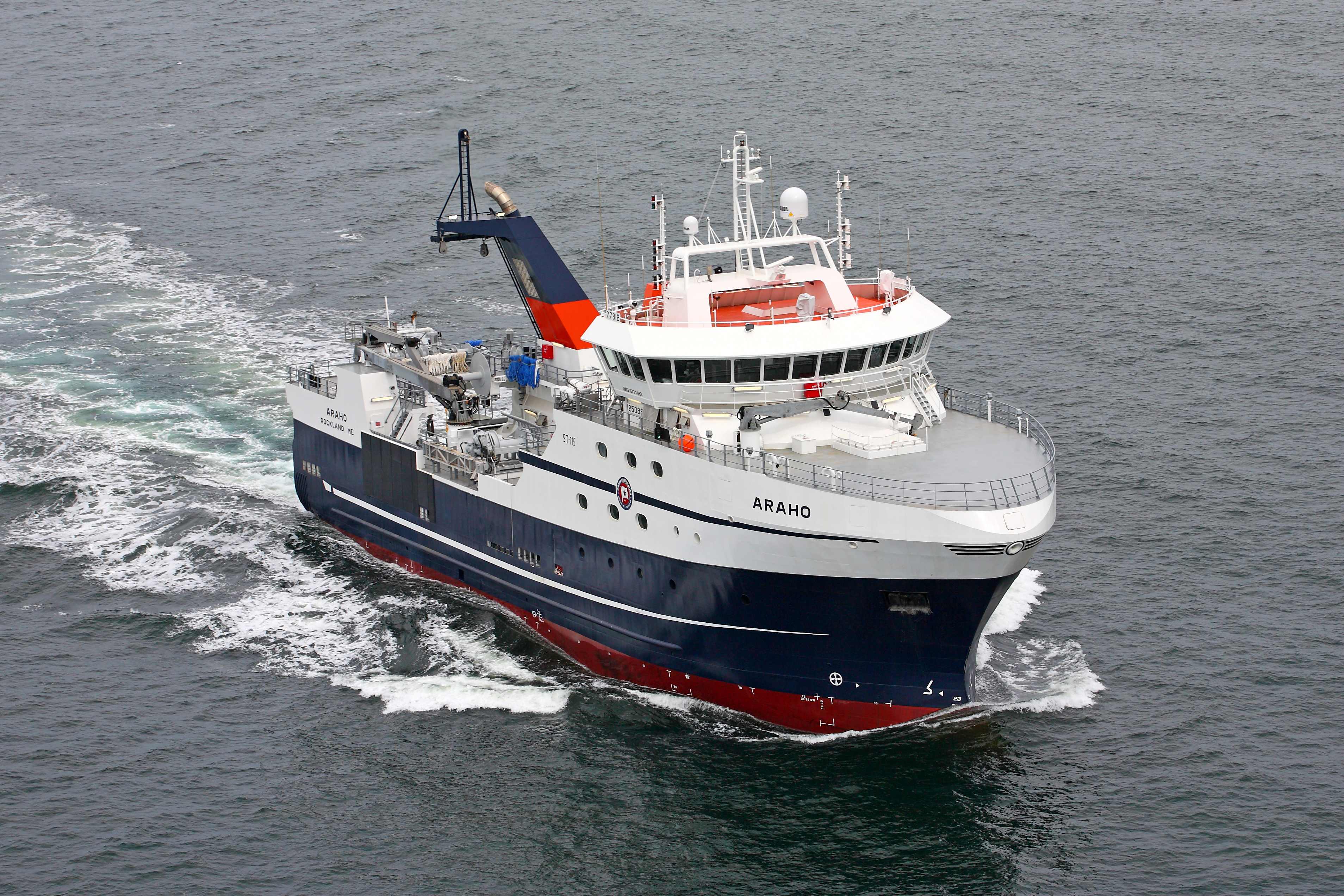
While the Araho is the pride of the Maine-based O’Hara Corporation’s Alaska fleet, the America’s Finest is noteworthy due to some Jones Act transgressions that held up its launch for two years. “The North Star,” recalls Hjelvik. “I had just gone over to do the incline tests and stability work, and when I got home, I heard the news that Hurricane Mitch had knocked it over. A friend sent me a photo.”
Despite their rough beginnings, both boats are working now. “The America’s Finest had to get some waivers, and Eastern got the North Star up and into the water again.”
Incline tests, part of the stability checks that are among the final stages of construction, consist of moving known weights across the deck and to various parts of the vessel, causing it to heel slightly, and measuring the angle of tilt with pendulums or digital equipment. Using the acquired data, combined with hydrostatic data, engineers like Hjelvik can calculate the vessel’s metacentric height and center of gravity, which are needed for making stability calculations.
“That was my first job at Skipsteknisk when I started in 2017,” says Hjelvik. “Then I became a project manager, and now head of sales.”
Boats are often launched with just the primer coat on the hull for the incline test and stability checks, and then hauled back out for the final coats of paint, name, and numbers. When all is complete, they are launched again and sent on their way.
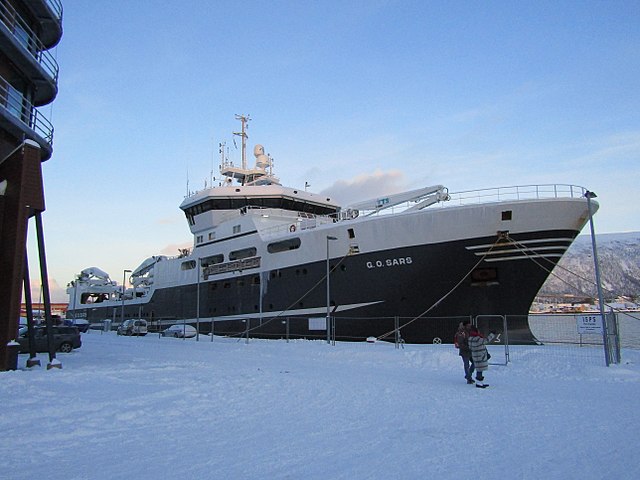
Skipsteknisk AS was founded in 1976 in the fishing port of Aalesund, Norway, and it is only natural that the company would focus on fishing vessels, which have made up the majority of its work. Although Skipsteknisk got its start designing fishing vessels, the company has expanded its expertise and is now recognized as one of the foremost designers of specialized research vessels, patrol boats, live fish carriers, wind farm support vessels, and more. The company has also taken the lead in designing alternative-fuel vessels, such as the 230-foot hydrogen-powered longliner Loran, which has not yet been built, and electric/diesel hybrids, such as the fisheries research vessel G.O. Sars, launched in 2017.
“Commercial fishing vessels have always been an important part of our work,” says Hjelvik. “That’s still mostly what we do. I can’t say how many we’ve been involved in designing and building, but they are all over the world.”