




From a distance, the shoreline of Alaska looks pristine, but that's not what the Gulf of Alaska Keeper (GOAK) is finding over and over again.
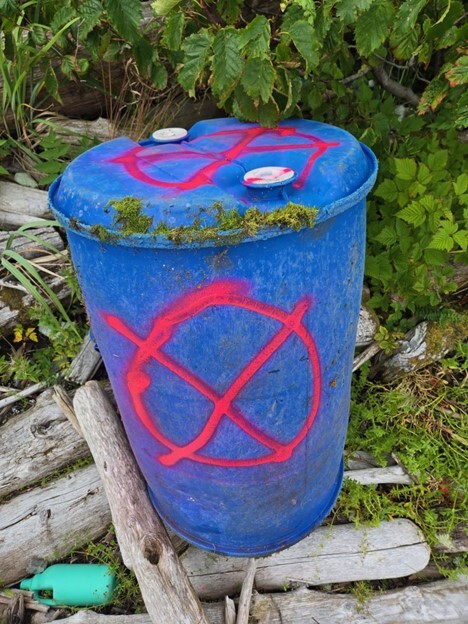
GOAK's latest discovery on Montague Island — dozens of containers with unknown contents, ranging in size from 5- to 55-gallon drums — is now under investigation by the U.S. Coast Guard, the federal agency responsible for recovery and removal of oil and hazardous materials in the sea and on coastlines.
Coast Guard officials in Juneau announced on Thursday, Aug. 28, that they are assessing the threat posed by the containers alongside partner agencies, including NOAA's Office of Response and Restoration, Alaska Department of Environmental Conservation, U.S. Fish and Wildlife Service, the Interior Department, and Chugach Alaska Corp., an Alaska Native regional firm.
To date this year, GOAK has cleaned 10 miles of some 75 miles of shoreline on Montague Island, located in the Gulf of Alaska at the entrance to Prince William Sound. The large, uninhabited island within Chugach National Forest, known for its rugged terrain, is popular for fishing, kayaking, and wildlife observation.
This summer, GOAK workers have found hundreds of containers washed up on shore, but most of them are busted, said Chris Pallister, co-founder of GOAK in 2005.
From the deck of a cruise ship two miles offshore, the shoreline of Alaska looks pristine, but it's not, Pallister notes in a video on the GOAK website. "It's a hell of a mess out there, and people need to realize that."
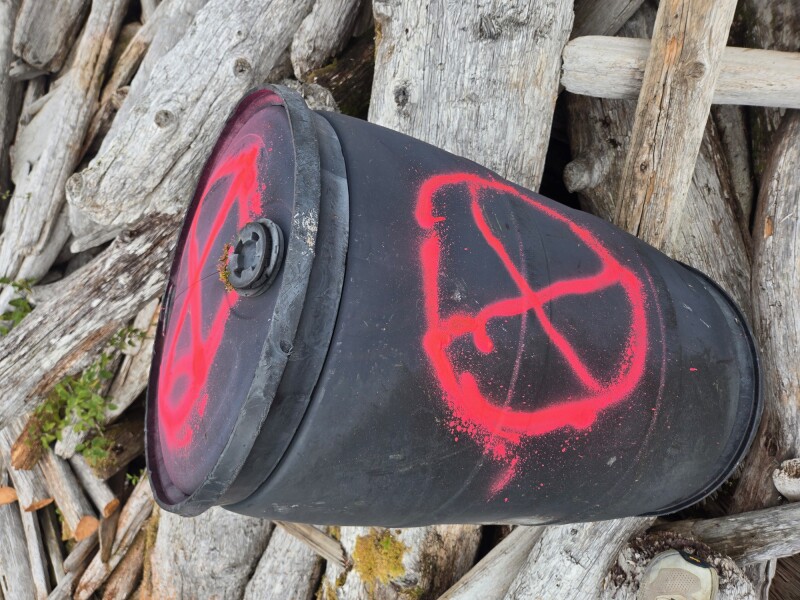
Pallister said he reported the profusion of barrels washed up on shore on Montague Island to the Coast Guard a couple of weeks ago. Although this summer's shoreline cleanup is officially done for the season, Pallister said he expects he will eventually be out there again with the Coast Guard to help them identify those dozens of containers now sprayed bright orange.
Because of the island's rugged landscape, cleanup operations involve the use of helicopters, with cleanup crews living offshore on boats, and then tug and barge operations to haul all the toxic trash away. "It's very labor intensive," said Pallister.
Over the past two decades, GOAK has removed several million pounds of toxic plastic debris from over 1,500 miles of critical and sensitive habitat. This latest project was funded by NOAA with a $3.8 million grant, "and that only covers a fraction of what needs to be done," he said.
"I believe there has been a massive chemical spill out there recently," he said. "Of the hundreds of drums that have washed up on shore (most recently) I think only a few survived the impact and the rest have dumped their contents on the shoreline."
Pallister said he had not seen dead fish or sea mammals, but that bears were definitely getting into the toxic trash, as noted by bear feces spotted that was fluorescent orange in color. Cleanup workers have also found containers of chloride bleach, petroleum products, and what they assume are detergents.
Pallister said his crews put in 100 days this summer cleaning 10 miles of shoreline on Montague Island. Now back in Anchorage, he said he expects to be out there again soon to help the Coast Guard find those orange-sprayed, sealed-up containers lying on the shoreline amidst other toxic trash, ranging from creosote-treated lumber, including railroad ties, to pressure-treated wood and more.
.png.small.400x400.png)
