
When British Columbia prawn fisherman Mark Urwin started looking to replace his aging vessel and expand his seafood business, he covered all the bases. Urwin has a broad, vertically integrated business model, marketing his own high-quality seafood as well as imported products through his company, 46° South Fish Company. He needed a boat to fit his uncommon approach to the fishing industry.
"We went all over," said Urwin, who originally comes from New Zealand. "We even went to eastern Canada. We looked at boats in New Brunswick and Nova Scotia. We came back here, and then I started looking at designs from New Zealand and Australia. We have a lot of similar small boat fisheries there."
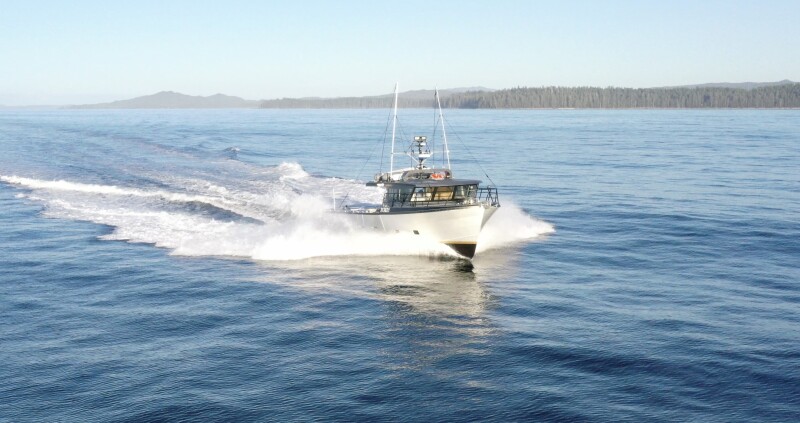
Working with the Australian naval architecture firm Southerly Designs and local B.C. boatbuilder Tideline Boats, Urwin came up with the vessel he wanted, the Kaitiaki. "It means 'Guardian' in Maori," he said. "She's pretty much a standard Aussie hull shape. The designers' challenge was fitting everything in, as we had license and length limitations. We maximized as much of the space as we could, and have more stuff in our boat than a standard 65-foot lobster boat in Australia. The designers also had to ensure that weights and balances all checked out. With that high-horsepower engine, they gave it a big prop to get that power down in the water, but at the same time not draw the keel too deep to take us over 15 GT and put us under onerous regulatory requirements."
The original fast Western Australia boats are actually based on a fiberglass design by an American named Raymond Hunt, Urwin pointed out. "Aussie builders brought the design to Australia in the 1970s, and there was a boom of that style of boats being produced, mostly all fiberglass."
Urwin noted that in the 1990s, aluminum boatbuilding had found its way to Australia, and most of the builders switched to aluminum because they found it easier to customize. "They saw that every fiberglass fishing boat coming out of the molds was being customized anyhow," said Urwin. "Bits added, or shortened, so the molds made no sense anymore. Aluminum was superior for custom fishing boats."
Urwin gravitated toward Western Australian lobster hulls because he found they ride better than the fast-working boat designs commonly built in British Columbia. "The Western Australia lobster hull has evolved over 50 years and is purpose-built for commercial fishing," Urwin said. "I started another company, Toura Boat Craft, to introduce the Western Australia design to commercial and recreational fishermen here."
Starting with the Western Australian hull, Urwin further sought to improve the performance, productivity, and comfort of his fishing operation. "Prawns are our bread and butter," he said. "But I wanted a boat we could use to explore other fisheries and a different approach around the quality and story of the fish. I see opportunities with species here in B.C. done a little differently, where we treat each fish with more care and attention and get it to chefs within a few days of capture. So I needed a boat with enough speed that it could work inshore, but also run offshore and fish in rougher weather. Now we have a boat that can do that."
With CNC files from Southerly Designs, Tideline Boats in Gibsons, B.C., began construction in late 2023. "We had 150 pages of drawings," Urwin said. "But it was like putting a Lego set together, because B.C. aluminum builders use jigs to fabricate the hull. This was something new to the Australian designers, who usually see hulls fabricated either upside down and then rolled over or by setting frames and stringers using plinths and lasers. At Tideline, the jig was built first, then the keel laid in there, then the bottom plate gets welded to the jig — with sacrificial strips that come off later — and then frames stood up, and away you go."
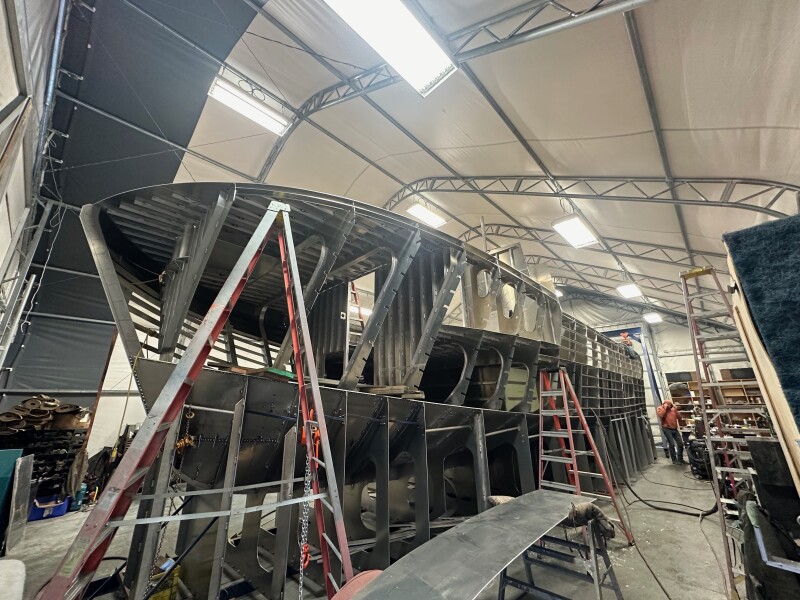
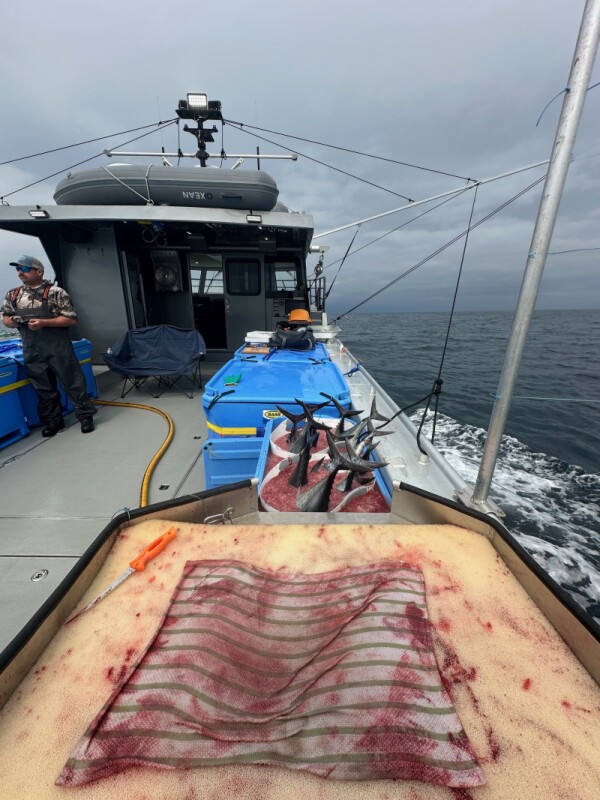
In March 2025, using an Australian design and BC construction techniques, Tideline delivered a boat that can carry loads of 10 tons at up to 27 knots, and get offshore and back fast enough to deliver high-quality products to Urwin's discerning customers. "Our customers are high-end restaurants, with Michelin stars," he said. "Last summer, we made a few trips for albacore. We had four big totes on deck with salt ice seawater. We spiked and bled the fish using the ikijime method, chilled them down in slurry, and put them in the totes on ice. We were able to get a high-quality product to our customers within two days."
Urwin said that many of his customers dry-age the fish, holding them for two weeks before cooking, and that fresh albacore are ideal for that. He noted that you can't do it with frozen fish.
"We hope to catch albacore within 40-50 miles of the coast," he said. "But last year they never came in that close off northern Vancouver Island, and we had to go 150 miles, but we had the boat to do it."
To power that boat, Urwin opted for a 1,000-hp V8 MAN diesel engine, with a ZF 2000 gear at 2.2:1, turning a 3.5-inch Aquamet 22 shaft and a Veem 5-blade prop. "It has smart command so we can troll at salmon speeds," said Urwin. "And an articulated foil rudder."
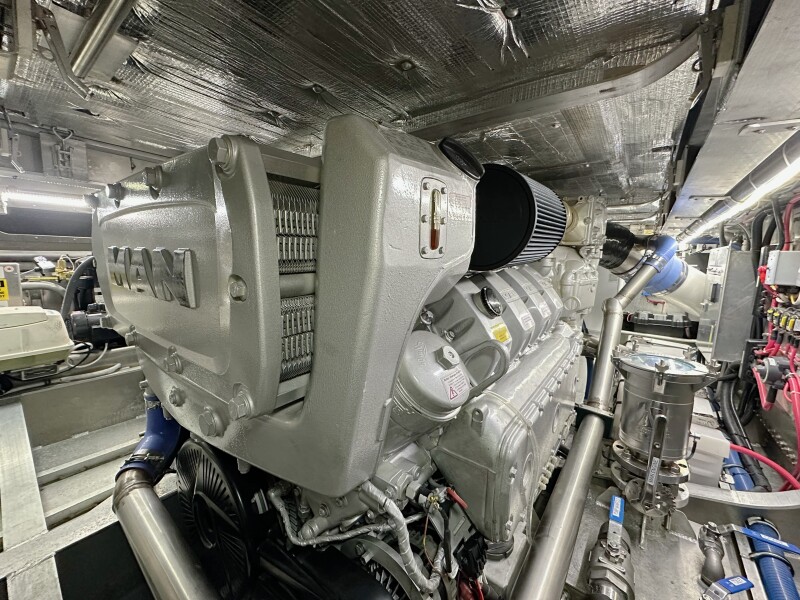
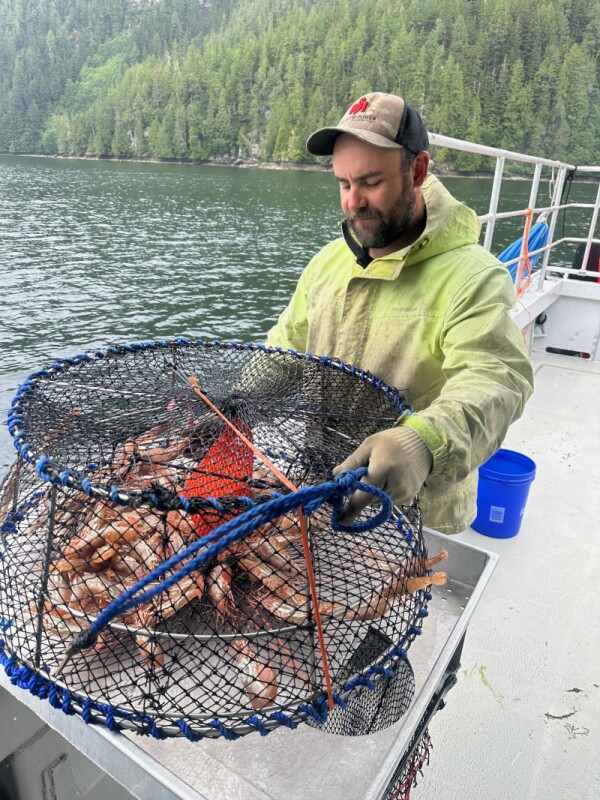
While he fishes albacore and keeps the catch on deck, Urwin's primary fishery is spot prawns, and for that, he has five 1,000-liter insulated fish holds. "There are three in front of the engine," he said. "And two behind. We have an 8-ton Pac West RSW (refrigerated seawater system) and recirculating system."
Urwin's boat also has freezer units in the two aft holds that he can isolate and use for keeping bait frozen if he gets into crabbing or makes longer prawn trips.
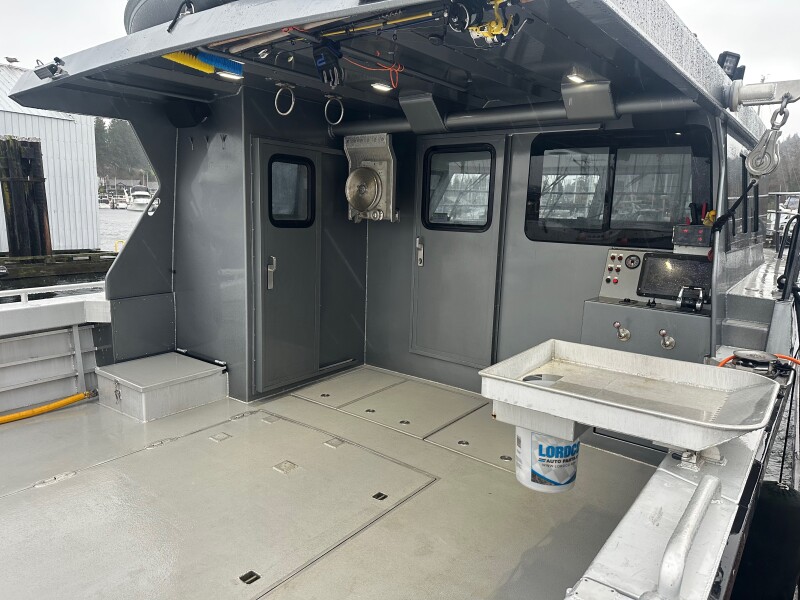
As a work platform, the Kaitiaki opens doors to many opportunities in a variety of fisheries. Besides prawns and albacore, Urwin is looking at others such as salmon and crab. "We want to share this model with other fishermen," he said. "Right now, my company, 46° South, is importing fish from Australia and New Zealand, but why not get it from here? I have a friend who is also interested in this type of fishing and marketing, and we have been working together on it. He's been using his smaller prawn boat to trial ikijime rockfish, while with our boat, we tackle some of the offshore fisheries."
Urwin is not only designing, working, and marketing differently, but he has also focused on comfort. "I don't want my crew finishing a trip feeling exhausted," he said. "So, we put a lot of thought into creating a comfortable boat. The hull design and fine entry mean you're not slamming, and we've insulated the boat throughout to reduce noise. The working heights on deck are all at 32 inches so that nobody is bent over."
Urwin noted that they also added a slack hauler, another New Zealand innovation, so that they do not have to pull the buoys from their traps across the deck to the hauler. "With spot prawns, you have a lot of line out, about 3,000 feet, so you put your hauler on the other side to keep all of that line from underfoot. But pulling the line through the hanging block over to the hauler puts a lot of strain on you. The slack hauler takes that strain, feeds you the slack line so you can run it through the block and back to the hauler without straining," he said.
Urwin noted that all these things reduce the physical demands on the crew. "We feel good when we get in," he said.
Usually, it is just Urwin and one crew member on the boat. The Kaitiaki has two bunks forward and a double berth under the wheelhouse floor. "Normally in B.C., they have the wheelhouse floor flush with the deck, or even below," said Urwin. "But we raised ours up 8 inches above the aft deck for three reasons: to reduce the possibility of downflooding if the deck is awash; to improve visibility, and to increase space so we could fit a double berth underneath."
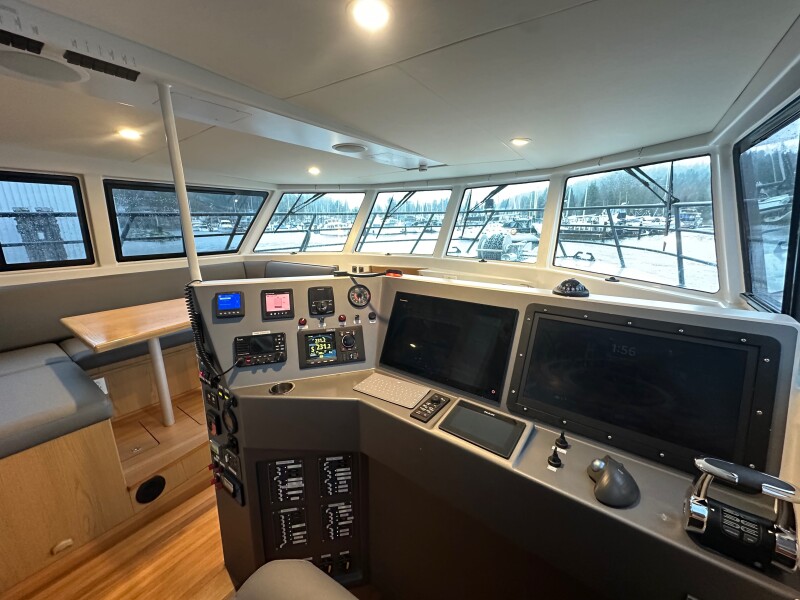
The spacious wheelhouse includes the galley and wraparound settee for Urwin and his crew to sit down and eat. In a design surprise, another carryover from Australia, the galley is forward of the helm and electronics displays.
"Ride comfort at the helm is better aft," said Urwin. "Visibility wasn't reduced at all, and if you're making some food while steaming, you're looking forward instead of having your back to the ocean while underway — it's safer."
At the helm, Urwin runs TZ Pro via a PC, with a WASSP transducer, a Furuno MFD for DRX radar, a chirp sounder, a backup chartplotter, and engine room cameras. "We have a Simrad autopilot, Zipwake interceptors, and Durabrite lighting, which is a must for operating the log-ridden waters in B.C. at night," said Urwin. "The helm has jog steering only, using a two-speed manifold for slow or fast rudder speeds by Kobelt."
A three-phase 20-kW Kohler genset runs the RSW and freezer, plus any 110 v needs. "We also have solar panels by Open Water Solar in B.C.; those produce 24 amps at 24 volts, and charge a lithium battery bank."
Urwin noted that the boat's features also include a Stat X fire suppression system, Starlink, and a Sonos sound system. "Dometic hydronic heating provides heating in the wheelhouse and berths," he said. "And also in the shower over the toilet, which is a drying room for wet weather gear. The outside toilet and shower to port also provide good shelter, along with the extended roof, when hauling traps on the starboard side in adverse weather."
After almost a year with Kaitiaki in the water proving the workability of the vessel design and business model, Urwin hopes to share his ideas with fellow fishermen.
Boat name: Kaitiaki
Home port: Gibsons, B.C.
Owner: 46 South Fish Company
Builder: Tideline Boats
Hull material: Aluminum
Year built: 2025
Fishery: Spot Prawn, Albacore
Length: 43 feet (47 LOA)
Beam: 16 feet
Draft: 5 feet
Engine: MAN V8 1,000-hp
Genset(s): Kohler 3-phase 20 KW
Hydraulics: 1 x Eaton 620 load sensing pump off gearbox 16.8 GPM, 35 gallon tank, Pacer pump for deckhose, Sleipner bow thruster, 2 Haulers
Gear Controls: ZF smart command, troll function (can go as slow as 1.8 knots), Dual station
Steering controls: Electric jog steering, hydraulic pump off engine for steering, 2-speed manifold (Kobelt)
Powertrain: ZF 2000 series 2.2:1, Aquamet 22 SS 3.5”, Veem 5 blade, bronze, interceptor strips, 35 “ dia x 38” pitch
Refrigeration: Pac West 8-ton RSW, Pac West 3-ton freezer
Fuel capacity: 3,900 liters (2 x 1,800 liter tanks)
Top speed: 27 knots light / 25 knots loaded
Cruise speed: 18-20 knots
Hold capacity: 4-5 tons
Pot capacity: 500 prawn traps.
Crew accommodations: 2 bunks forward, 1 double in master room
Electronics: Furuno MFD (radar, chirp Hi/Lo transducer + amp, ER cameras), Time Zero Pro via PC, Wassp and DRX, Simrad autopilot, Zipwake interceptors, Stat X fire suppression, Starlink, Sonos sound system, Victron inverter/charger & Cerbo GX plus Solar M chargers, Open Water Solar panels, Lithium house bank, Durbrite lighting
Deck gear: Hydroslave hauler x2, Lone Star 24V anchor winch
.png.small.400x400.png)