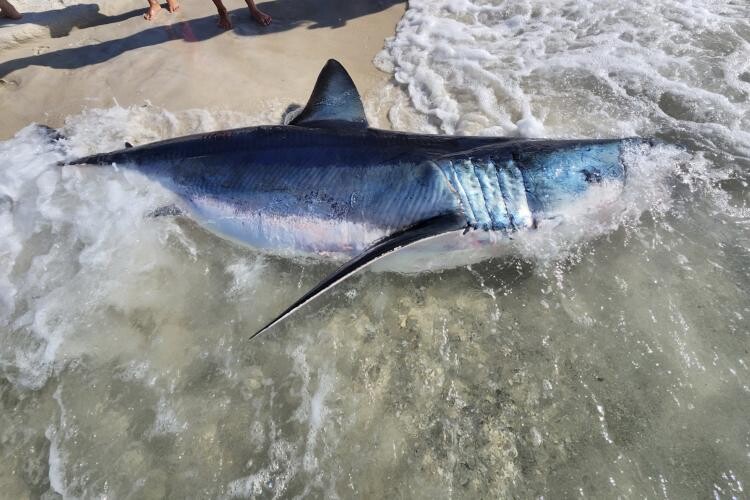
A puzzling stranding drew NOAA Fisheries experts to Panama City Beach, Fla. On Nov. 21, an 11.4-foot female shortfin mako washed ashore in the early morning hours.
According to NOAA, strandings of “large pelagic species like the mako shark are relatively rare for this area,” prompting an immediate response from the Southeast Fisheries Science Center to secure the shark and conduct a full necropsy- an animal autopsy.
“The 11.4-foot size is substantial, and our team was able to collect comprehensive data, including biological samples, to assess the shark’s health, life history, and any potential environmental factors that may have contributed to its death," said NOAA Fisheries research associate Annsli Hilton. The necropsy offers scientists one of the few opportunities to gather biological data from an adult shortfin mako, information NOAA notes is “invaluable” for marine science and long-term conservation.
The unusual sight also stopped a group of visiting high school football players on the beach. Members of the Columbus Crusaders happened to come across the shark while in town from Ohio and joined the response effort. The team assisted NOAA staff in moving the shark to a waiting vehicle for transport to the lab for examination.
“We were so grateful for their zeal and willingness to help,” Dr. John Carlson, NOAA research fish biologist said. “They were interested in the entire process, and working with the public to do this provides us with a very real way to connect them to our conservation work.”
The initial necropsy findings revealed no visible signs explaining why the shark died. Biologists reported “no visible evidence” of causes such as entanglement in fishing gear. Tissue samples were also collected for pathogen screening, including samples from the brain to test for a condition previously observed in great whites called meningoencephalitis. Testing is being coordinated by the Northeast Fisheries Science Center’s Apex Predators Program.
NOAA also shared that data from adult shortfin makos is somewhat limited, and each stranding does further marine science and conservation efforts.