
As a crowd of fishermen, their families, and curious onlookers formed, there was something unmistakable in the air: pride. It was the kind that comes from generations of families who have braved the ever-changing weather on the North Atlantic, built a city on the back of hard work, and brought home some of the best scallops in the world.
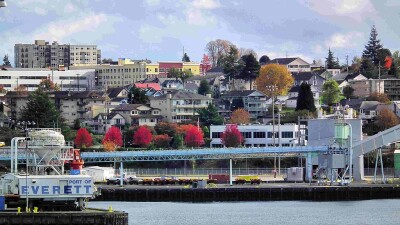
For one day this past summer, the nation’s top-earning fishing port reminded everyone exactly what New Bedford was built on.
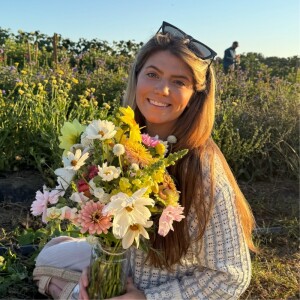
“When we started talking about Scallopalooza, my intention was simple: to celebrate our fishermen,” said Stacy Alexander-Nevells, a board member of the New Bedford Fishing Heritage Center (FHC) and manager of Atlantic Shellfish, her family’s business. “It is a hard, thankless life that only those who live it can truly understand. You’d be surprised how many people right here in our local community don’t really know what it takes to bring those scallops to the dock.”
Scallopalooza, she shared, was born out of a desire to change just that, letting fishermen showcase their skills, feel celebrated, and give the community a glimpse of what they do at sea. “I’ll never forget the moment we were about to announce the first round of the event,” Alexander-Nevells recalled. “We played Peter Farland’s anthem about what it means to be a commercial fisherman. As I stood on the stage and heard it playing, I saw the guys getting amped up, and I got goosebumps. That was it. That was the moment I knew we were doing something special.”
For Alexander-Nevells, who grew up in a fishing family and married a fisherman, the festival hit close to home. “This industry was built on the backs of hardworking families, and when I looked out at the crowd, I saw a legacy continuing,” she shared. “Scalloping isn’t just a job. It’s a way of life. And Scallopalooza is a celebration of just that.”
The “Scallop Capital of the World”
Organized by the New Bedford FHC, Scallopalooza took place steps from the city’s working waterfront. For a community that proudly calls itself the ‘Scallop Capital of the World,' the event was a true reflection of the city’s heart.
Joe Ritter, programs manager for the New Bedford FHC, said, "If you want to learn about the people and families and the evolution of our community, well, this event showed this story,” Ritter said.
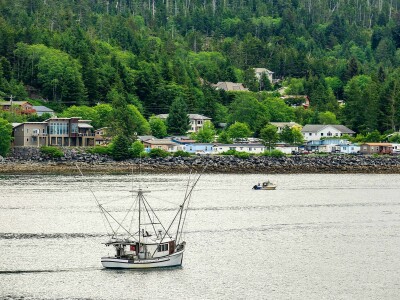
That story begins on the docks, where scallops represent roughly 80 percent of the seafood revenue that passes through the port. Out of nearly 500 vessels that call New Bedford home, about two-thirds are scallopers. “Scallops are our livelihoods and our identity,” said Laura Orleans, FHC executive director.
A shucking good time
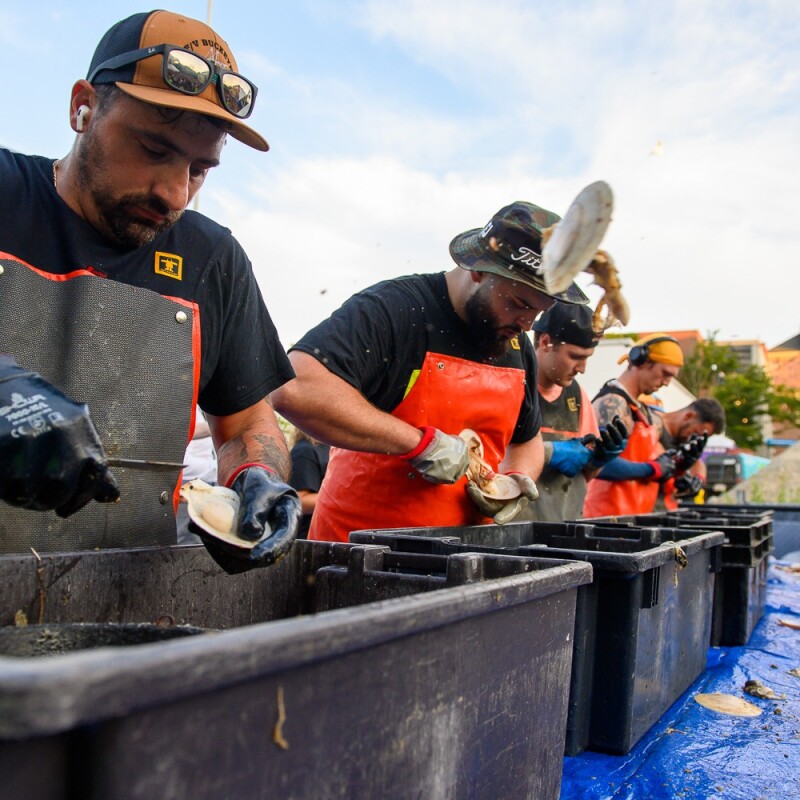
The main event, a scallop shucking contest, drew a crowd that packed in shoulder to shoulder along Bethel Street. Music blared as the emcees, retired scallop captain Chris Wright and local maritime attorney Samuel Blatchley, counted down to shucking time. Shells clattered as knives flashed, and the crowd erupted.
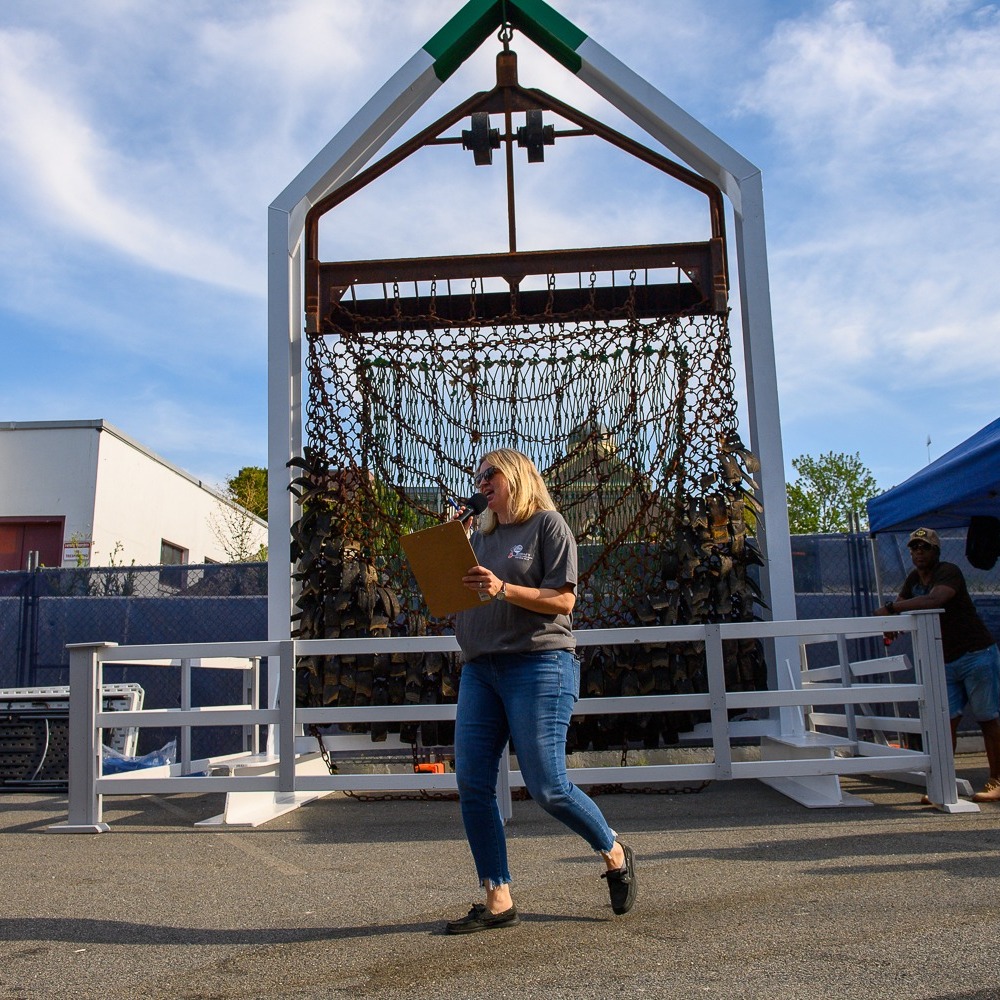
“It wasn’t just the competition where the pride showed through; it was throughout the whole process of planning and setting up the event,” said Orleans. “Kaity Quinn, whose family owns Quinn Fisheries, suggested that we display a full-sized, 2,000-pound scallop dredge. She worked with her team at East Coast Fabrication to custom-design and build a steel frame, which was delivered by crane truck at 6 a.m. on the day of the event. It was like a piece of art, a real tribute to the industry."
Competitors from vessels across New Bedford’s fleet went head-to-head for the title of quickest and best shucker. “It was a combination of speed, skill, and tradition,” Ritter shared. “And the top fisherman from each round moved on to the finals.” The winner, Bryan Despres from the Lady Dee, took home the trophy, bragging rights, and a story he can tell for years.
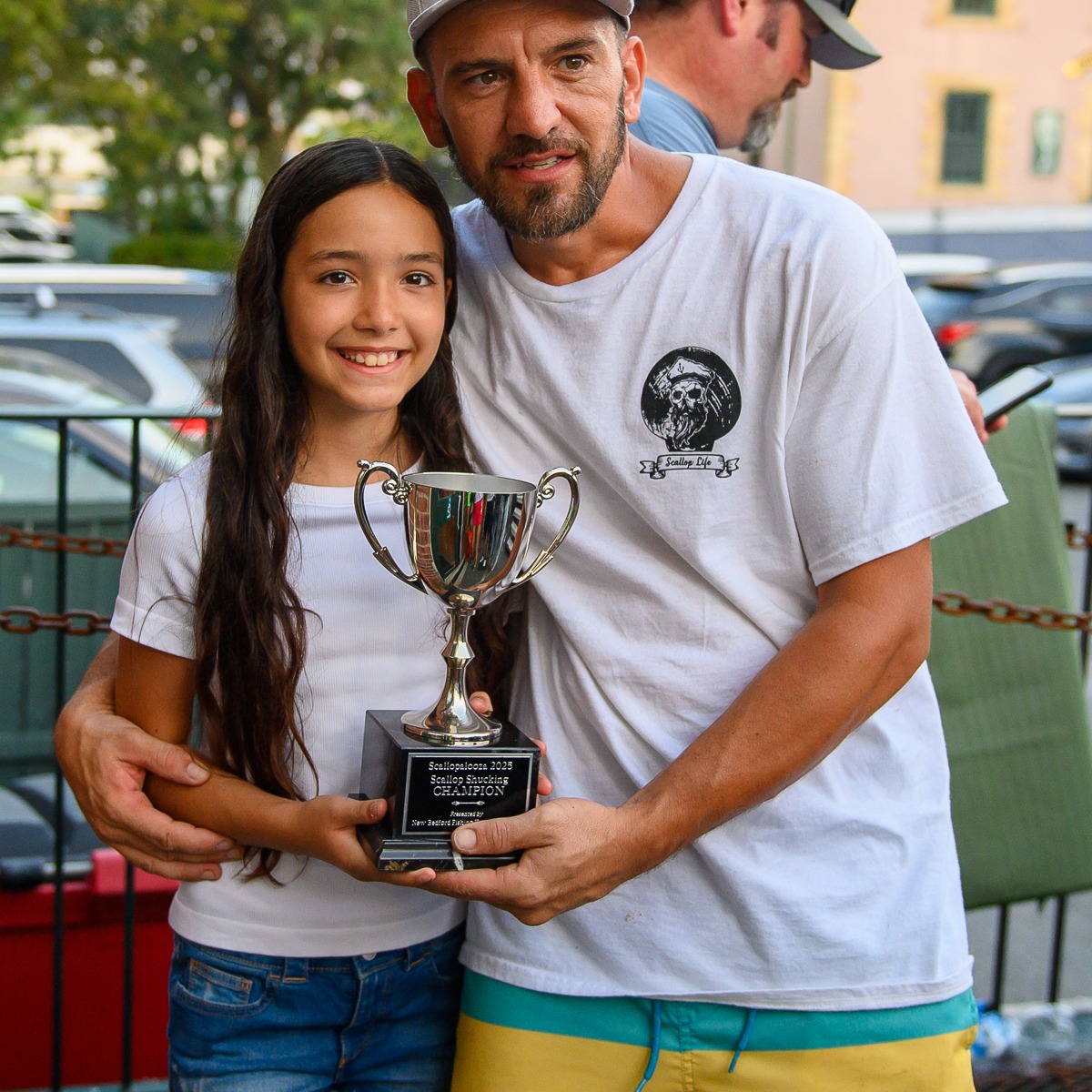
For Depres, the win carried deep significance. “I grew up in a foster home in New Bedford,” he said. “And I got an opportunity for fishing, and like I said, it’s life-changing for people.”
Depres' story represents what Scallopalooza will continue to build upon: resilience, opportunity, and pride in a trade that makes up a community.
Continuing the legacy
Stacy Alexander-Nevell’s husband, Hollis Nevells, captain of the Amber Nicole (a vessel owned by Stacy's father), put in extra time at sea with his crew to catch scallops that were donated for the event. Their daughter, Nadia, and Kaity Quinn — who are both in their early 20s — were involved in every aspect of planning the event, from fundraising and social media promotion to recruiting shuckers. “Watching the younger generation take the lead on so many aspects of the event made me realize just how much this means to them,” said Orleans.
Intergenerational pride is a big part of what made the event so important and powerful, Orleans said. “The past, present, and future of our waterfront were who made up Scallopalooza,” she said, adding that the festival served as a bridge between industry and community, letting people appreciate the skill and the grit that go into every scallop landed. “So many people enjoy scallops but have never seen what it takes to harvest them.”
Warren Bretton, a shucking champion from the past event in 1989 shared on Facebook, “What a wonderful thing bringing this event back to the city, the fishermen put a lot of effort and skill and knowledge into the job that they have chosen,” he wrote. “I hope you can continue to keep it going for years to come. Looking at the photos, it looks like you had a successful attendance. That shows that the people still support this industry and all the men and women risking their lives to do it. Well done.”
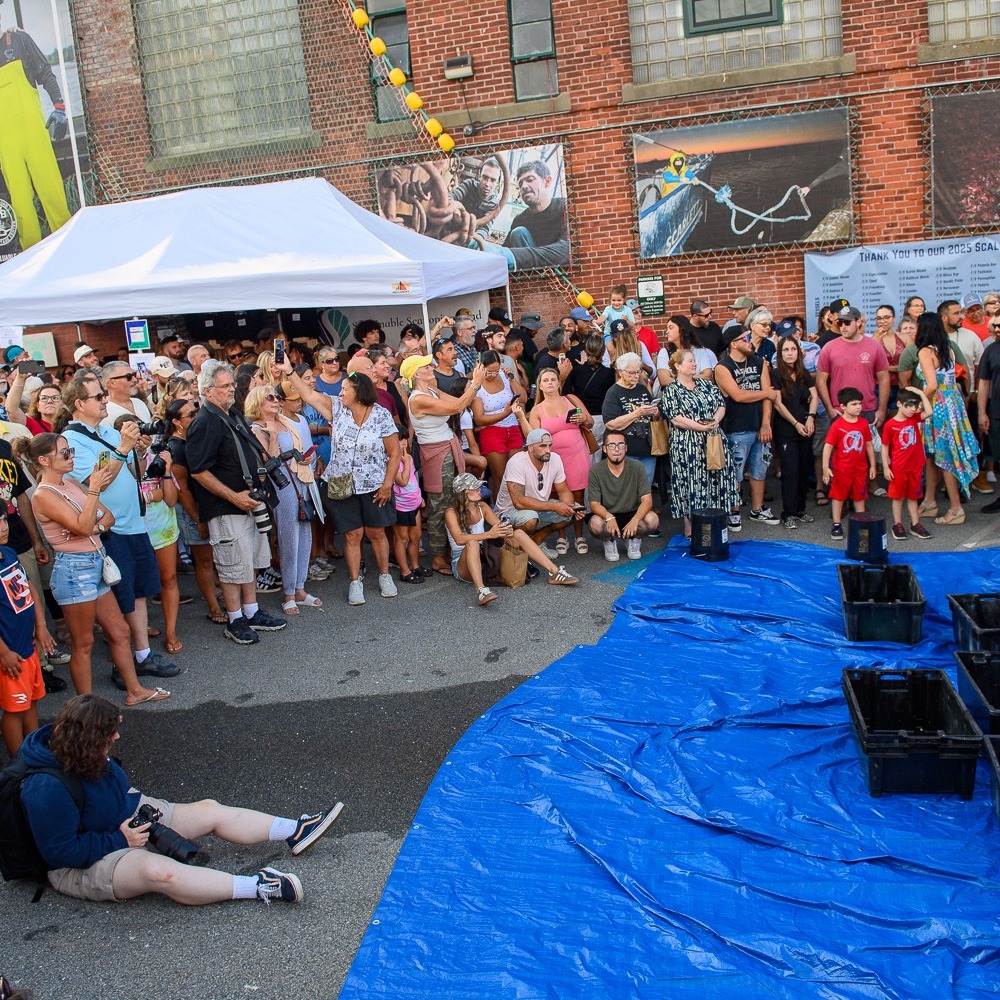
Despite the joy of the day, there’s no shortage of challenges scallopers face — from warming waters to market pressures — but for one night, the focus was on what unites the fleet, not what divides it. “There will always be debates about what’s best for our industry,” Alexander-Nevells said. “But if we come together at events like this, standing shoulder to shoulder, celebrating who we are, we’ll remember that deep down, we all want the same thing: the survival of commercial fishing and the families who built it.”
The first annual Scallopalooza served as a reminder that behind every shucked shell, every pound landed, and every meal, there’s a story of a family, perseverance, and pride. “When you celebrate your fishermen, you celebrate your community,” Orleans said.
Plans are already underway for Scallopalooza 2026, tentatively set for Aug. 13.