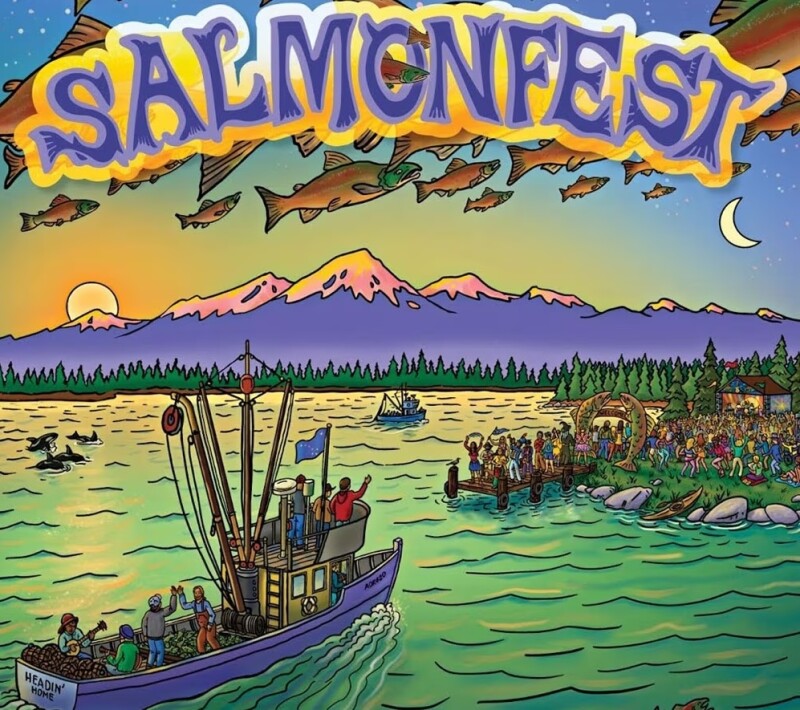
In August, Salmonfest once again drew thousands into Ninilchik, Alaska for three days of music, advocacy, and a shared focus on protecting Alaska’s salmon populations. Launched in 2011 as Salmonstock, the celebration has become the event of the summer, pairing its festival atmosphere with education and outreach around Bristol Bay and other fisheries. This year, National Fisherman (NF) joined the event as a sponsor to talk with attending commercial fishermen and local organizations.
At the NF booth, conversations spanned generations of active and retired fishermen. It was refreshing to witness the large number of young fishermen, whether working as deckhands or running their own boats. Topics ranged from season and regional productivity to questions about how new setnet technology is reducing King salmon bycatch. More than 140 attendees signed up for free NF+ memberships, including 80 commercial fishermen.
While the festival’s stages and headliners bring in the crowds, Salmonfest attendees walk the Salmon Causeway, where fishermen, families, and advocates discuss the future of Alaska’s fisheries.
Among the advocacy groups in attendance was Commercial Fishermen for Bristol Bay (CFBB), a national coalition representing thousands of fishermen who depend on the world’s largest sockeye salmon run. CFBB describes its mission as “ensuring the long-term sustainability of the world’s largest sockeye salmon fishery through habitat protection, education and advocacy.”
National Fisherman spoke with CFBB about its focused attention on House Bill 233, legislation introduced this year in the Alaska Legislature that would ban metallic sulfide mining in the Bristol Bay Fisheries Reserve. The reserve was first created in 1972 under Gov. Jay Hammond to restrict oil and gas development without legislative approval. CFBB representatives explained that HB 233 would expand those protections to include mining, offering a new line of defense against projects such as the Pebble Mine.
Representatives noted that Northern Dynasty Minerals, the company behind the Pebble Mine, continues to pursue permits, while more than 20 mining claims remain active across the region. Fishermen said this presents a clear threat to a fishery that has supported commercial harvests for more than 130 years. The bill was introduced at the close of the legislative session and will automatically be taken up again when lawmakers reconvene in 2026.
The event also provided space for other grassroots groups working on fisheries and watershed issues. The Susitna River Coalition highlighted its campaign against the West Susitna Access Road, which it claims would cut across more than 180 rivers and streams in the basin. Coalition members said the project could damage salmon populations and wetlands critical to the river system’s overall health.
On the maritime side, National Fisherman spoke with the Alaska Safety Alliance (ASA) regarding maritime workforce initiatives. Through the Alaska Maritime Education Consortium, which links the University of Alaska and the Alaska Vocational Technical Center, ASA is working to prepare Alaskans for maritime careers. The focus includes jobs identified in the Alaska Maritime Workforce Development Plan, such as shipbuilding, vessel repair, port operations, and vessel operations. ASA’s Maritime Works program emphasizes career awareness, training opportunities, and sustained employer engagement in a sector that supports more than 70,000 jobs statewide.
Organizers describe Salmonfest as a celebration with a purpose. The festival’s website notes: “Salmon is one of the iconic species of Alaska and while protecting the great runs of Bristol Bay has been our primary focus over the years, we support a variety of causes year-round. Since 2015, Salmonfest has donated over $300,000 to salmon-related initiatives across Alaska.”
For CFBB and other groups, Salmonfest provides a platform to keep Bristol Bay in the spotlight as legislation moves forward and industry pressure continues.
While advocacy filled the Causeway, music anchored the festival. Alongside headliners, local acts such as Wasilla’s Black Barrell and the Bad Men, and Juneau’s Cousin Curtiss & Harrison B delivered impressive sets to large crowds.
After the show, NF reporters drove down to Homer to meet with Bulletproof Nets and Bay Weld Boats to discuss the projects they're working on.