

Walmart’s recall of potentially radioactive shrimp from stores in 13 states has drawn attention to the idea that food security and food safety go hand in hand. Many in the industry argue that the U.S. is sacrificing its domestic shrimp industry to an influx of farmed imports and not doing enough to protect consumers from contaminated shrimp.
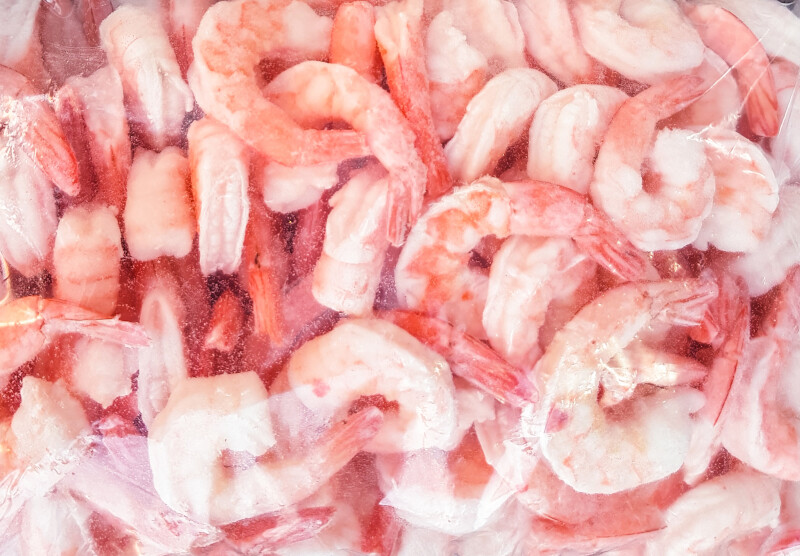
On Aug. 20, Walmart announced that it was recalling raw frozen shrimp from stores in Alabama, Arkansas, Florida, Georgia, Kentucky, Louisiana, Missouri, Mississippi, Ohio, Oklahoma, Pennsylvania, Texas, and West Virginia.
As reported by Food Safety Magazine and several other sources, the U.S. Food and Drug Administration (FDA) detected Cesium-137, a radioactive isotope, in shipping containers and shrimp samples from Indonesia. “The FDA issued a recall alert for frozen shrimp distributed by Southwind Foods LLC of Carson, Calif., sold under the brand names Arctic Shores, Best Yet, First Street, Great American, and Sand Bar,” says Food Safety Magazine, adding that the FDA later requested that Walmart recall three lots of Great Value brand frozen shrimp from its stores.
The contaminated shrimp had been processed by the Indonesian firm PT. Bahari Makmur Sejati (doing business as BMS Foods), which the FDA added to a new import alert for chemical contamination. BMS products are banned from entering the U.S. until the company cleans up its act.
The news has focused attention on the issue of contamination in imported shrimp. “I’m in favor of aquaculture,” says Jim Gossen, former owner of Louisiana Seafood Global Source. “But we have to be diligent.”
Gossen has been working on the issue of adulteration in shrimp for decades. He points out that tracing the sources of contamination can be difficult, and oftentimes the end users don’t know what kind of shrimp they’re eating or where it came from. “They don’t know if they’re eating white, brown, pink or vannemei, or if it’s farmed or wild caught. You can ask the chefs, but a lot of times even they don’t know. We need to be educating the consumers.”
Other members of the industry have supplied the Trump administration with points of concern regarding imports and are hoping for relief. Their list includes the rise in imports and drop in price, and the fact that the FDA tests less than 0.1 percent of shrimp entering the country, exposing consumers to numerous banned chemicals.
“I’ve been thinking about this for 30 years,” says Gossen. “It’s a battle to get people the truth about what they’re buying.”
When Gossen was in business, he sold the highest quality shrimp he could, noting that some processors add chemicals to domestic shrimp. “I sold domestic shrimp and stayed away from peeled shrimp that had been treated with tripoly [sodium tripolyphosphate]. The FDA approves it, and I think it’s safe, but it adds weight and volume to the shrimp and then the shrimp shrinks when you cook it. I’d rather pay a little more and have shrimp that doesn’t shrink.”
Gossen advises consumers to buy shell-on domestic shrimp if they want to have the best product on the market. He notes that domestic wild-caught shrimp are highly unlikely to contain banned chemicals, and if they’re shell-on, they have probably not been treated with tripoly.