For more than 150 years, North Carolina fishermen have been using pound nets. Gaither Midgette is among those keeping the fishery going.
Before the Civil War, the American shad fishery in the South was dominated by aristocrats, including George Washington. Plantation owners with deep pockets invested what would be millions of dollars today into the gear and infrastructure needed to harvest shad with haul seines of 2,000 yards or more. They depleted the resource, and during the Civil War in North Carolina, the Union Army destroyed most of the boats, nets, and buildings needed for the haul seine fishery. In 1863, North Carolina outlawed the fishery for the duration of the war in order to keep shad from being commandeered by, or sold to, Union Army commissaries.
The pause in the harvest during the war led to rebounding stocks, and in 1869, the Hettrick brothers brought the pound net to North Carolina. Pound nets required a much smaller investment and provided a higher return than haul seines. A few haul seine operations remained, but increasingly, the shad fishery belonged to the common people. In addition, the pound nets often caught higher-value species at a time when ice was introduced to preserve the catch, and those fish could be shipped to Baltimore, Philadelphia, and New York.
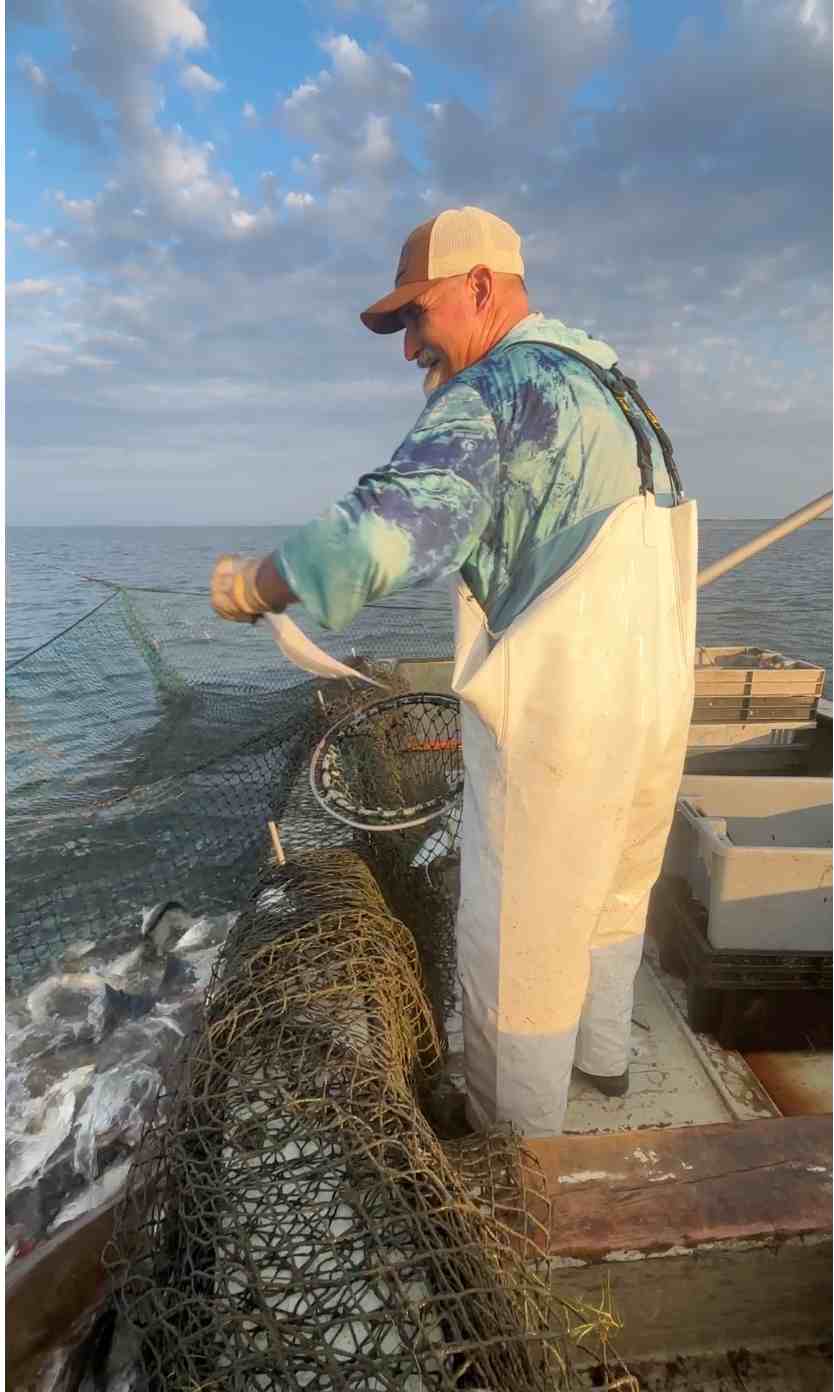
Over a hundred years later, the shad fishery has shrunk to almost nothing, but small-scale fishermen are still working the pound nets in Pamlico, Albemarle, and Croatan Sounds, and Gaither Midgette of Wanchese is among them. At 5:30 on a warm August morning, he fires up the 30-HP Honda 4-stroke on his pound skiff, a 20-foot by 6-foot wooden boat planked crossways on its flat bottom. “It’s all juniper-planked,” says Midgette. “The sides are all juniper, too. Glen Bradley built it about 20 years ago.” He steers down the canal from Spencer Yachts to the open water of Croatan Sound, between Roanoke Island and the mainland. “It won’t take too long. We’ll be finished by 7:30,” he says.
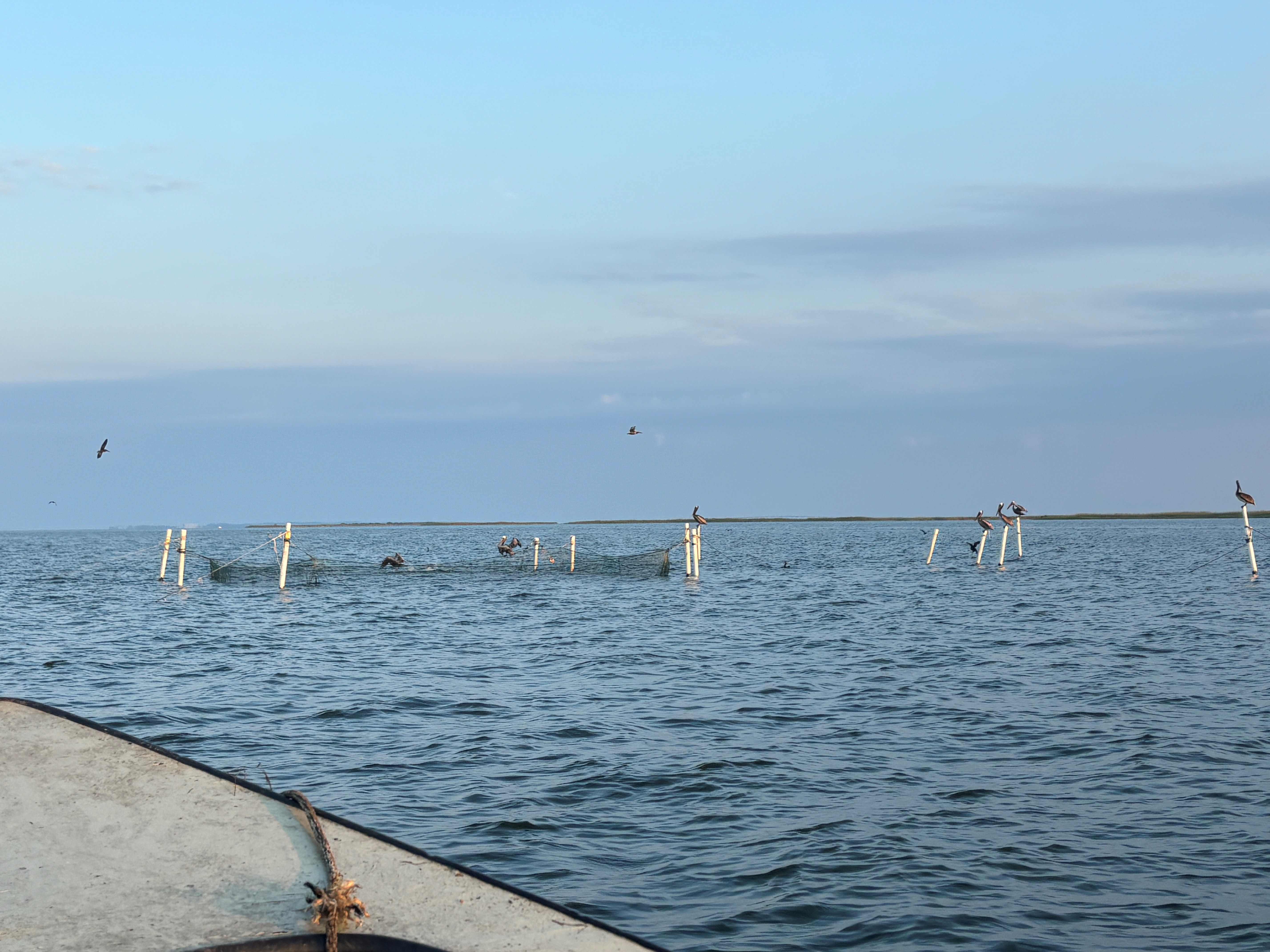
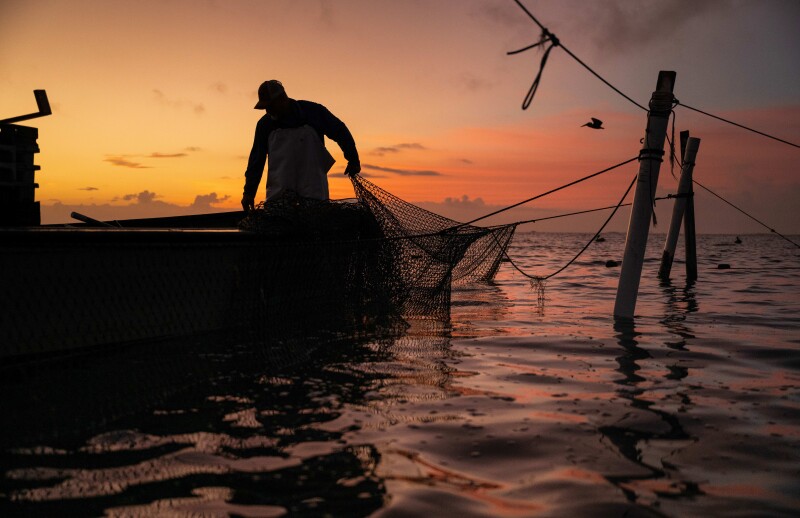
Midgette has built four pound nets on the island side of the sound, and it’s still dark when he approaches the first one. The lead consists of a wall of 5-inch twine hung on stakes of white PVC pipe. It stretches more than 200 yards from the marshy shore to the heart of the net. Fish hit the lead and then swim into the heart of the pound net. There, they find an opening into the crib, a net bag of 3-inch mesh from which they seldom escape. “I have a couple here, and together they stretch about 400 or 500 yards into the sound,” Midgette says. Lead weights hold the bottom edge of the net down. “Some guys get a diver to check it,” says Midgette. “But it’s not very deep, I can jump over and check it with my feet if I think there’s a problem. You can usually tell.”
To get permission to build a pound net, Midgette must have a commercial fishing license and a licensed boat. Then he applies to the county for a permit. “It don’t cost nothing,” he says. “They run an announcement in the paper, and if there’s no objection from the public, you get your permit. It’s pretty easy, I guess.”
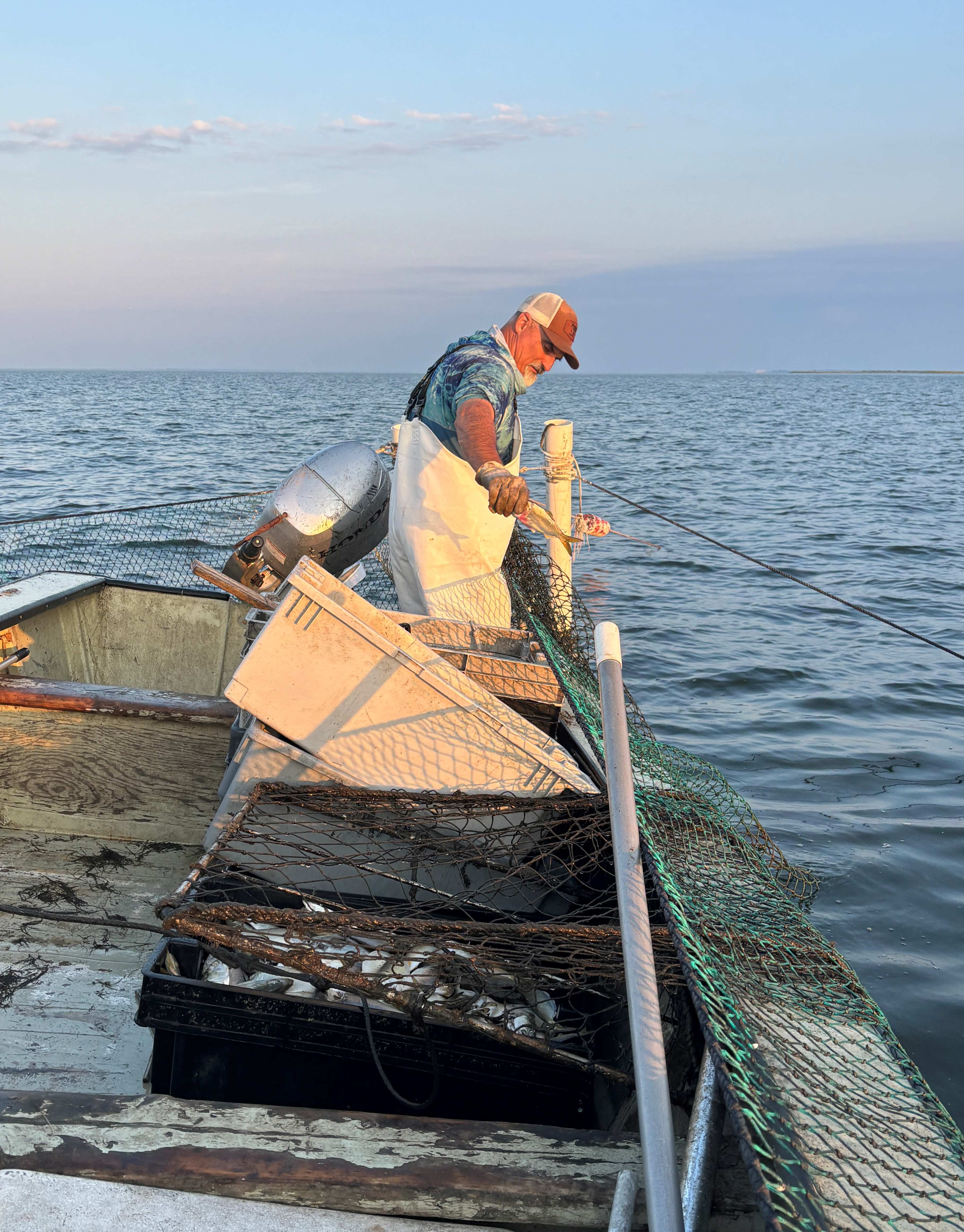
In the old days, the pound nets were built with wooden stakes that became worm-ridden and had to be replaced periodically. Midgette avoids this problem by using the PVC pipe for stakes. In the dim light of the early dawn, he cuts the engine and glides towards the outside of the first net. He unties the two lines that stretch the entry funnel and tunnel iron into the crib. He pushes down the twine with an oar and pulls the boat across to the inner side of the crib, where the fish swim in from the heart. He hauls up the 30-inch by 30-inch tunnel iron through which they enter the crib and braces it on the port side of the boat. Midgette has added a couple of thin steel bars across the opening, “I got the idea from the TEDs we use shrimping and welded these bars on it to keep the big turtles out,” he says. “We don’t have to do it, but they can be 300 or 400 pounds, and it’s a job to get them out of the net.”
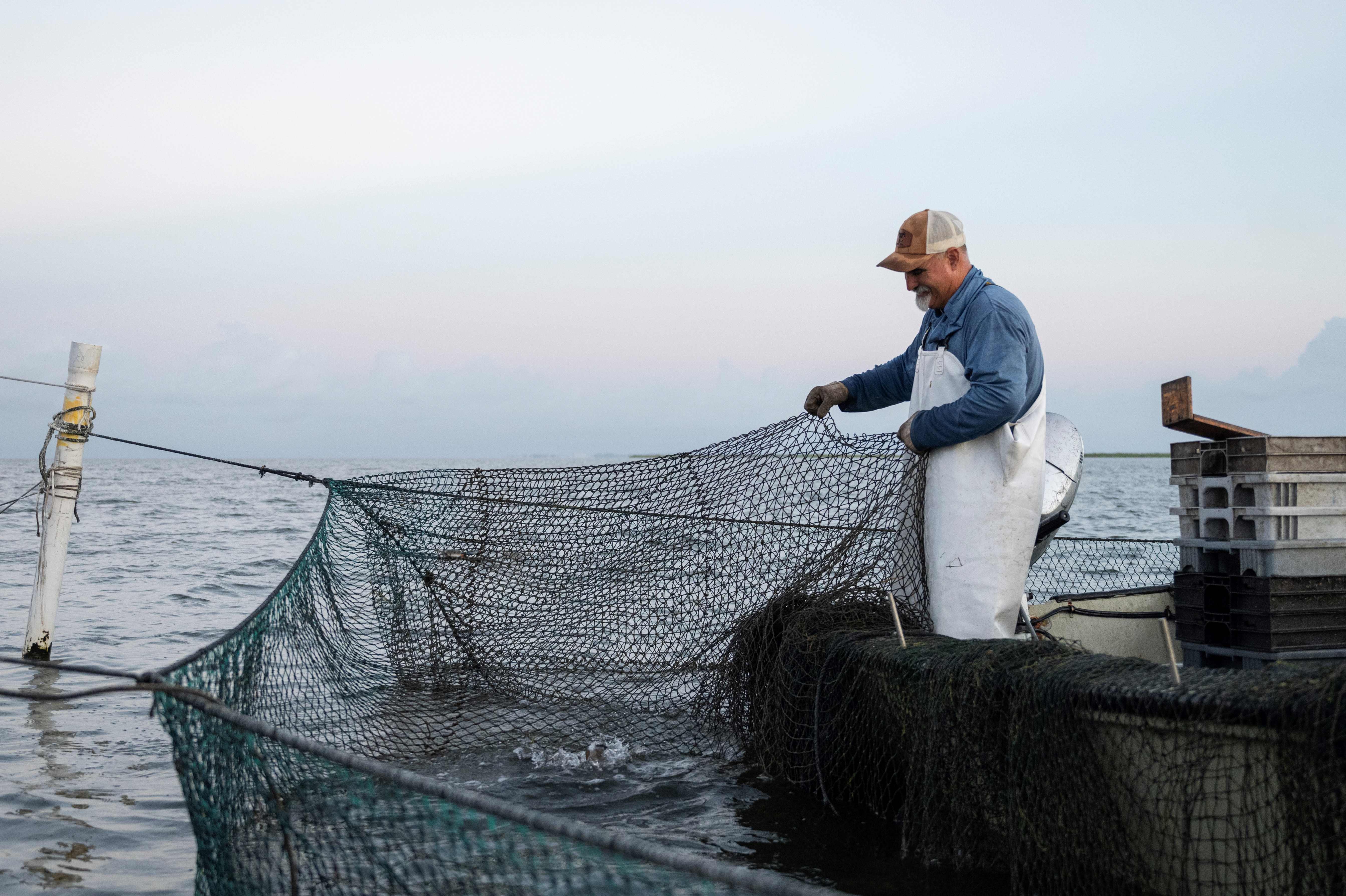
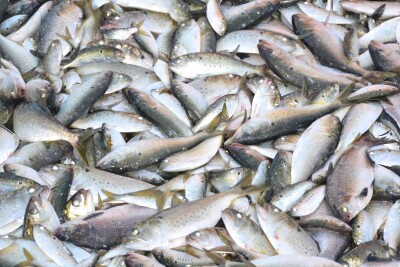
With the only escape route effectively closed, Midgette starts to pull up the weighted corners along that side of the bag that forms the crib. Once he gets one side of the net up, he can flip the grate back and continue to haul the net, moving the fish and his boat closer to the outer side of the crib. Bailing the fish out of a pound net is usually a two or three man job, but Midgette has a system for working alone. He has a few slim aluminum pegs handy, and he works his way back and forth along the rail, pulling twine. When he gets a big handful up, he slips a peg through the meshes into a hole in the rail. Finally, he dries the fish up enough to see what he has: a mass of splashing menhaden and other fish, and three or four huge skates. Midgette starts brailing the catch aboard. “It’s starting to slow down now, but I was getting a lot of star butterfish before. If I got fish in this net, I’d usually get a lot more in the second. I got five boxes of butterfish in this net one day, and a lot more in the other.”
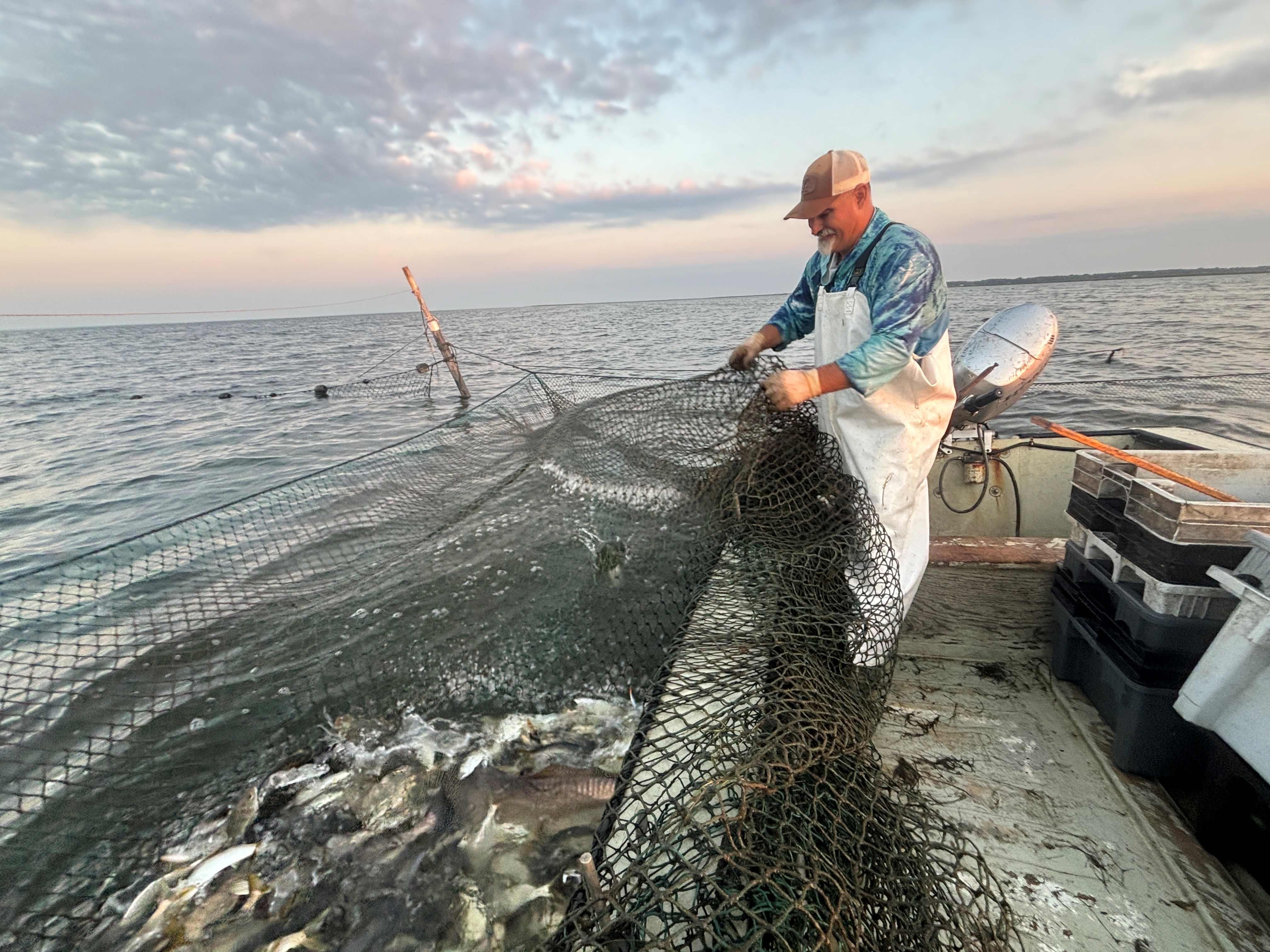
With the price of butterfish running around $3.60 a pound, and Midgette landing a dozen boxes a day, he admits he had some good weeks. Despite the ease of entry and reasonably low investment for gear, the number of pound netters is dropping. “I guess there are only four of us left in Dare County,” says Midgette. “Thirty years ago, there were about 20 or 30.”
For Midgette, pound netting is part of being a Wanchese waterman. “My grandfather fished pound nets,” he says. “And my father did a little bit. I started in high school fishing with a guy named Tyler Outland, who actually had some of the sites that were my grandfather’s. I learned a lot from him.”
In the dim light, Midgette continues to brail today’s catch aboard. “There’s some speckled trout,” he says. “And there’s a black drum—probably what we heard croaking.”
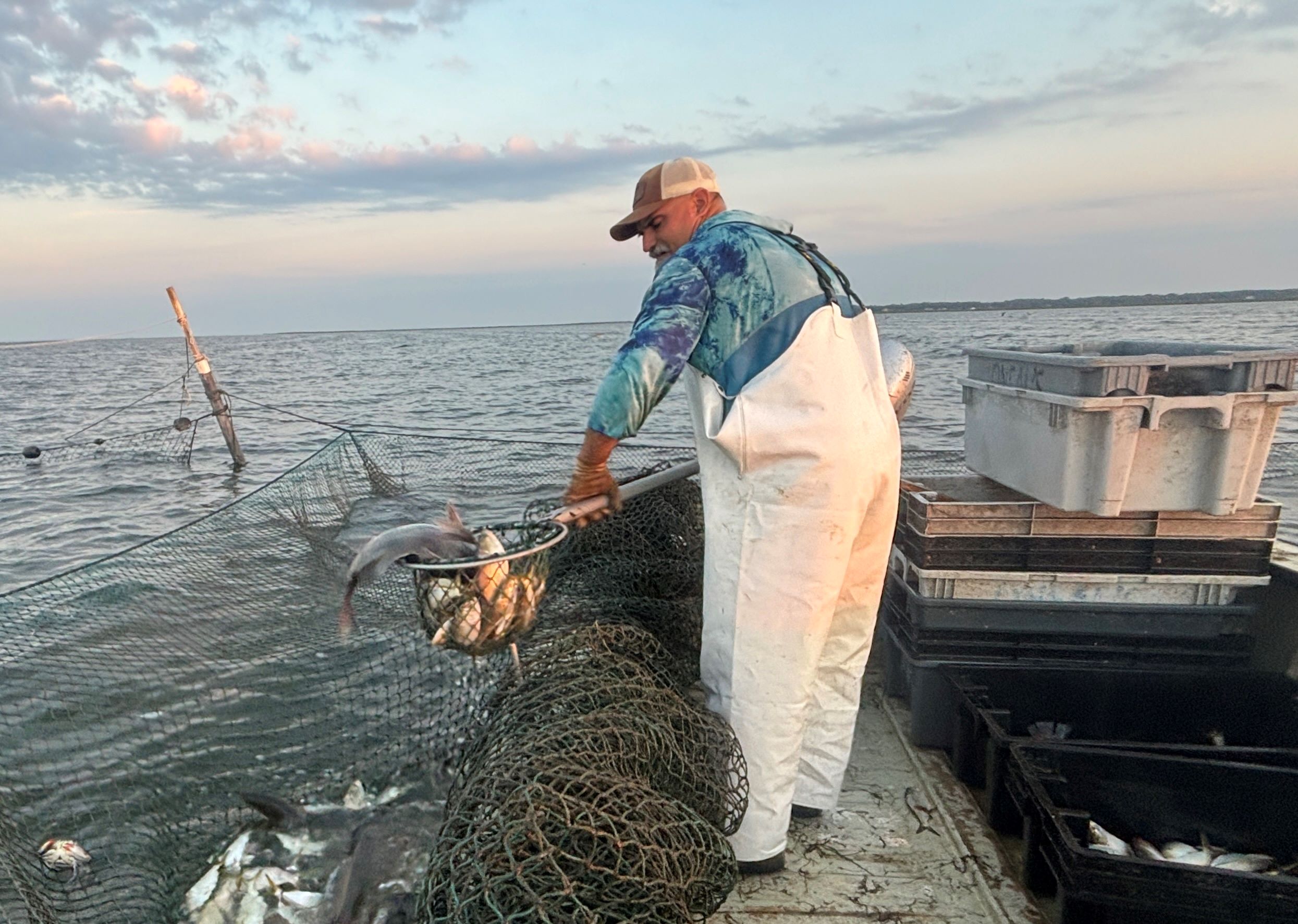
Midgette works the big skates out of the net. He notes can keep almost everything. But what he can’t keep goes overboard, alive and kicking. After dipping a few fish aboard, he lifts a flounder out of his dip net and tosses it out into the Sound. “We can’t keep them except for a certain time of year,” he says. “Can’t keep the red drum either. I don’t know exactly why, but that’s what the regulations say.”
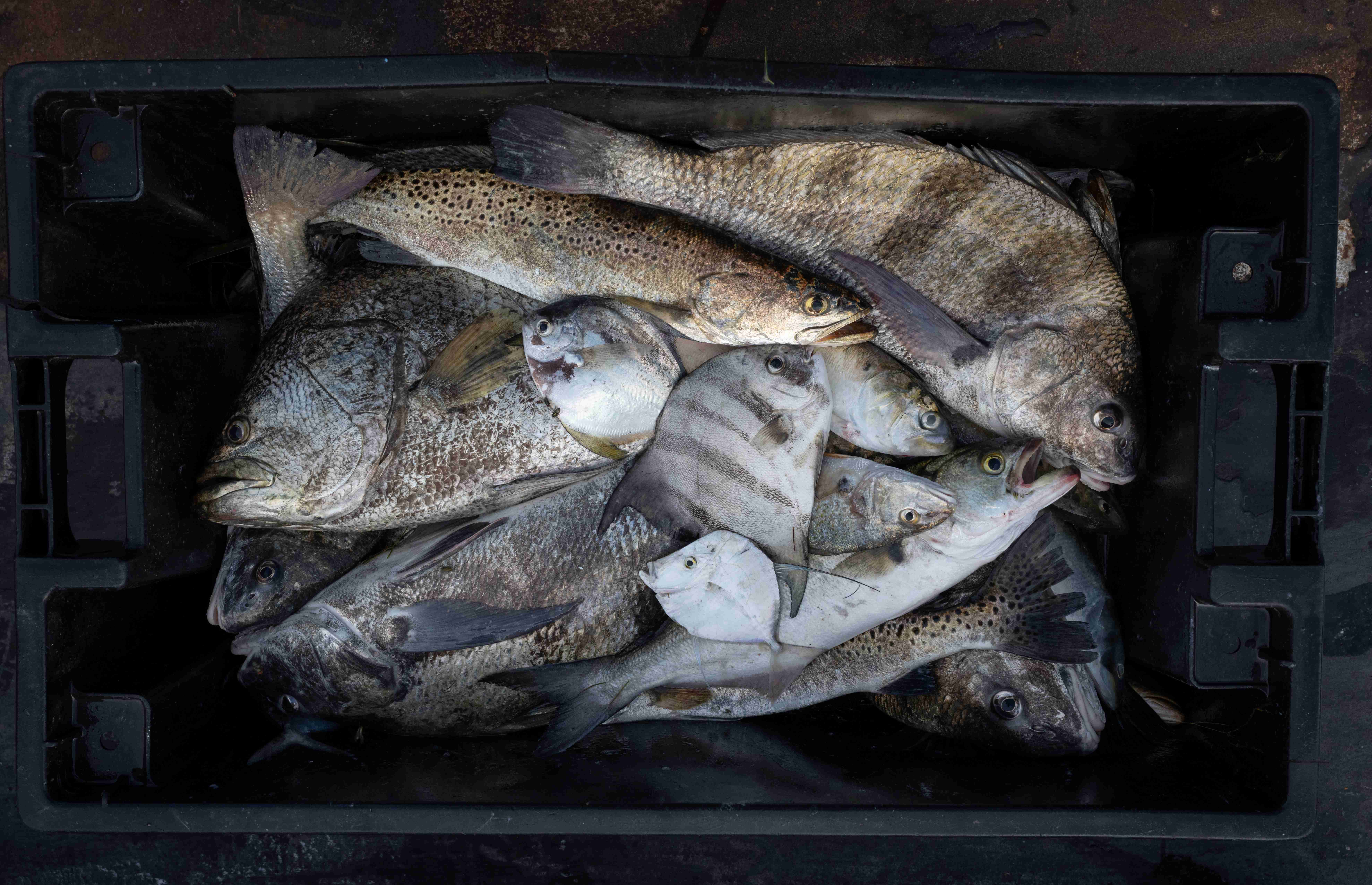
As Midgette has said, the big butterfish days are over for now, and he is loading up his boxes with 30-cent menhaden and a few higher values species. By the time he finishes with his first net, the sun is almost up. Midgette moves on to the second net and repeats the process of lifting the grate aboard and gathering up the dark, algae coated netting. Again, he brails menhaden into his fish boxes and picks out the other fish, Spanish mackerel, lookdowns, speckled trout, black drum, bluefish, pompano, and one or two butterfish.
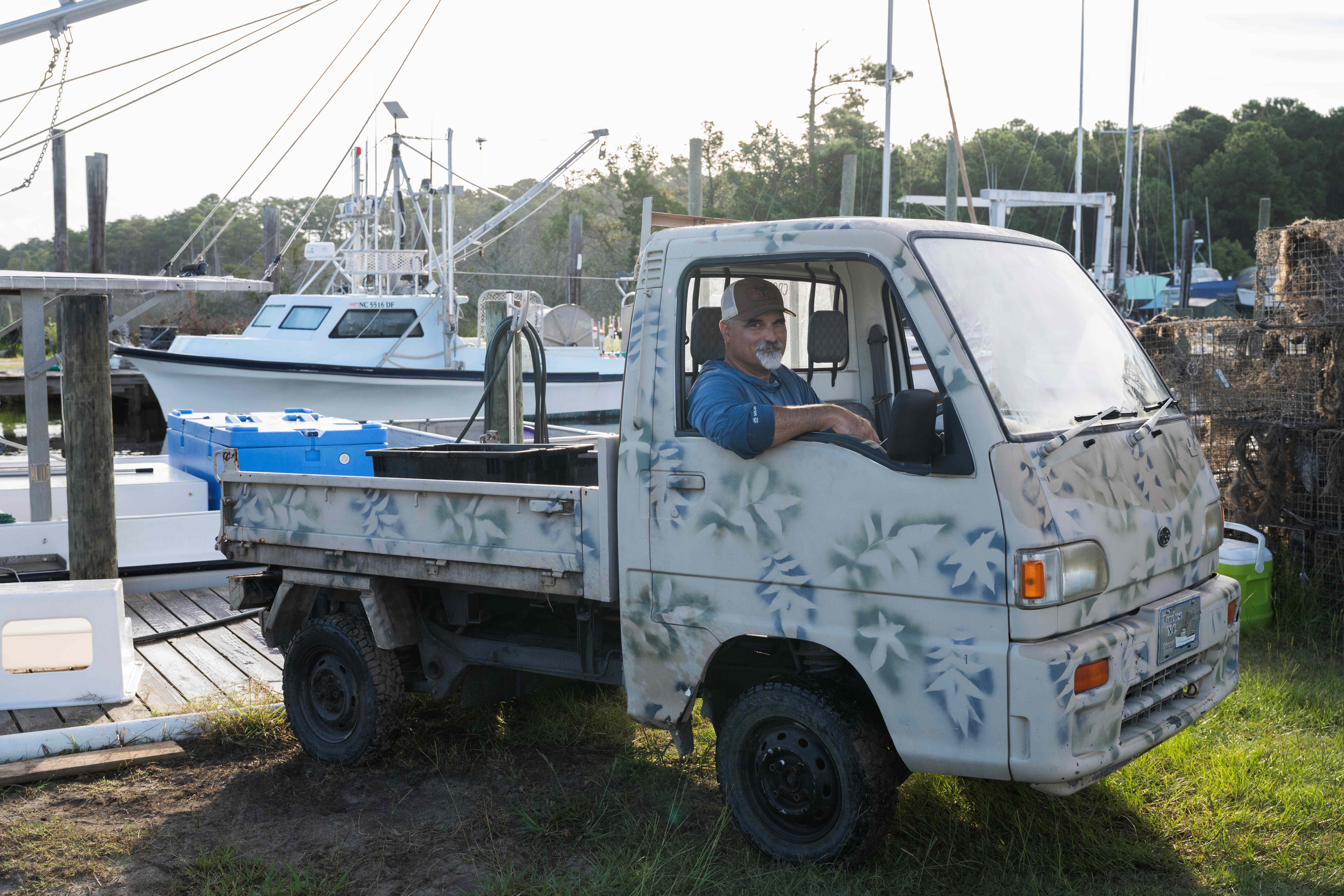
Midgette moves methodically to his third and fourth nets as the sun rises and the day heats up. The fish are not iced or gutted, but as he predicted, he is done and headed back up the canal by 7:30. He loads four boxes of menhaden and one of an assortment of food fish onto a Suzuki mini truck that looks like a big go-kart “I gave my truck to my daughter to use, and I use this to take my fish over to O’Neal’s,” he says, referring to O’Neal’s Sea Harvest, one of three packing houses in Wanchese. “I got it from a place called Mayberry Mini Trucks. They import them from Japan.” He’s laughing as he gets into the little truck on the right hand side and heads off to O’Neal’s, a couple of miles away.
At 56 years old, Gaither Midgette is keeping a family, as well as a North Carolina tradition, alive. The post-Civil War arrival of the pound nets in the sounds enabled small-scale fishermen to reap the benefits of the region’s fisheries, and Midgette is among those hanging on to a simple and profitable way of life. “I never took anybody out there with me that didn’t think it was the neatest thing they ever seen,” he says. “It’s like fishing in an aquarium; everything’s alive.”