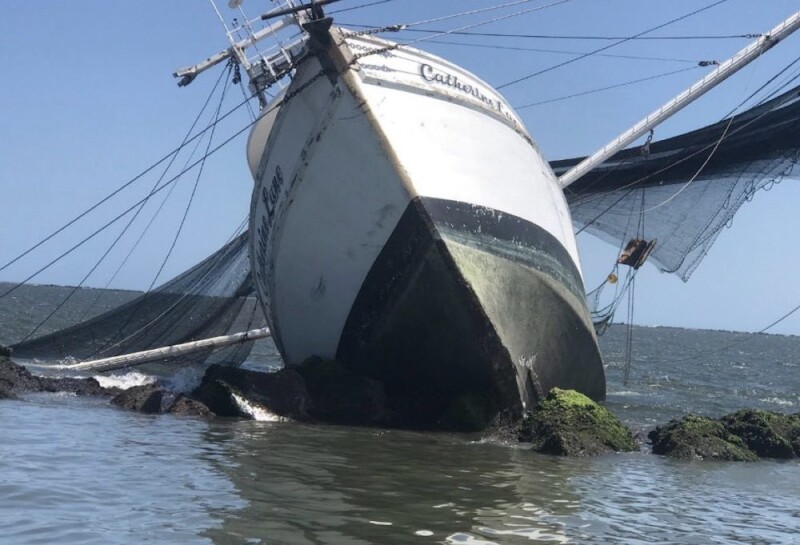
On the morning of June 9, 2021, the fishing vessel Sage Catherine Lane was making a routine transit when it ran aground on the north jetty at the St. Marys Entrance near Cumberland Island, Ga. Soon after, the vessel began taking on water. The three crew members abandoned ship and were rescued by a nearby vessel. The Sage Catherine Lane later sank, resulting in a total loss valued at $1 million.
Who was driving the boat when the incident occurred? It turns out autopilot was engaged.
The captain, an experienced fisherman with more than 30 years on the water, had set the autopilot so that he could make a quick trip to his bunk. The boat was supposed to maintain its heading out of the inlet to open water, but the autopilot failed.
“I turned around to get my socks and boots to put them on. I felt the boat turn hard to port. I looked up and we were heading straight for the jetty,” the captain told authorities following the incident.
The captain tried to reverse and steer away, but it was too little, too late. The Sage Catherine Lane struck the jetty and ran aground before his actions could take effect.
Autopilot is commonly used in marine operations, especially in open water where hazards are minimal. It reduces the monotony of steering by allowing the helmsman to leave the helm to perform other pilothouse tasks and observe from different navigational viewpoints.
“There are also disadvantages that have the potential to lead to negligent navigational practices,” according to a 2016 Coast Guard safety alert. "Overreliance on [autopilot] systems can allow an operator to get too engrossed in performing other work on the bridge and, in some extreme cases, can lead to watchstanders leaving the bridge for extended periods of time. This inattentiveness to the vessel’s navigation has led to marine casualties.”
Although issues are uncommon, National Transportation Safety Board (NTSB) reports on fishing vessel incidents suggest that autopilot use can lead to complacency.
In May 2024, the fishing vessel Papa Rod was transiting on autopilot when it struck an anchored bulk carrier in the Gulf of Mexico off the coast of Louisiana. The deckhand on watch was asleep at the helm.
In October 2022, the fishing vessel Tremont turned into the path of a containership while underway in the Atlantic Ocean off Virginia, resulting in a collision. The Tremont's mate had autopilot engaged and was not maintaining a proper lookout while troubleshooting the vessel’s gyrocompass.
In January 2016, the fishing vessel Day Island ran aground on Ventura Beach, Calif. The captain had fallen asleep while autopilot was steering the vessel.
And there are many more examples.
“Over the last 10 years, we have investigated a dozen accidents involving fishing industry vessels where we note the use of autopilot [as part of our determination of the probable cause and contributing factors for the accident],” an NTSB spokesperson told National Fisherman.
In the case of the Sage Catherine Lane, the captain felt comfortable leaving the helm unattended while the autopilot was engaged — a practice that, while not encouraged, does occur aboard fishing vessels.
“Had the captain stayed in the wheelhouse after engaging the autopilot, he would have been able to respond and take control of the vessel after the autopilot system failed and caused the rudder to turn to port,” the NTSB said in its Sage Catherine Lane incident report.
“Autopilot use does not relieve the operator of responsibility to conduct a proper navigation watch. Use of autopilot should not be a justification for an operator to leave the wheelhouse or bridge unattended in confined waters,” the report continued. “Navigating in channels and harbors requires quicker reaction times due to traffic, currents encountered, and frequent course changes, and more rudder due to slower speeds. Therefore, autopilot use is often discouraged or prohibited in a harbor entrance or narrow channel.”
“The NTSB has not issued any safety recommendations specifically addressing the overreliance on autopilot within the fishing industry,” the NTSB spokesperson said.