
When I was an economics major in the late 1960s, I was taught that tariffs, as well as non-tariff barriers, should be avoided as a burden on trade and a tax on the populace. However, because the world has not accepted that teaching and tariffs have become a major defensive tool for advancing the Trump administration's policy objectives, the conventional wisdom should be reconsidered.
Today, there are over 180 nation-states trying to be competitive on the world markets for goods and services, 35 percent of which are represented by the United States. Consequently, access to our markets is extremely important. U.S. tariffs provide critical, indispensable leverage against unfair foreign trade practices, including tariffs and nontariff barriers to our exports, and unfair penetration of our markets to the detriment of domestic production and jobs. Lessons can be drawn from trade experiences with two of America’s closest allies: Japan and Canada.
Japan, over the last 40 months, has devalued its currency against the U.S. dollar by 50%, from 105 to 155 yen to the dollar. This means that Japan has effectively established the equivalent of a 50% tariff on all international imports.
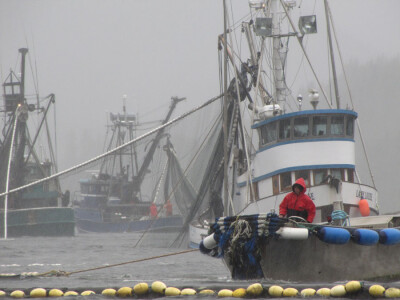
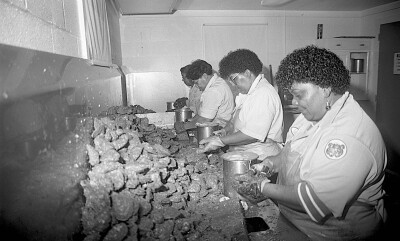
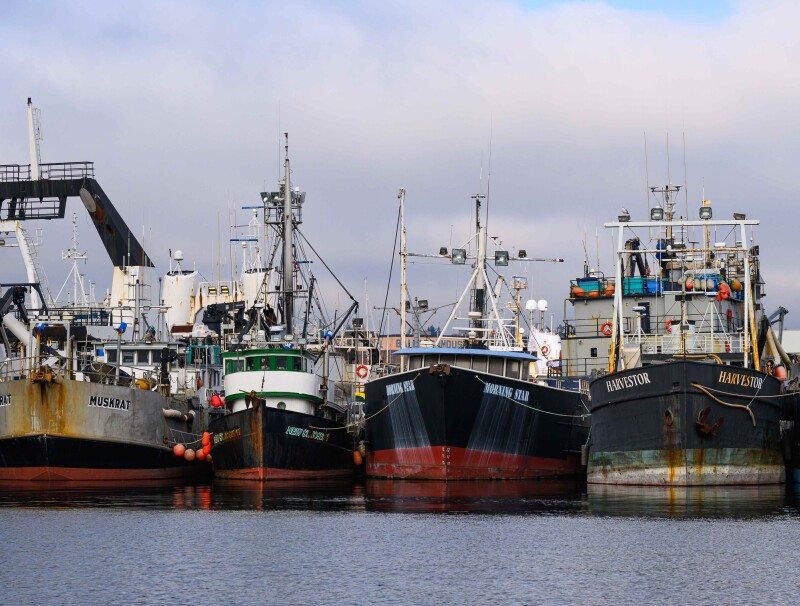
My decades of experience in the U.S. fishing industry lead me naturally to focus on seafood impacts of foreign trade practices, including Japan’s. That nation’s use of tariff and non-tariff barriers reaches way back and was a major factor in the Americanization of our fisheries, greatly propelled by the “Fish and Chips” policy and the American Fisheries Promotion Act. As the huge, predatory foreign fleets were supplanted by American fishermen and processors committed to sound conservation and management, and as foreign markets, were forced open to U.S. seafood exports, the benefits to the U.S. economy mounted to the billions of dollars. Japanese currency manipulation claims, among its most significant victims, the West Coast and Alaska fishing industries and their coastal communities, which have suffered badly. I doubt that Japan is losing sleep over that, but it should, and with the right doses of U.S. tariffs, it will.
Looking beyond the fisheries-related impacts, the Japanese action also means that for an exported Honda from Japan, the labor in that car is now 50% less costly in the international marketplace. So, a car built in Detroit has been challenged and damaged by competition, not through hard work, greater efficiency, higher quality, and better ideas, but through patently unfair currency manipulation.
In short, Japan’s answer to its economic problems is to beggar its trading partners, including its closest ally, upon which Japan’s sovereignty, territorial integrity, and independence depend, the United States. One might think Japan would consider that its actions weakening the U.S. are bad for Japanese security, but the short-term, domestic political consequences of Japanese economic difficulty clearly are deemed the more important consideration.
Japan’s currency manipulation must stop. U.S. tariffs can provide critically important, even indispensable leverage.
Then, there is Canada, which keeps its dollar at 30 to 40 percent less than the U.S. dollar through currency manipulation. This means that Pacific Northwest timber products face a Canadian labor cost effectively 30 to 40 percent lower than that of the U.S. counterpart. Wisconsin cheese has a similar problem. U.S. seafood is in the same boat. The very survival of Canada depends upon the security umbrella provided by the United States. And this is how Canada repays us. As we all know, those two nations are by no means the whole trade problem confronting the United States.
When the U.S. Supreme Court rules on the executive branch’s ability to use tariffs, these realities should be the deciding factors. After all, they go to the heart of executive powers provided by the U.S. Constitution and our national economy, which fuels our national security; both will suffer or thrive, depending on the court's ruling in this case.
About the Author
Robert "Bob" Alverson, manager of the Fishing Vessel Owners Association (FVOA), has been a cornerstone of the North Pacific fishing industry for more than five decades. Through his work with FVOA, he helped guide the industry through major regulatory and economic transformations, most notably the development and implementation of the halibut and sablefish (black cod) Individual Fishing Quota (IFQ) programs. Beyond his policy work, Alverson has managed complex insurance and business affairs that have strengthened the resilience of the fleet he represents. He is a 2025 National Fisherman Highliner award recipient.