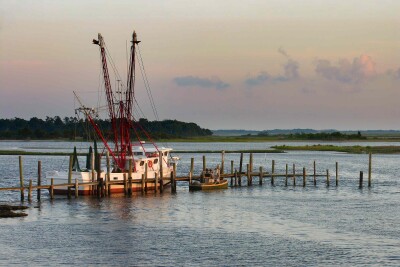


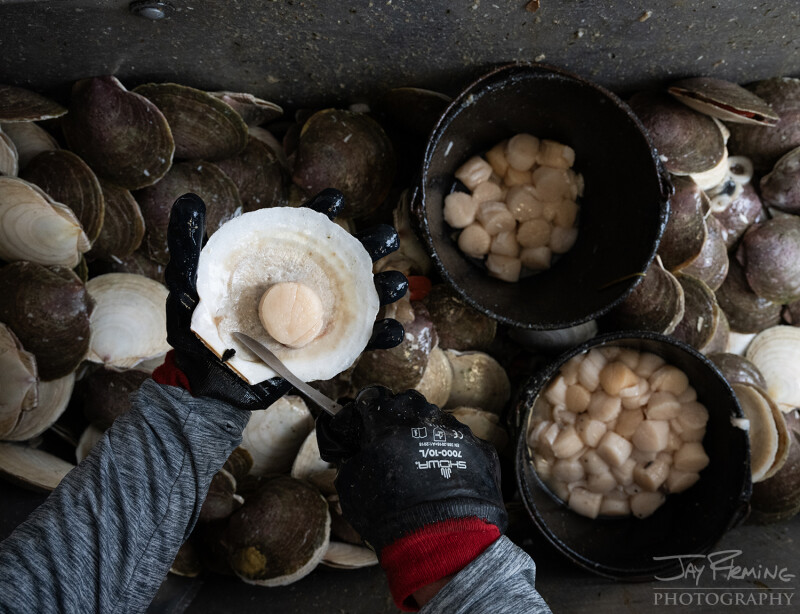
Scalloping is usually easy pickings when the Northern Gulf of Maine (NGOM) management area opens on April 1, and boats come from all over the northeast coast to harvest their 200-pound-a-day limit of big, clean scallops. But fisherman Brady Lybarger of Cape May, N.J., reports that catches are dropping off fast.
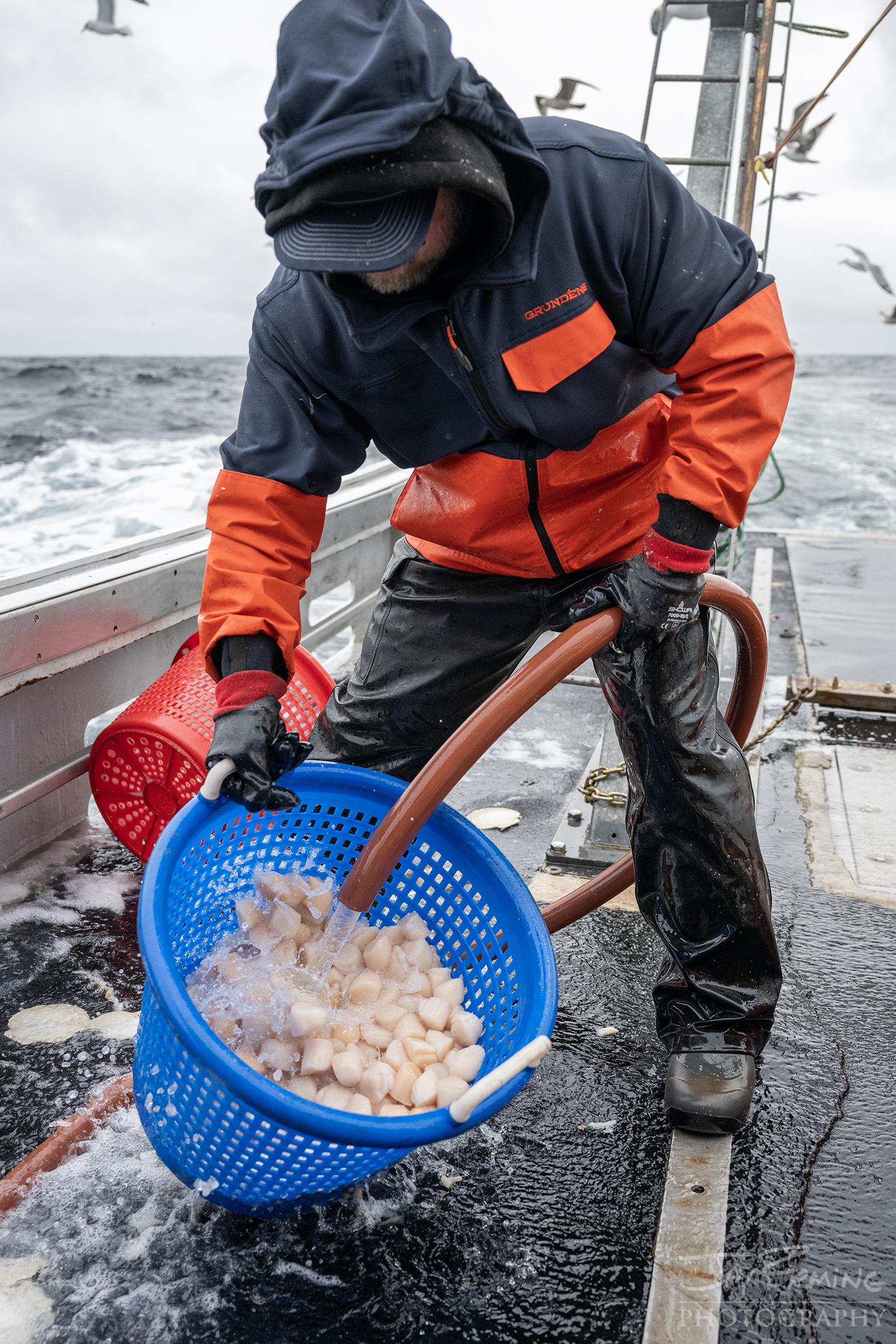
On the third day of the season, Lybarger had to make 6 tows to get his four buckets. “None of them more than 12 minutes,” he says. “We were in by 3 o’clock. But the scallops aren’t as thick as they were last year. On April 4, we made 9 tows, up to 25 minutes, and I heard some guys made 15.” But Lybarger notes the scallops are still good size and quality. “We’re getting U12s,” he says, referring to the scallops running less than 12 meats to the pound. “The price is down from last year, but it’s still $30 a pound. I’ll take that all day.”
Despite the drop in catch per unit of effort, Lybarger expects a short season. “Do the math,” he says. “One hundred eighty boats, 200 pounds a day, a roughly 400,000-pound quota. That’s 11 days. If we get anything over that, it’s a bonus.”
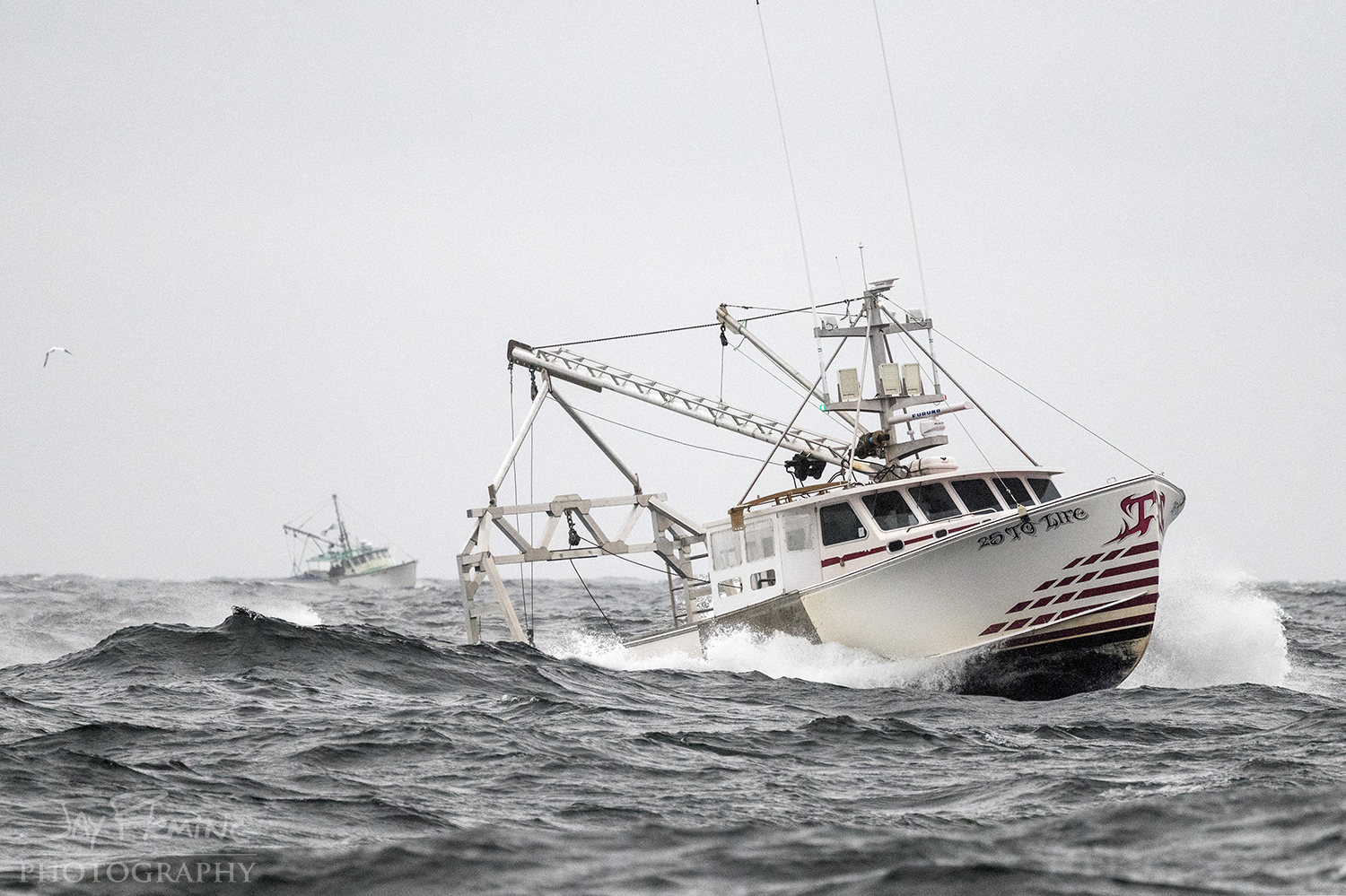
Lybarger and almost all of the 180 boats in the fishery are working out of Gloucester, Mass., the closest port to the NGOM management area. Some arrived the night before the April 1 opening, but Lybarger has been in town for three weeks.
“I bought a new boat there was a lot to do,” he says. “We had to build a 10-foot dredge, get the whip wire set up for emptying the dredge and lifting the dumping mat, and a whole list of little things.”
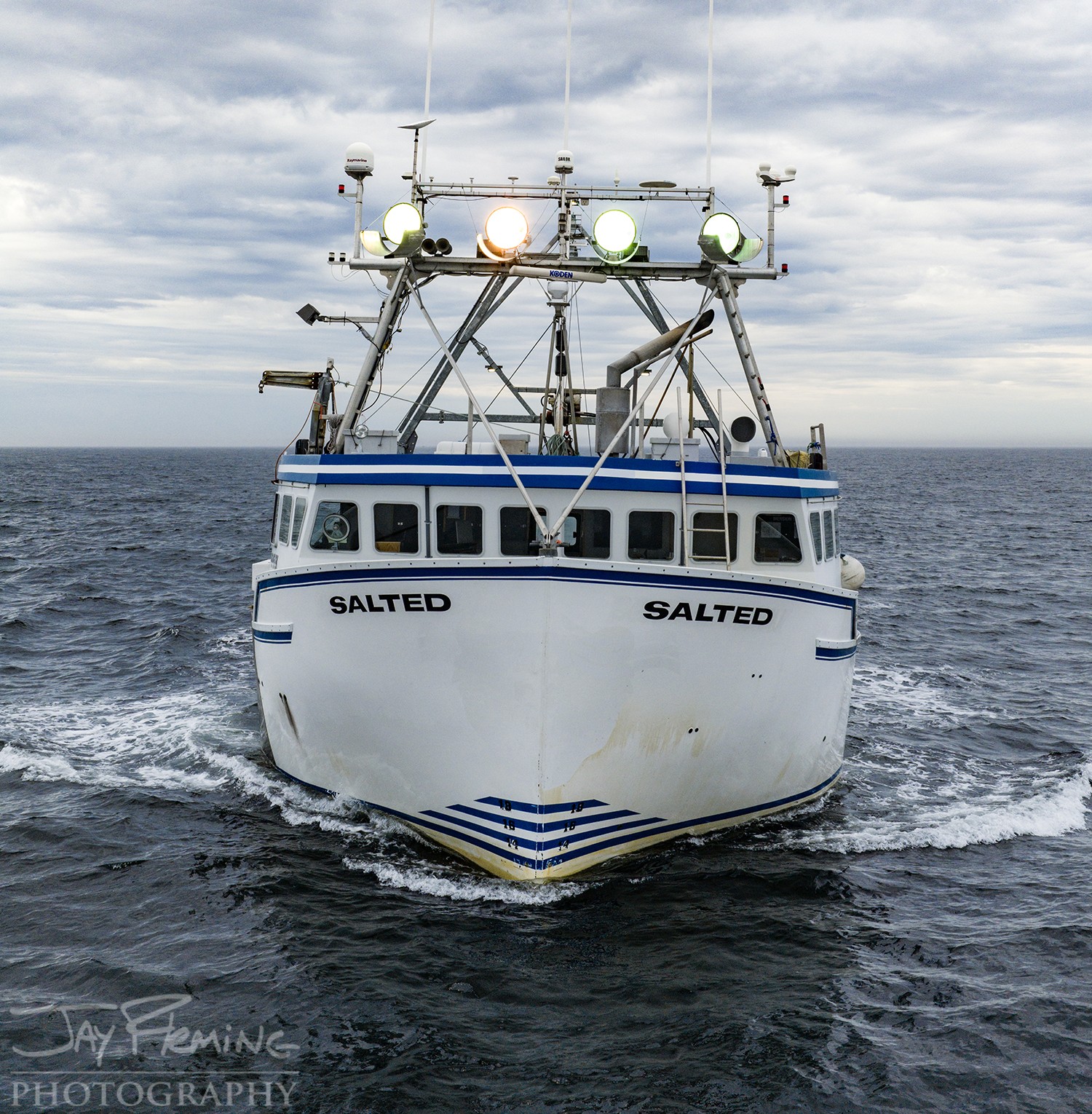
Although he has been scalloping for 27 years, 2026 is Lybarger’s second season fishing scallops in the NGOM area on Stellwagen Bank and his first year with his new boat, the Salted. “I was here last year with a 40-foot Wesmac, and it wasn’t doing it for me,” he says. “It was a good boat, but a little too small. I had to watch the weather. The Salted is a hog; it’s 50 feet, with a 30-foot beam, and a 7-foot draft. With this boat, I just go.”
Landing $6,000 worth of scallops for 11 days or more means Lyberger and most of the other NGOM fishermen will leave Gloucester having stocked around $66,000. “But if I want to make this new boat work, I have to keep it fishing,” he says. “After this, I’ll go gen cat [general category] scalloping, hopefully closer to Cape May. Then I’ll go fish rod and reel for tile fish, greenstick for tuna, and buoy gear for swordfish.” He also has permits for squid, sea bass, and scup.
To get the most out of the high-quality fish he catches, Lybarger and his wife, Amanda Axelson, own a seafood retail store, Scallop Shack Farms. “I catch the fish, and she runs the business. She handles everything to do with the boat and store,” says Lybarger. “We run a small shop and focus on getting top-quality American-caught seafood to our customers.” Feeding people is the name of the game, and the Lybarger/Axelson team is working hard to get it done, including traveling to Massachusetts for the NGOM scallop payday.
.jpeg.small.400x400.jpg)