

NOAA Fisheries has identified a growing number of offshore federal waters, from Southern California to Alaska, with potential to support aquaculture development
The multi-year process, rooted in science and public engagement, complies with demands in two executive orders issued by the White House to identify areas that may be suitable for developing multiple commercial aquaculture projects.
“When farmed sustainably and based on sound science, as it is in the United States, aquaculture is good for people, the economy, and the environment,” said Danielle Blacklock, director of NOAA’s Office of Aquaculture, on Sept. 19, as NOAA identified 13 AOAs in the Gulf of Mexico and off Southern California. “Aquaculture Opportunity Areas leverage NOAA’s cutting-edge science and marine planning to identify spaces where aquaculture can grow sustainably. It’s time to start putting more healthy U.S. farmed seafood on American dinner tables."
In Southern California NOAA identified eight locations in the Santa Barbara Channel and two in the Santa Monica Bay, ranging in size from 500 to 2,000 acres, for a total of 16,500 acres. The document analyzes the impacts of varieties of aquaculture and determines these areas may be suitable for seaweed, shellfish and finfish aquaculture.
In the Gulf, NOAA identified three locations off the coast of Texas, ranging in size from 500 to 2,000 acres, totally 4,500 acres. The final impact statement also determines that these areas may be suitable for NOAA's National Centers for coastal ocean Science, in partnership with NOAA Fisheries and the state of Alaska, is anticipated to publish its final report, An Aquaculture Opportunity Area Atlas for the Gulf of Alaska, in the coming months. The document is to identify areas with the highest potential to support multiple marine aquaculture operations and least amount of conflict with other ocean uses.
Eleven participants in the Alaska mapping project included active seaweed farmers, hatchery workers/operators, and others with extensive local knowledge of kelp farming and the area. Study regions included Southeast (Juneau, Sitka, Wrangell, Petersburg, Craig, and Ketchikan), Southcentral (Seward, Valdez, and Cordova), and Southwest (Kodiak).
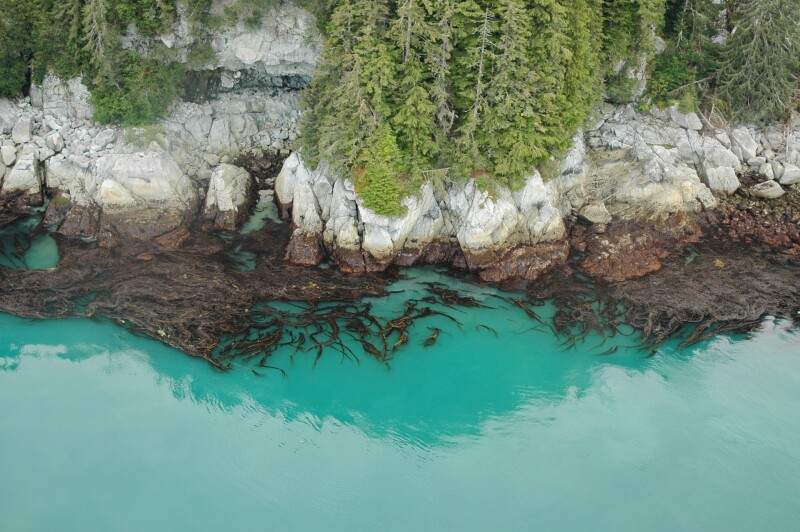
In general bull kelp, sugar kelp and ribbon kelp appear to be broadly distributed across all the AOA study regions, said Jennifer Angelo, with NOAA Fisheries in Juneau, Alaska. These are the primary species cultivated by the farmers who participated in the mapping effort and are also the three main species currently grown in Alaska. Other species mapped had a more sporadic distribution, including giant kelp, dragon kelp, three-ribbed kelp, sieve kelp and dulse.
This data does not represent all wild seaweed or kelp beds in Alaska and the mapping effort included a relatively small number of participants, Angelo said.
The Alaska project uses complementary datasets (NOAA Fisheries ShoreZone Bioband, Barnacle Foods Aerial Surveys and Alaska Department of Fish and Game Baseline Genetic Collections) to help fill in data gaps. Due to the inherent limitations of participatory mapping, the results are generalized and further site-specific analyses and data should be considered, she said.