


A previously unknown virus in farmed Pacific oysters may hold the key to mass die-offs of farmed Pacific oysters, a multimillion-dollar industry, researchers at the University of British Columbia (UBC) in Vancouver, Canada, say.
"We've recently seen annual mass die-offs in B.C. and elsewhere of Pacific oysters," said Kevin Zhong, a research associate in UBC's Department of Earth, Ocean and Atmospheric Sciences. "Often we don't know the cause."
According to a research paper published on Aug. 4 in Proceedings of the National Academy of Sciences, this discovery serves as a reminder that growers should exercise caution when moving young oysters internationally and domestically to prevent the potential spread of pathogens.
Pacific oysters are the primary shellfish species grown in B.C., with an estimated value of $16 million in 2023. While mass die-offs have been attributed to factors ranging from viruses and bacteria to warming water temperatures, in many cases there is no definitive cause.
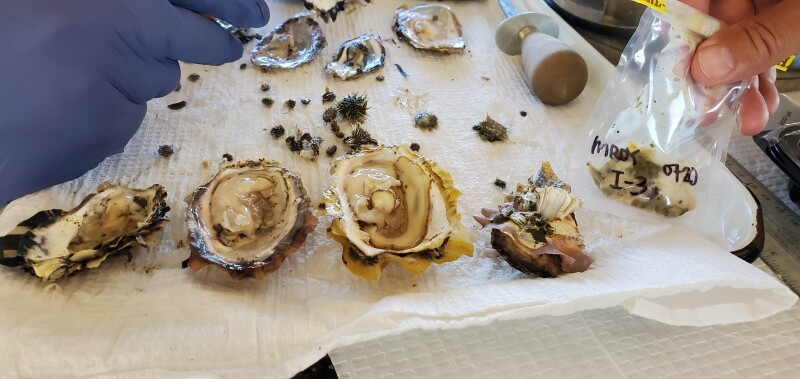
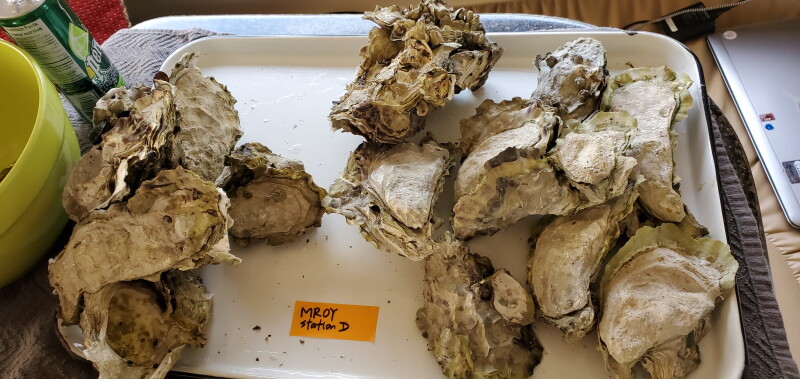
Researchers collected 33 oysters from two farms in B.C. during a mass die-off in 2020, along with 26 wild oysters from 10 nearby sites. Analysis of their RNA revealed the presence of a previously unknown virus, Pacific Oyster Nidovirus 1 (PONV1), in 20 of the dead and dying farmed oysters, but not in healthy wild oysters, suggesting a link between the virus and mortality.
"The discovery of a previously unknown RNA virus was not the original objective, but rather an unexpected and significant outcome of this comprehensive investigation," Zhong said. "Ultimately, the presence of this novel virus in diseased and dying oysters from farms, combined with its absence in healthy oysters from nearby naturalized beach areas, suggested a strong link between the virus and the observed oyster die-offs."
RNA, or ribonucleic acid, is a crucial molecule that acts as a messenger, carrying genetic information from DNA to the ribosomes, cellular structures responsible for protein synthesis.
"Interestingly, through analysis of publicly available genetic datasets from oysters around the world, we found that this virus is also present in Pacific oysters from various locations in China and France," Zhong said. "This suggests that the virus is geographically widespread. However, in these cases, its presence was not associated with any reported mass mortality events."
Nidoviruses like this one are found in a wide range of animals, including humans. The nidovirus SARS-CoV-2, for example, causes COVID-19.
"The virus itself appears to specifically infect Pacific oysters and not other species of oysters, and there is no evidence to suggest that this virus poses any risk to people or other animals who may consume these oysters," Zhong said.
The virus can be traced back to Pacific oyster samples from China included in a study published in 2012. "This suggests that the virus has been present in oyster populations for over a decade but remained undetected until now," he said.
"Whether changing climate conditions, such as warming ocean temperatures, are contributing to outbreaks involving this virus is an important and timely question," Zhong said. "While further research is needed to establish a direct link, environmental stressors like rising temperatures have been shown to influence disease dynamics in oysters, as seen in past disease outbreaks due to other microbial pathogens such as Vibrio spp. and Perkinsus marinus. It's possible that similar stressors could play a role in facilitating the emergence or impact of this virus, and this is an area that warrants further investigation."
"It's important to investigate mass die-offs in oysters to determine what causes disease," said senior author Curtis Suttle, a professor of Earth, Ocean and Atmospheric Sciences, Botany, Microbiology and Immunology, and the Institute for Oceans and Fisheries. "Similar to humans, disease and death are not caused by a single factor, but prevention is not possible until the causes are known."

The viruses are so different genetically from other nidoviruses that the research team has proposed a new family: Megameaviridae, or large RNA viruses. PONV1, which the team is proposing to name Megamavirus gigas, or large RNA virus giant, and its relatives appear to be specific to oysters, so humans are not at risk from contracting the virus, Suttle said.
B.C. oyster farmers, like growers elsewhere, often import oyster seed and juvenile oysters, or spat, from domestic and international hatcheries. "The discovery of the virus is a reminder that growers should use an abundance of caution when moving oyster spat internationally and nationally, as we still know very little about what causes disease in oysters," Suttle said. "New pathogens may be introduced when spat are imported. Ultimately, developing rapid tests for detecting potential pathogens is essential for safely importing oyster seed and identifying the cause of disease and mortality."
This research began in the summer of 2020 and is ongoing. "We hope to continue and expand this work if we secure funding," Zhong said. For this study, their primary collaborations were with researchers in Canada, including scientists from Fisheries and Oceans Canada, and industry partners including B.C.'s RKS Laboratories Ltd.