




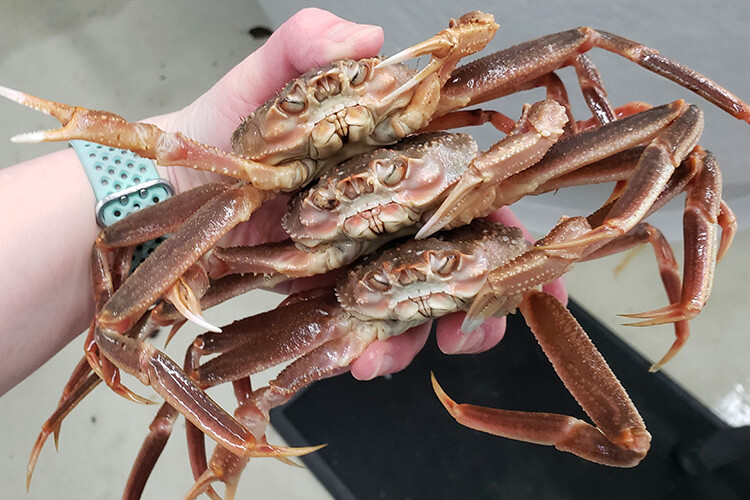
A new study from NOAA Fisheries offers fresh insight into the dramatic crash of the Bering Sea snow crab population during the 2018- 2019 marine heatwave and raises cautious hopes for possible recovery. Scientists measured the energy reserves of snow crabs, specifically fat stored in the hepatopancreas, the crustacean's organ similar to a liver/ pancreas, revealing that warmer waters and high population densities likely combined to trigger the collapse.
As NOAA explained, poor “energetic condition,” characterized by low energy reserves, increases the risk of starvation and mortality. The research team validated a practical “rapid energetic condition” metric based on hepatopancreas percent dry weight, showing a strong link between that measure and total fatty acid concentration.
According to NOAA scientist Erin Fedwa, the decline in snow crab abundance during the collapse was “associated with dramatic declines in the energetic condition of juveniles.” Fedewa added, “It’s always a concern when you see impacts to juveniles. They represent the future of the population and the fishery.”
Historically, snow crab thrived in the Bering Sea’s cold pool- bottom waters colder than 2 degrees Celsius. Surprisingly, the study found that even colder temperatures, below zero degrees, are necessary to support high energy reserves and strong survival. But during the heatwave, warmer bottom waters, coupled with high crab densities, created a “perfect storm.” Stressing energetic reserves and spurring widespread mortality.
As co-author of the study, Mike Litzow put it, the results “underscore the consequences associated with elevated temperatures and high population density and point towards the critical importance of cold-water habitat for snow crab recovery.”
The study reports that energetic conditions in the eastern Bering Sea snow crab rebounded quickly, as indicated by survey samples taken from 2021 to 2024. This rebound coincided with observed increases in recruitment and population abundance.
“Support for initial population recovery is very encouraging,” Fedewa said — but she cautioned that future recovery remains “critically dependent on conditions that promote high energetic reserves and survival of juvenile snow crab.” The stock remains vulnerable to another marine heatwave.
Going forward, NOAA will present energetic condition estimates to stakeholders and managers in its Snow Crab Ecosystem Socioeconomic profile, using the new rapid metric to guide future fishery decisions and help prevent a repeat collapse.
.png.small.400x400.png)
