




For decades, fishermen have been blamed for the depletion of ocean resources. While overfishing and the use of inappropriate gear have had demonstrable impacts on fisheries and ecosystems, scientists are looking deeper into the decline in ocean abundance. They find that microplastics and other pollutants are also affecting the health and reproductive capacities of many species.
The science on microplastics in the marine environment is growing and becoming more concerning with every new study. In 2019, researchers at the Monterey Bay Aquarium, often perceived by fishermen as hostile to commercial fisheries, found that fishing gear may not be the primary source of microplastics in the ocean. In their study of the deep ocean, they found that the sea floor and deep water organisms were full of microplastics, with PET (polyethylene terephthalate) being the most common.
“This suggests that most of the particles did not originate from local fishing gear,” wrote Kyle Van Houtan, former chief scientist at Monterey Bay Aquarium and one of the study’s co-authors.
As the Monterey aquarium continues to examine the sources, types, and pathways of microplastics in the marine environment, other organizations including the Mid-Atlantic Regional Council on the Ocean (MARCO) are building on that research to determine how microplastics in the marine food web are affecting fisheries.
Microplastics have long been recognized as endocrine disrupters that can impair reproduction in fish. At a June 2025 MARCO webinar, Meredith Seeley, an assistant professor at Virginia Institute of Marine Science, presented evidence that microplastic accumulation also made fish more susceptible to viral pathogens. Seeley noted that when fish were exposed to viruses and microplastics, particularly nylon, “it significantly increased their rate of mortality.”
Seely believes that microplastics on the gills and in the guts of fish can cause inflammation that breaks down the defensive barrier and allows pathogens to enter their bloodstreams. Although Seeley used farmed rainbow trout for her studies and focused on aquaculture, open net pen aquaculture is suspected of acting as a disease incubator that spreads disease to wild fish, which are difficult to study.
“I’ve been saying it for years,” says Kieran Kelly, owner of the microplastics recovery company, Ocean Integrity. “Probably at this stage, microplastics and nanoplastics are killing more plants and animals in our oceans than commercial fishing.”
According to one presenter in a series of recent National Academies webinars, plastic production has doubled since 2008 and is expected to triple by 2030. At the same time, one webinar in the series looked at mitigation strategies, which remain largely theoretical.
“It’s a matter of scale,” says Margaret Spring, chief conservation and science officer at the Monterey Bay Aquarium. “At the national and global scale, it has not been easy, but California is taking action, as is the EU. But with production increasing without limit, it will take high-level commitments to change the trajectory.”
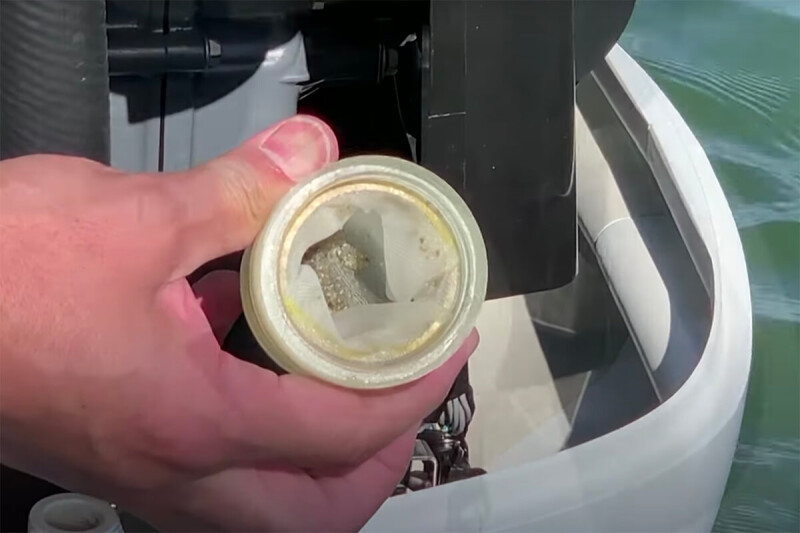
The commercial fishing industry, with net recycling programs, plastic recovery, and microplastic filters in some outboards, may be ahead of the curve. But as Spring notes, microplastics will continue to impact our oceans, and by consequence, fish, fisheries, and human health.
.png.small.400x400.png)

