

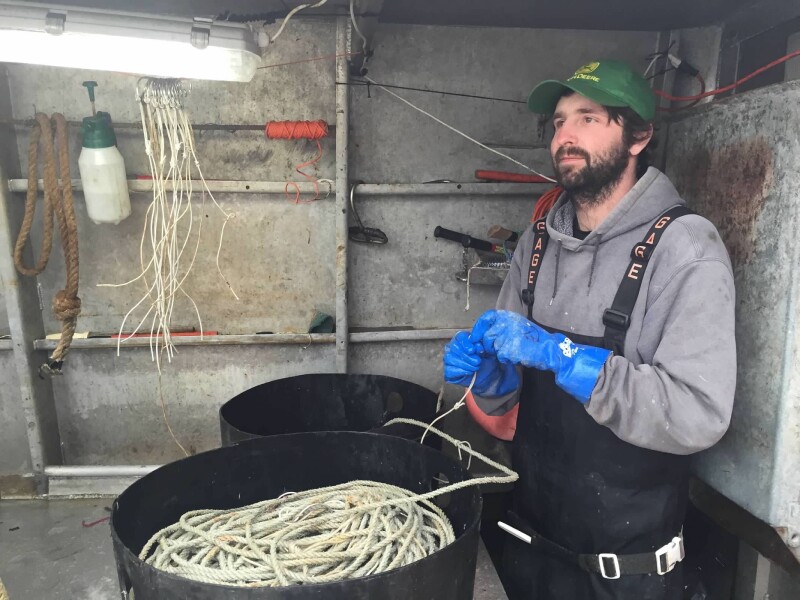
Sometimes less is more is the mantra embraced by Erik Velsko of Homer, Alaska, intent on building his reputation for the highest quality Pacific cod and other fish harvested from the ocean offshore of Alaska.
"I don't want to catch three to four million pounds of cod a year," said Velsko,
Velsko began fishing with his dad, John Velsko, as a child, and got hooked early on salmon seining. By age 17, he was crewing on an opilio crab boat in the Bering Sea.
After four years of studies at the California Maritime Academy and traveling to Iceland to see how they handled their Atlantic cod catch, he came home to raise the bar on wild Pacific cod. "When you're harvesting someone's food, it deserves your full respect," he said. "The market knows good quality fish. We are basically building the market from scratch right now. We are competing to start a new market."
When Velsko first got into cod fishing, harvesters in Alaska were getting 40 cents a pound. When he traveled to Iceland, he learned they were getting $1.67 a pound at the dock. Then their price went up to $1.70 a pound, he said.
Kaia Seafoods is now emulating the Icelandic model for processing cod: leaving the heads on, bleeding and gutting the cod onboard their fishing vessels, and putting them into 700-pound totes covered with slurry ice before they are delivered to processors on shore.
"We are getting three times the dock price," he said. "We are catching less fish, but we are providing premium-quality fish."
Kaia Seafoods' original market was a big e-commerce firm, but the company also sells to consumers who buy subscriptions from Kaia Seafoods and to a large cod distributor on the East Coast that sells its products all over the world. Every cod harvested by Kaia is bled and gutted by hand on deck, then placed in liquid ice to chill, protecting the texture of the fish and preventing bruises, allowing for fresh-quality fish up to sell halibut, sablefish, and salmon.
To Velsko's mind, there is always room for improvement. "You can't keep processing with this old school mentality," he said. "Those days are going away because there are other opportunities."
Beyond his own adventures in harvesting and processing, Velsko is looking at the future of commercial fisheries, including the markets and economics.
"The last several years should be a stark reminder for everyone that what we have been doing is not good enough and there's room for improvement," he said. "Alaskan fisheries are currently stuck in a bit of a rut, and if this industry is going to withstand the test of time, we need to be making positive progress forward all the time."
Vesko said he feels that innovation has become a bit stifled, with both fishermen and processors less willing to take risks because of operational costs and fear. Supporting forward thinkers involved in fisheries is a necessity to excite the next generation to get involved, he said. Alaska fishermen are some of the best harvesters in the world, but they need to refocus their energy on getting the most value for their fish rather than just catching the most fish, he said. "We don't want an industry that is just going through the motions to get the job done. We want an industry always striving for excellence. That is an industry that breeds innovation and change and brings new people who are excited and energized by the work," he said.
Traveling to Iceland, he observed the connection between all the entities that make commercial fisheries successful there. Scientists support the fishermen, processors support the communities, and the government helps facilitate and fund the infrastructure needed to compete globally, he said.
The result is a thriving seafood culture and economy where everyone is not just surviving but thriving.
Alaska is a much younger fishing community, so there is still time, and Velsko said he is hopeful Alaska will get there. His hope is for a system that can be relied upon to be sustainable, transparent, and stable. "We will either adapt or die in the flood of foreign seafood, both wild and farmed," he said.
While serving on the Advisory Panel of the North Pacific Fishery Management Council, Velsko said he found there's a fairly large gap in the reality of what happens on the fishing grounds and what happens in council meetings. Things can be so right in council meeting documents and then so wrong in reality, he said.
Velsko, like many other veteran commercial fishermen, is expressing increased concern over all the jobs to fill in commercial fisheries, as the older generation retires. He worries about where these people will come from. "Over time, the secretive nature of the industry and the massive consolidation (much created by regulation) translated into a whole generation of upcoming captains and owners who didn't have a basic understanding of the business side of the industry — me included," he said.
He referred to young harvesters who can catch a lot of fish, but struggle with the financial side of the business. "Commercial fishing is a difficult business aside from the capital-intensive nature of the operation, but if fishing entities are not run with expenses in mind, it is a race to the bottom," he said.
Velsko also worries about knowledge and traditions not being passed down to the next generation.
"Incoming captains, engineers, and crews need to be trained, but in order to do this, individuals in these positions need to be willing to step aside and assist the next generation into their future roles," he said. The lack of training and education in the industry currently results in a reduced pool of qualified captains and crew.
Velsko and his wife, Lacey, grew up in fishing families in Homer. Now their children are on board as crew when the summer fishing season begins. His daughter Britta has joined his crew for the Bristol Bay salmon fishery for the past five years, and this past summer, his son Leo joined the crew too. While the Velsko kids don't get to hang out with their friends all summer on vacation, they do come home with a paycheck when the season ends.
How Alaska's fishing communities position themselves over the next few decades will help determine what that industry will look like in the years to come, Velsko said. "As large processing interests continue to consolidate, independent fishermen need to maintain their place in Alaska's commercial fisheries," he said.
"Competition with farmed salmon and other species is not going away, so Alaska needs to be thinking ahead about where we are heading and how we will get there. We still have time, but we need to start now."
.png.small.400x400.png)