A Maine-based nonprofit and a commercial fishing cooperative have partnered to put a new high-voltage electric workboat into daily lobster co-op service.
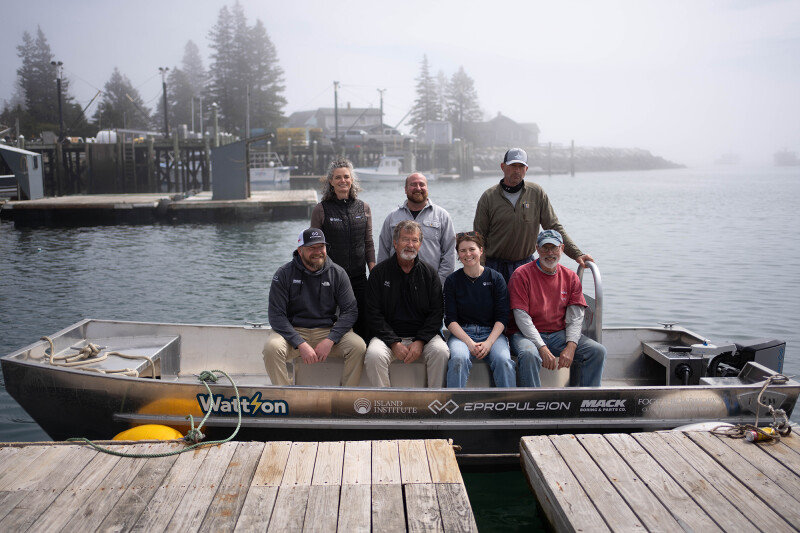
The vessel, named Wattson, is a 16-foot aluminum alloy skiff powered by ePropulsion's X-20 motor and a G230 23.5-kilowatt-hour battery. It launched recently through a partnership among Island Institute, Spruce Head Fisherman's Co-op, Fogg's Boatworks, and ePropulsion, distributed in North America by Mack Boring & Parts.
At the Spruce Head Co-op, Wattson handles the kinds of tasks typical of a harbor workboat — ferrying crew and gear to moored vessels and moving up to three tons of lobster to the dock for wholesale distribution. The boat operates mostly below 4.5 knots but can reach planing speeds of 11 knots. It can run for several days on a single charge under its current duty cycle and recharges overnight on standard 110-volt shore power.
The motor's high torque transfers efficiently to propulsive power with low energy consumption, according to ePropulsion.
Jarod Bray of the Spruce Head Co-op and the Maine Lobsterman's Association said the project represents a measured approach to integrating new technology into working fisheries. "Fishing is an important part of our communities, and managing it responsibly is key to keeping it sustainable long term," Bray said. "Taking small, gradual steps to incorporate new technology, where it fits, can help us better understand how these tools can work within our fishery and support livelihoods for generations to come."
Patrick Fogg, president of Fogg's Boatworks, said the skiff was purpose-built for the application. "Our skiff was designed to be a classic, simple, and versatile work platform, specifically engineered to integrate and perform well with the ePropulsion X-20 system and the commercial applications required by the Spruce Head Fishermen's Co-op," Fogg said. "We believe this package has a wide range of uses for co-ops like Spruce Head, boatyards, marinas, and many other commercial applications that demand durability, efficiency, and low-end power."
Lia Morris, senior community development officer at Island Institute, framed the launch in broader terms. "Launching Wattson marks a historic first — not just for Maine, but for commercial fishing operations around the world looking for a model that works on the water today," Morris said. "Our mission has always been to help coastal communities thrive, and that means meeting fishermen where they are."
Island Institute, a Rockland-based community development nonprofit founded in 1983, has supported the electrification of more than 20 vessels over the past five years. The organization's electric boat initiative is funded by Builders Vision, the Maine Technology Institute, the State of Maine, and corporate sponsors. Beyond launching demonstration boats, the Institute is also working to expand shoreside charging infrastructure across Maine's coast.