




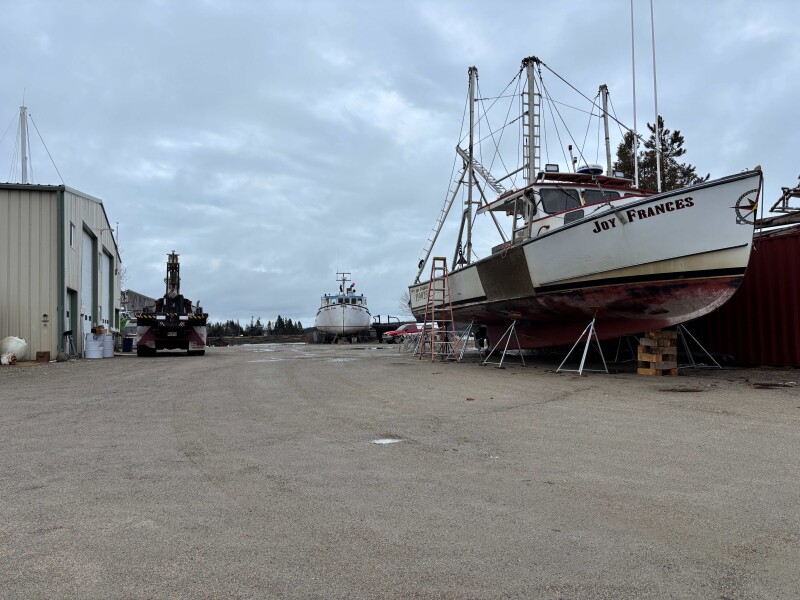
Jonesport Shipyard sits by the water’s edge on the eastern end of one of the most fisheries dependent communities in Maine. The yard, founded in 1958 by Bert Frost, has been providing space for fishermen to store and work on their boats for decades, offering help where needed and stocking a limited selection of fasteners and parts. Sune and Patricia “Twig” Noreen bought the yard in 1985 and ran it with a focus on wooden boats and yachts while continuing to serve the fishing community.
“It was on the market for the last twenty years,” says the yard’s relatively new owner, Jon Johansen. “We started to worry about what would happen to it. Look at this view, we worried about condos. But if you looked at the books, it didn’t make any sense to buy it. It was really a mom and pop operation.”
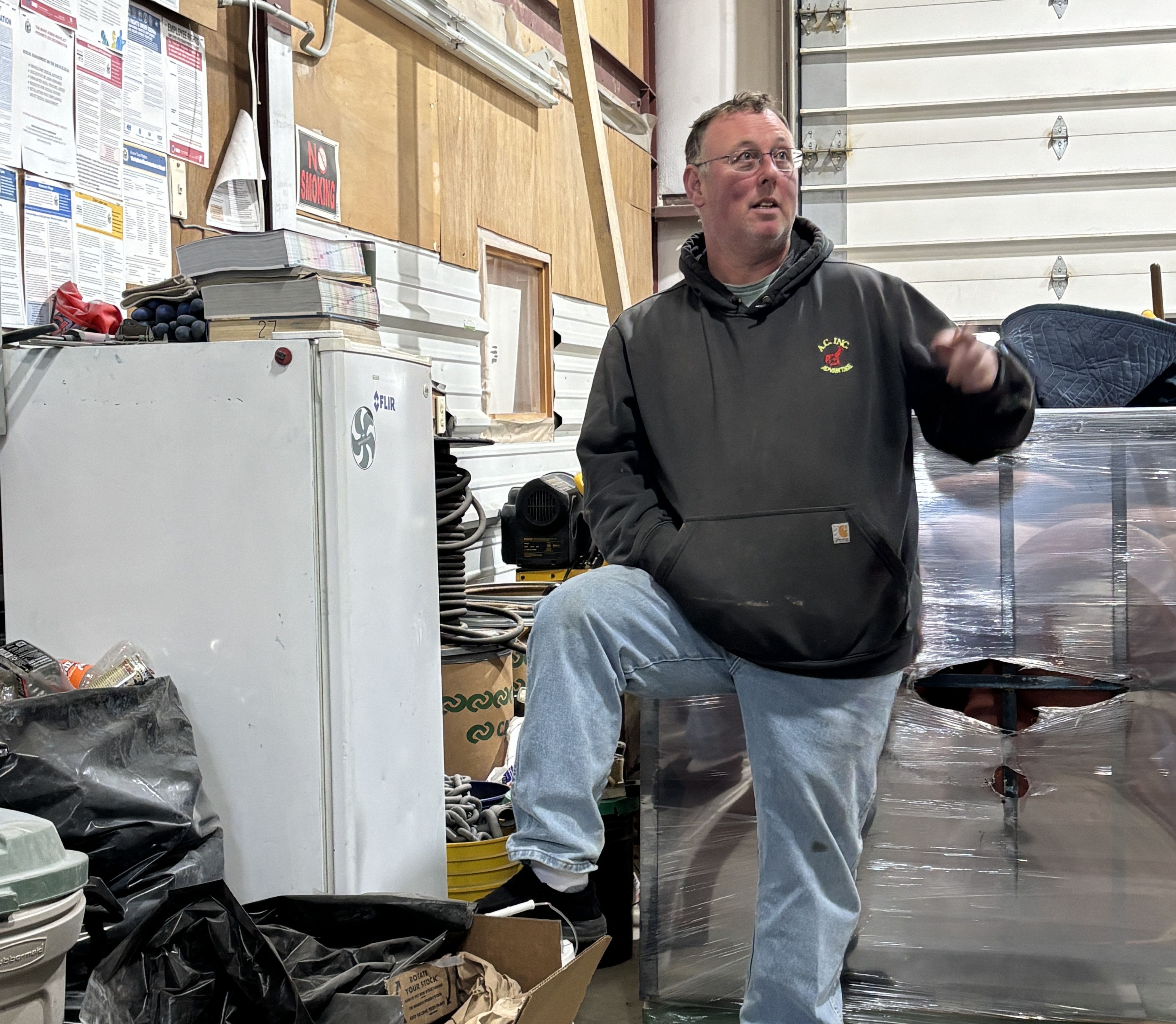
But Johansen and his yard manager, Alonzo Alley, had a vision. Late in 2023, Johansen bought the yard and began the process of turning it into a profitable enterprise geared toward meeting the needs of the town’s fishermen. “We want to serve the fishing community,” says Johansen, who was president of the Maine Lobster Boat Races for years and remains deeply connected to the industry. In late March, Johansen and Alley are busy getting boats ready for the Northern Gulf of Maine scallop season in April. “We just put a new Phaser genset on that one,” says Johansen. “That was tricky. We had to go in from behind the wheelhouse and down into the engine room from the front.” To get that job done, Alley and the yard’s crew used a JCB telehandler l with a 50-foot extending arm to lift the 400-pound generator onto the boat. “That was one of the first things we bought,” Johansen says of the telehandler. “That’s the first thing Alonzo asked for. We use it for everything.”
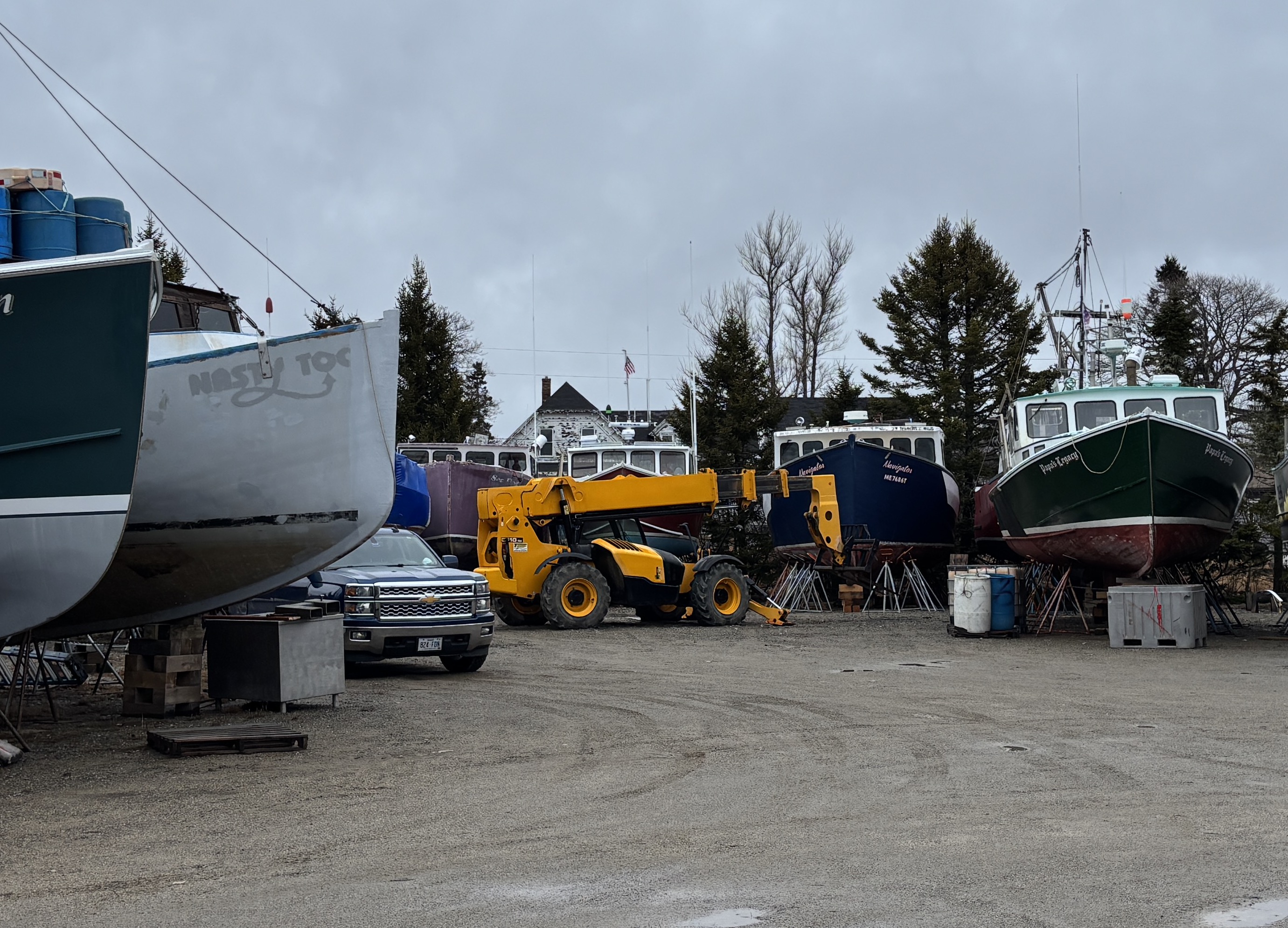
As Johansen explains, these early years involve getting the yard services geared up to meet the demands of the local fleet, mostly lobster boats and small scallopers. That includes expanding storage space for boats hauled out for the winter.
“There was a big yard between the house next to the shop and an old storage building,” says Alley. “I said to Jon, you can have a lawn or boats there. They both produce green. What kind do you want?” They tore up the grass, and the space now holds close to a dozen boats.
“We also bought the land next to here, so we have room for more boats,” says Johansen. “The only problem is we have to take them out on the road and under the wires, so we use it for the smaller boats.”
“Later on, we’re going to build our own road right from here over to there, so we don’t have to deal with the wires,” says Alley.
Johansen faces another obstacle in his expansion plans. The property includes the original 1958 shop, now condemned, and Johansen wants to replace it with a building tall enough to fit a scallop boat with all its rigging. But a town ordinance limits how tall he can build that close to the water. “The rule is there to stop people from building big condos,” he says. “But we’re talking about a working waterfront and serving the fishing fleet, so we might get permission.”
Whichever way he goes, Johansen knows he needs more
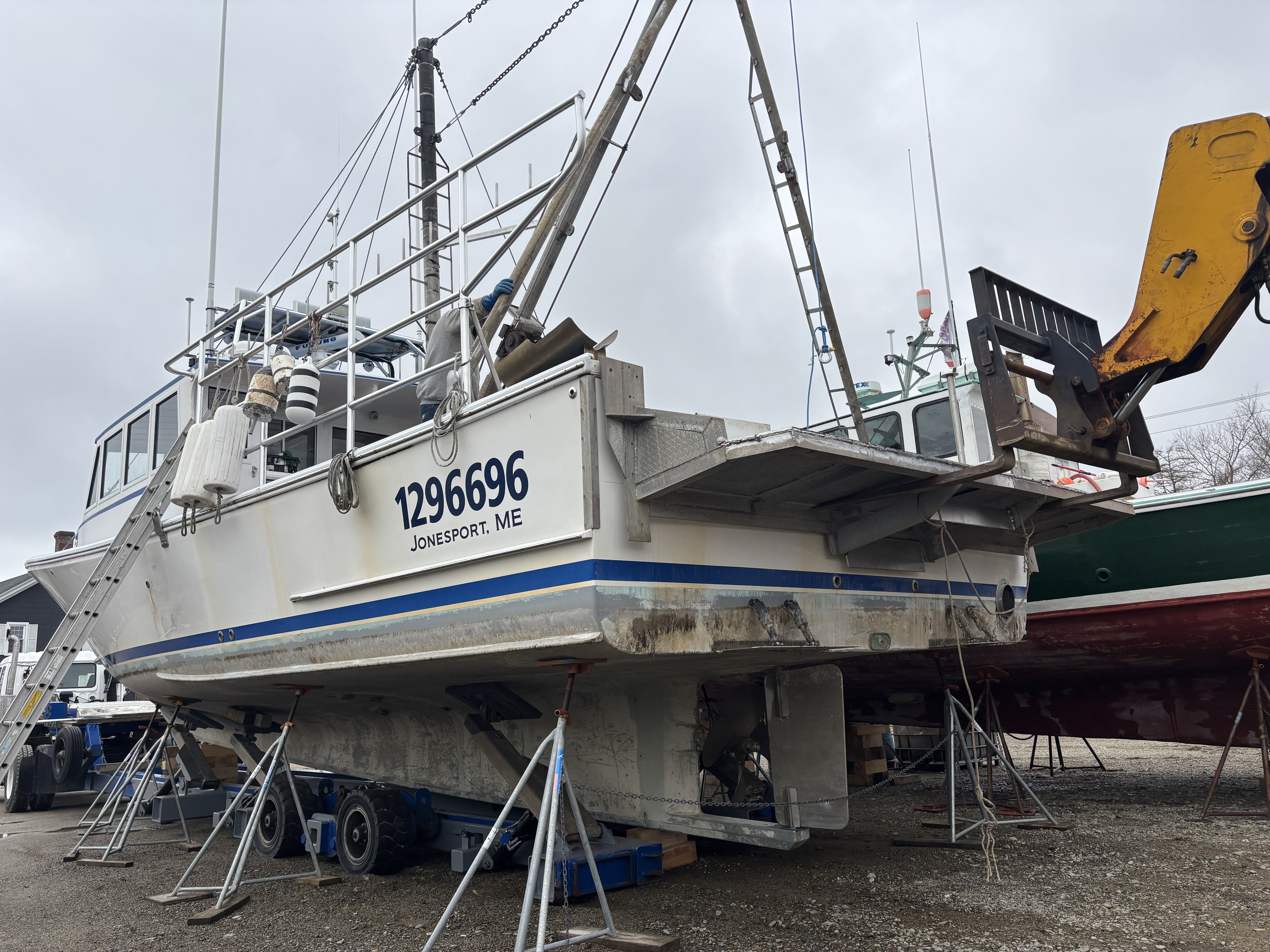
space. “We cut the stern out of that boat alongside the building yesterday and had to gelcoat it, and I’m not too happy with it. It’s still too cold out there for it to go off right, but he’s happy with it. He’s one of the ones we’re getting in the water to go down to Gloucester.”
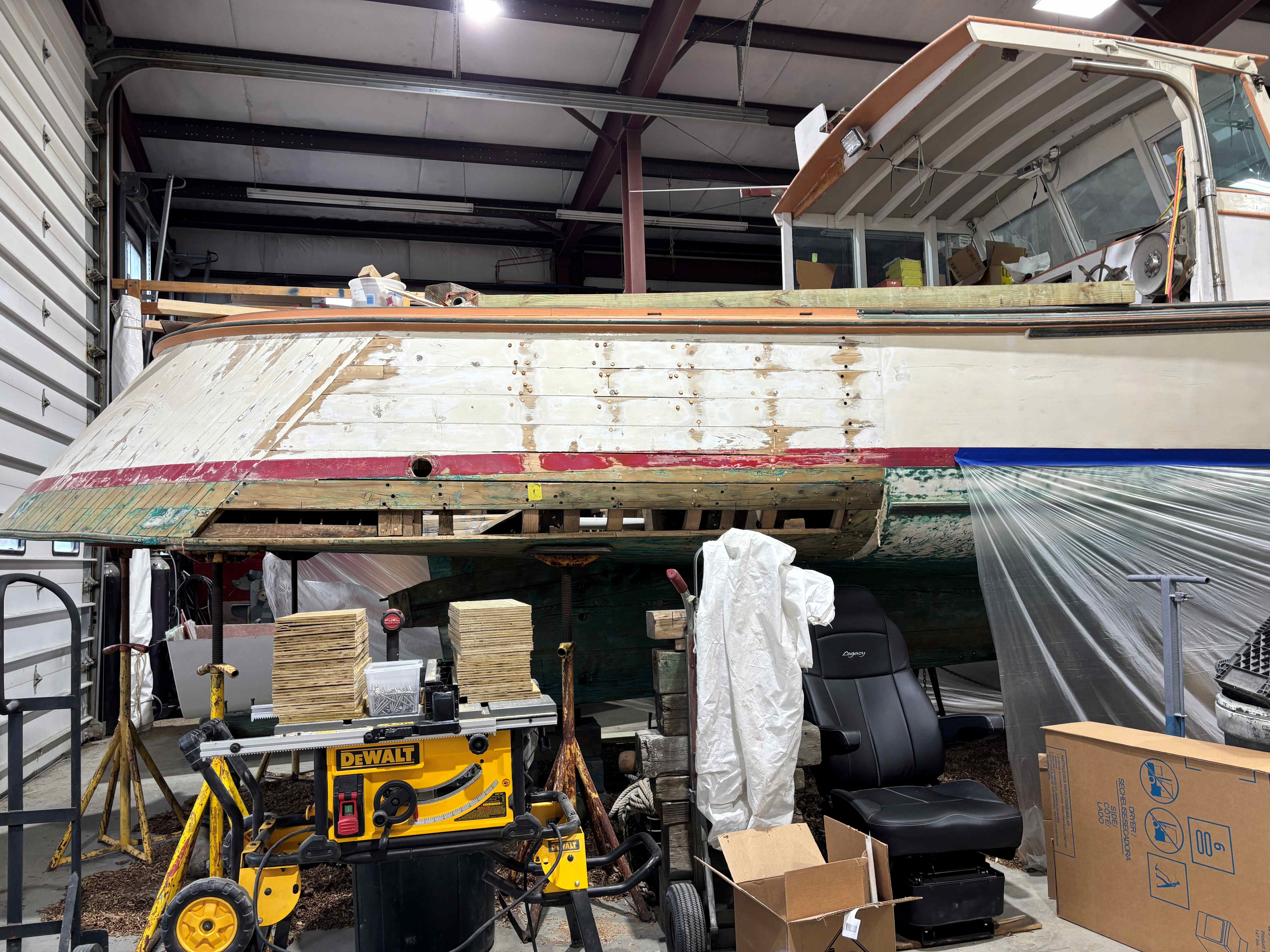
The current shop has room for two or three boats, and right now it holds a fiberglass sailboat and a classic torpedo stern wooden lobster boat. “They mostly built them in the 1930s,” says Johansen. “But this one was built in 1992.” Johansen notes that the torpedo stern requires some complex bevels that make it particularly challenging to repair. So he has a local wooden boat builder, Richard Stanley, come in and work on it. “He comes in when he can,” he says.
Among the modifications Johansen has made to the shop is a new catwalk around the perimeter. “That’ll make it easier to get on the boats,” he says. “Less time wasted going up and down ladders.”
Jonesport Shipyard is geared for repairing and working on wood and fiberglass hulls. “We don’t do steel,” says Johansen. “We’re not set up for welding, and most of the steel boats are too big for our shop.”
But Johansen and Alley are expanding the services they offer to the mostly fiberglass boats of Jonesport. “We have set up to do hydraulics,” says Johansen. “We can make up the hoses right here. And we’ve expanded the store to include a lot of what these guys are looking for in terms of fasteners, parts for their haulers, blocks, shackles, fittings, and much more. It’s a big investment, but you have to have what they need, or they’ll go somewhere else.”
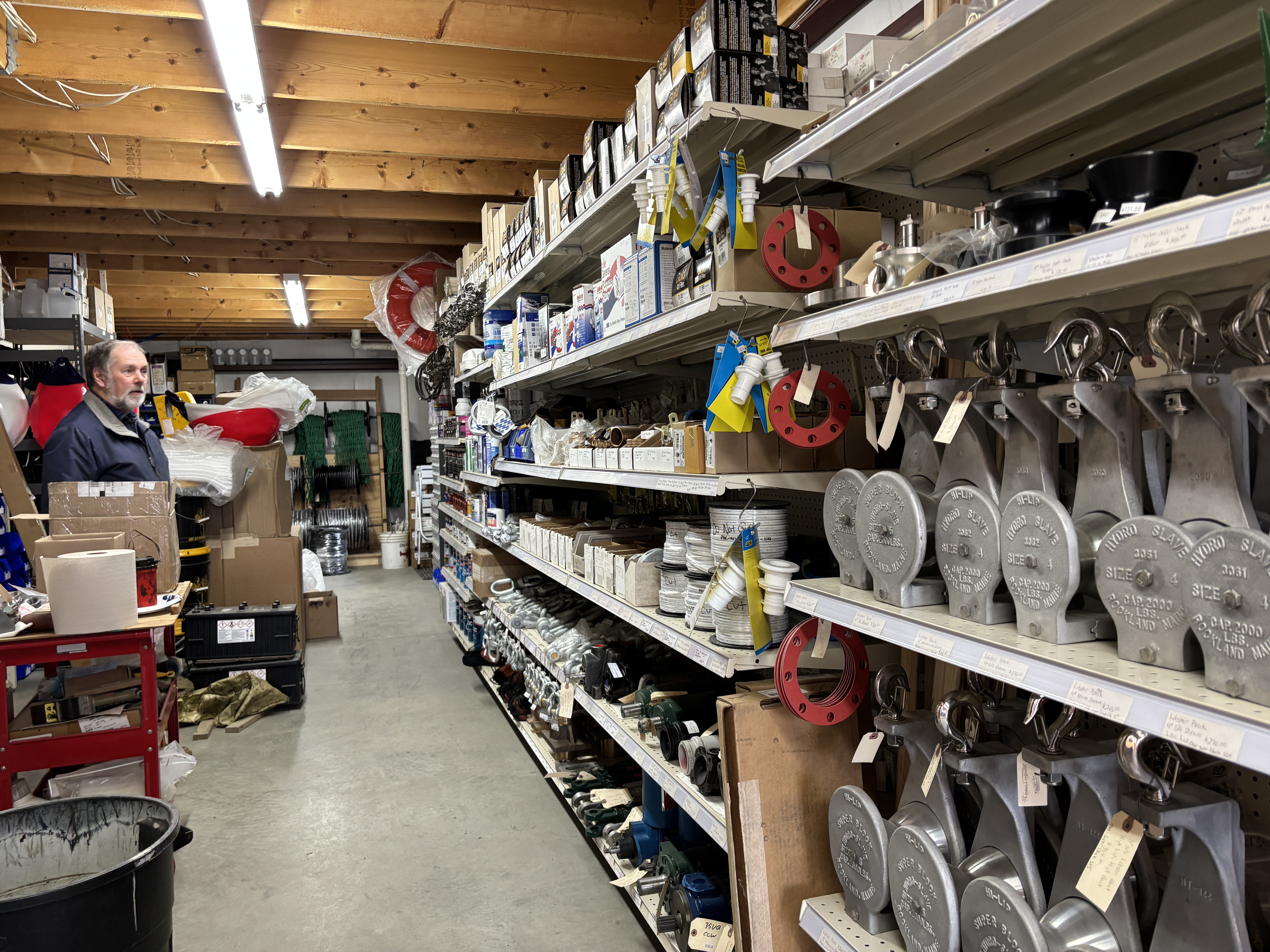
Johansen adds that he would like to start stocking a line of marine electronics like radars, sounders, plotters, and sonars, as well as TimeZero. “The thing is, you invest in that stuff and six months later they’ve upgraded it. Still, I’d like to get that in here if we can.”
According to Alley, the yard contracts out engine work, but he would like to see the boats start to use more refrigeration. “I put a refrigeration system in a boat out on the West Coast; they need them for their crabs,” he says. “Some guys have tried them here and it improves the quality of the lobsters. You get a lot less shrinkage.” But he notes that unless the refrigeration is maintained all through the cold chain, the effort to chill lobsters on the boat is wasted.
Johansen is a busy man; besides Jonesport Shipyard and his lobster boat race work, he publishes Maine Coast News, owns a boat shop in Belfast, is president of the board at the Penobscot Marine Museum in Searsport, Maine, and has a couple of other gigs. “I get six or seven hours of sleep a night,” he says. With Alley running the day-to-day, Jonesport Shipyard is gradually getting out of the red, but as soon as he turns the corner, Johansen will be plowing profits right back into the business and the community. “We want to build up our customer base here,” he says. “And then we hope to attract boats from other ports along this part of the coast.”

.jpg.small.400x400.jpg)
