
Fishermen and chefs hope to feed people and eradicate invasive blue catfish at the same time.
Blue catfish have become a manmade disaster in Maryland, Virginia, and North Carolina. They're an invasive species spreading throughout the region and eating whatever they can find. On the upside, they're good eating, and some commercial fishermen and anglers are doing well catching them.
The problem began, as many do, with good intentions. In 1974, striped bass stocks were declining, and the state sought to provide a new species for anglers to catch. Chester F. Phelps, then executive director of the Virginia Department of Game and Inland Fisheries, oversaw the introduction of 300,000 blue catfish into the James River. More stocking followed, and in 1985, Virginia stocked blue catfish in the York River. Blue catfish, native to the Mississippi River watershed, seemed like a good fit for Virginia rivers.
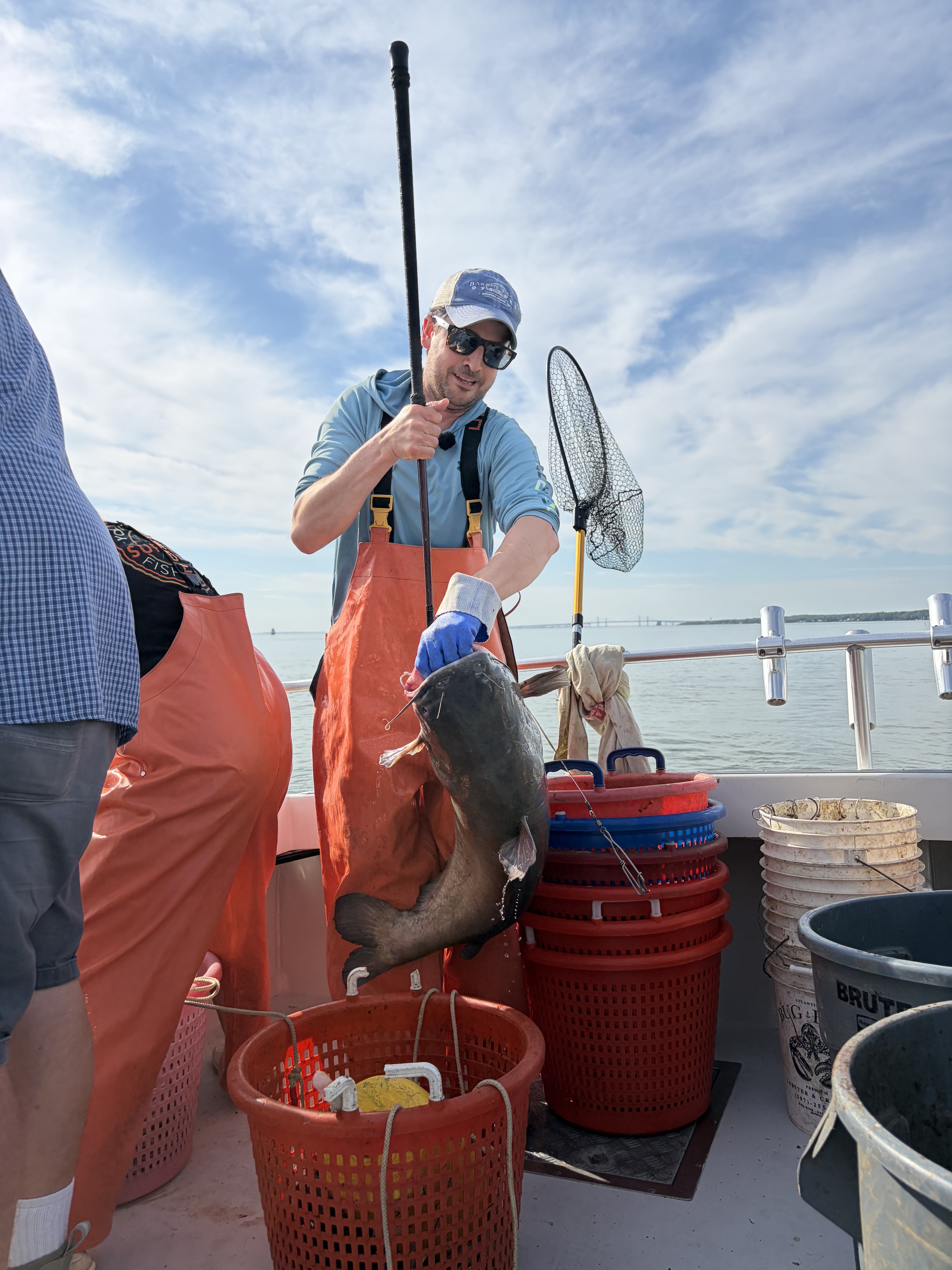
Photographer Jay Fleming of Annapolis, Md., has been documenting the spread of the blue catfish and working to raise awareness of the damage the invasive fish are inflicting on other stocks. "They've gotten up into Maryland and down to North Carolina, and they eat everything," says Fleming. "Crabs, oysters, mussels, clams. I opened up the bellies of some, and they are full of fish and shellfish."
"Jay went fishing with me ten years ago, and we never saw a blue catfish; he went with me last year, and that's all we saw," says Mike Malczewski, who fishes out of Tuckahoe Creek in Maryland. "I've been fishing catfish for 30 years. I first saw blue catfish about eight years ago, up near the boat ramp at Two John's Landing on the Choptank River. I pulled a pot, and it had about 200 to 300 pounds of blue catfish, all the same size, about 8 inches long, and every pot near that landing was the same."
Malczewski is fairly certain somebody dumped those fish into the river, but he can't get confirmation. "I talked to the state, and they say they know nothing about it."
Malczewski started out working for another waterman, fishing pound nets. "We'd start fishing about 2:00 in the morning and be done by 7:00. I needed something else to do part-time, so I bought some pots and started fishing catfish. Pretty soon it was all I did, and I'm still doing it," says the 55-year-old Malczewski, noting that his son Cody also fishes for blue catfish. "Not full-time. He longlines for them. I only fish pots."
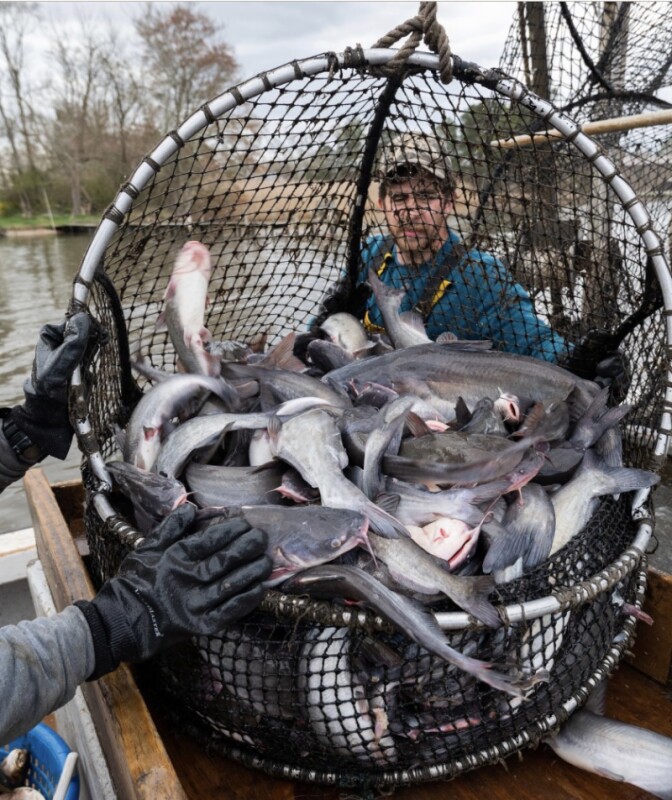
Malczewski builds his own pots, which are similar to fyke nets. "The hoops are fiberglass, about three and a half feet to four feet in diameter. They can be as small as two feet, and as I get older, I've been making mine smaller."
Malczewski sews 3½-inch nylon mesh to the hoops, with a single funnel leading to something like a codend in the back of the pot where the fish accumulate. "I put about eight or ten pots on a 1200-foot line. I haul about 25 pots a day," he says.
He fishes 100 to 150 pots depending on the season, and baits with gizzard shad or menhaden he buys from local pound netters. Malczewski uses the same type of bait bags Maine lobstermen use. "Yessir. I get them from Hamilton Marine, too."
While Fleming is sounding the alarm about millions of blue catfish, Malczewski notes that they are not always easy to catch. "I went out this morning and didn't get anything. It's the full moon and the crabs are shedding, so there's soft crabs and peelers crawling everywhere. Hard to get them into the pot when there's better food all over the bottom."
Malczewski wonders whether there are as many blues as Fleming and state biologists believe. "They would have you think you can throw a pot anywhere and catch, but blues are funny," he says. "One day you have nothing, and then another day you get'm. When you find them, you try and stay on the school. They can be anywhere. Channel and white catfish stay up in the rivers, but blues I've seen in salty salty water, where crab pots are."
Malczewski began fishing for blue catfish from a 35-foot plywood boat built by John Kinnamon on Tilghman Island. "That one has a 225-horsepower John Deere inboard. But the blues move around so much, I had to get a faster boat. I bought a 27-foot skiff built by Ronnie Carman over at Snow Hill. I have a 325 Suzuki on that one."
Each boat has a 500-gallon live tank amidships that can hold a ton of catfish on a good day. "I keep my fish alive," says Malczewski. "In the summertime when it's hot, I keep pumping the air and water to them, then I drain the tank when I get to the dock. It's about a 20-minute drive to where I sell. It works better than dealing with ice and all that mess."
When he was fishing channel cats, Malczewski's main market was pay-ponds in Georgia and elsewhere. "I shipped them live to those places where people pay to catch them. But the blues I mostly sell to the market."
One of Malczewski's regular buyers is Nick Hargrove, owner and president of Tilghman Island Seafood in Tilghman, Maryland. "We bought 4 million pounds of blue catfish last year," says Hargrove. "I buy about 20,000 pounds a day, some guys bring them here, and we send trucks out to get them. I send trucks all the way down to North Carolina."
According to Hargrove, the market is strong. "Catfish is one of the top five most recognizable fish in the world," he says. "Not so much up north, but when you come down south, it's on all the menus. It's a great low-priced protein."
Hargrove pays fishermen between 60 and 80 cents a pound for blue catfish, and he has six to eight cutters filleting fish at about one every 20 seconds. "The yield is about 25 to 27 percent," says Hargrove. "Then we sell the carcasses to a fishmeal plant for aquaculture feed. Some lobstermen up north tried them for bait, but they didn't fish too well."
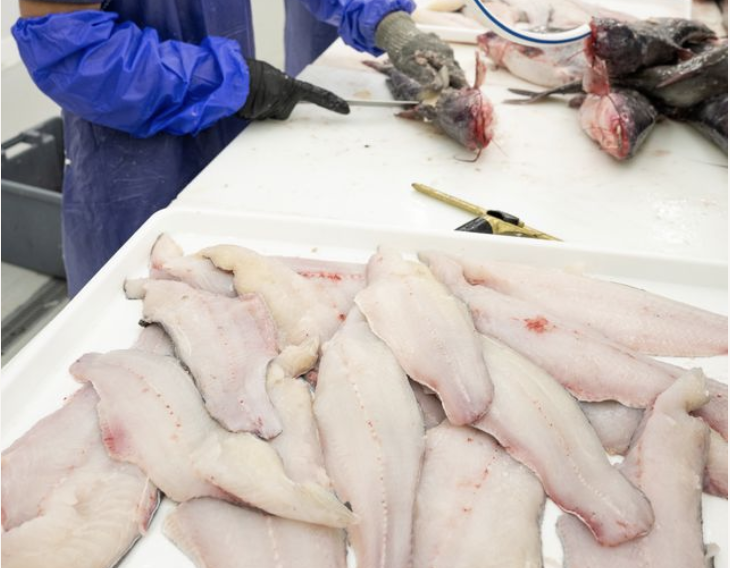
At present, the Tilghman Island Seafood plant is only around 3,000 square feet, but Hargrove notes that a combined government and private effort will soon enable the facility to expand to 30,000 square feet. "We're growing," he says. "The state and USDA are offering some matching funds. We're looking to automate where we can. We're talking to Amazon Robotics. The trouble with getting a filleting machine for these fish is the size variation, they can be everything from 50 pounds to a pound. And they cut differently than most fish. They are more horizontal than vertical. But it we can get something to handle the small fish, that'll help. The small ones take time and slow down the processing."
Besides restaurants, Hargrove sells to supermarkets, food service companies, and any other markets he can find. "My partner Norman McCowan handles that. He's in charge of sales and promotion."
To help expand the market and raise awareness, Jay Fleming helped organize the second annual catfish cook-off. He invited ten local chefs — including one from a Michelin-starred restaurant and a James Beard Award winner — to compete on Saturday, May 16, in Annapolis. "JJ McDonald, a seafood buyer in Jessup, Maryland, donates all the fish," said Fleming.
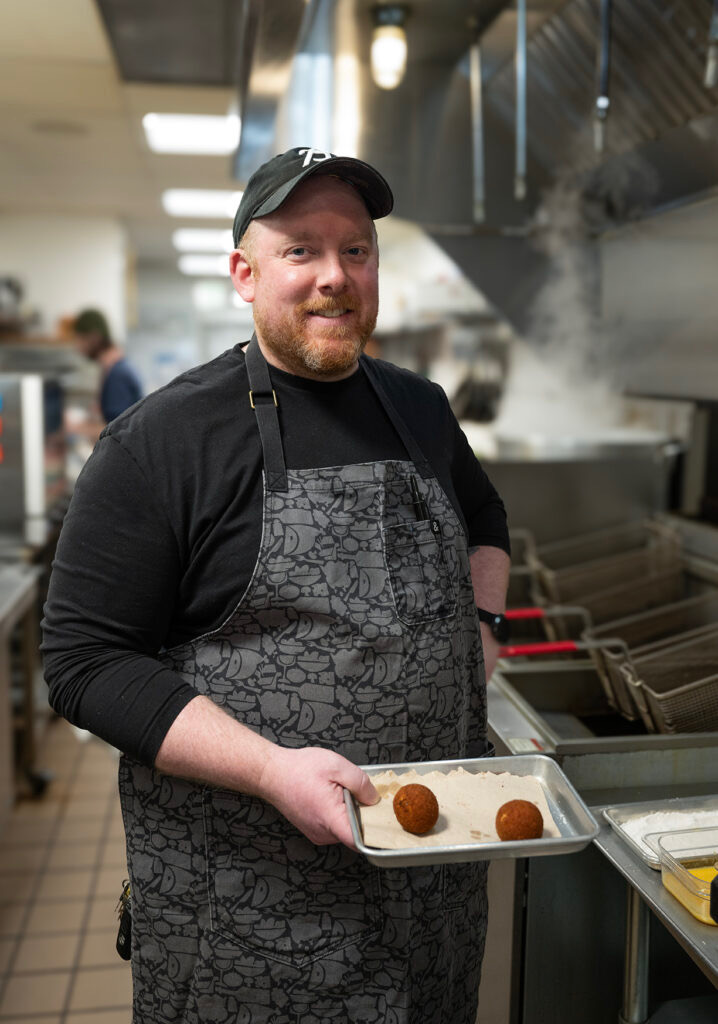
He added that the chefs bring whatever other ingredients they need to cook their respective recipes, and the crowd chooses the winner. "It's the people's choice. They vote with their tickets."
Fleming noted that the first event in 2025 drew a good turnout. "We're hoping for more this year," he said.
In addition to the main event, there will be fresh local oysters, music, boat rides, and presentations on the blue catfish problem by Maryland's Department of Natural Resources and others.
Mike Malczewski and his son were also on hand with some of their gear for a show-and-tell. "We explain to people how we catch the fish and other aspects of the fishery," said Malczewski. "The thing is, we really have to get more market for the little ones and the big ones, otherwise the little ones are growing, and the big ones are spawning, and we're creating a sustainable fishery rather than eradicating them."
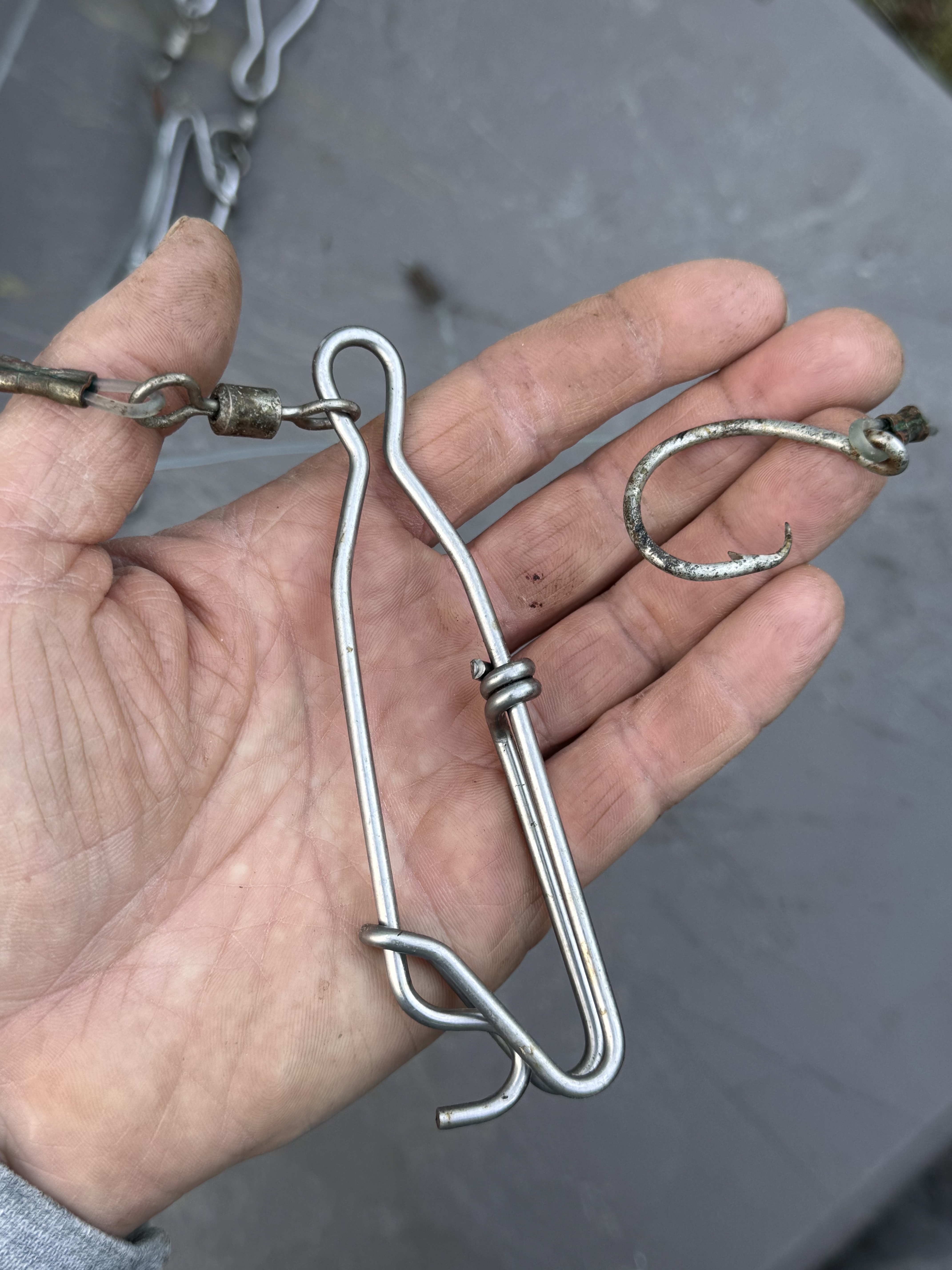
Besides taking photos, Fleming also fishes for blue cats. "The license is only $15," he says. "I bought one in 2024 and started fishing a trot line. I use snap-on gear with 12 ought inline circle hooks. The biggest I've caught so far is 54 pounds."
Fleming says his drive is not so much to make money as to help the bay. "This is an invasive species that is wreaking havoc in the bay. I want to do all I can to help control them. The same with the chefs in the cook-off, they all care about the bay and want to keep it healthy."