

Research funded by the Gulf Spill Restoration fund found that reduced bar spacing on turtle exclusion can successfully keep small turtles out of shrimp trawls, and still maintain shrimp catch.
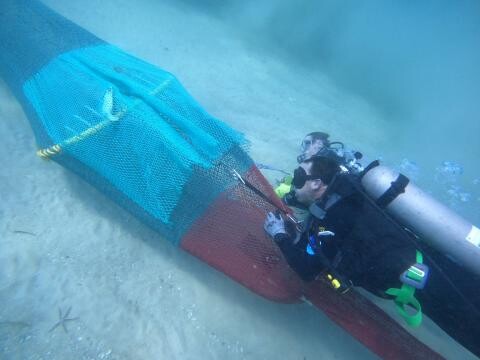
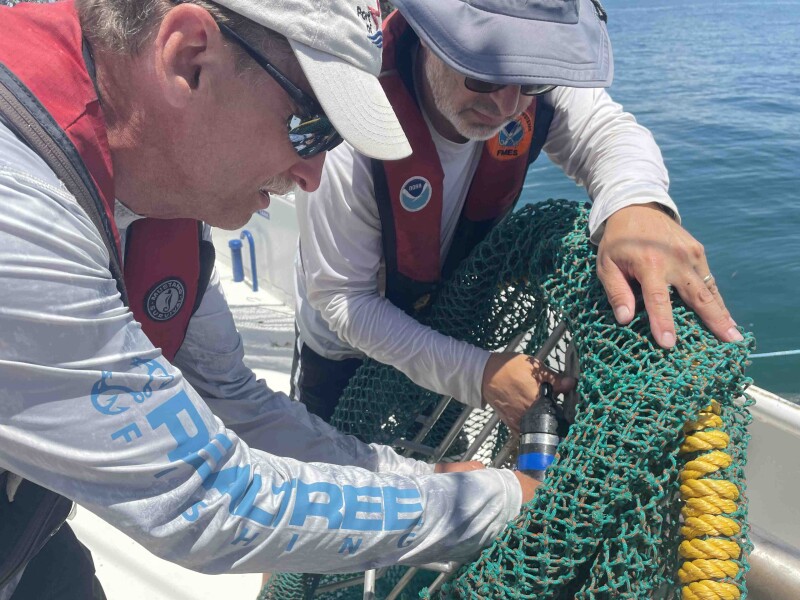
The Gulf Open Ocean Trustee Implementation Group recently completed the project addressing juvenile sea turtle bycatch in the otter trawl shrimp fishery. In partnership with the fishery, the project team developed and tested modified turtle excluder devices (TEDs).
TEDs of various designs have been tested and used for years to reduce sea turtle bycatch. The current industry standard TED has a bar spacing of 4-inches. The excluders have been highly successful for reducing bycatch.
But small juvenile sea turtles with body depths of less than 2 inches are not always excluded by the current designs, because of the smaller turtles’ size and their limited strength to swim out escape flaps on TEDs.
“The goal of the Reducing Juvenile Sea Turtle Bycatch Through the Development of Reduced Bar Spacing in Turtle Excluder Device project was to test whether a TED with 2.5-inch bar spacing allowed juvenile sea turtles to more easily escape, as compared to current 4-inch bar spaced TED designs, while maintaining shrimp retention rates,” according to a summary from NOAA Fisheries.
To restore sea turtle species injured by the 2010 Deepwater Horizon oil spill, Gulf restoration groups work closely with both recreational and commercial fisheries. To support the modified TED research project, a stakeholder working group including otter trawl shrimp fishermen from across the Gulf was established to provide feedback on proposed TED designs, testing protocols, and overall project direction.
The project success evaluated TEDs with a reduced bar spacing for their impact on juvenile sea turtle exclusion and shrimp catch rates. The findings show “that not only does this modified design reduce juvenile sea turtle bycatch, but it also causes no significant decrease in shrimp catch,” according to the researchers.
The Open Ocean trustee group “recently approved further work to reduce sea turtle bycatch in the Gulf of America in Open Ocean Restoration Plan 4. This additional funding will be used to make the three TED configurations tested in this project available for shrimpers who would like to voluntarily use small bar TEDs on their vessels,” according to NOAA Fisheries.