




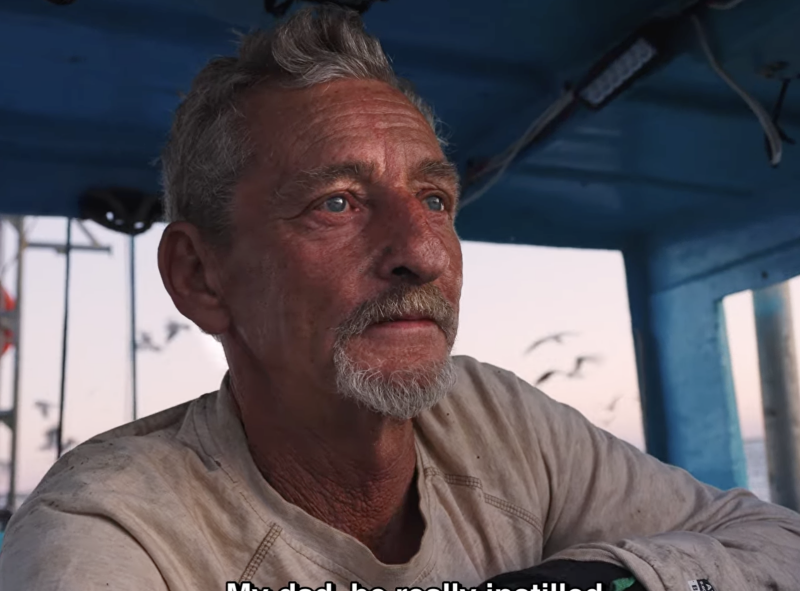
On Saturday, Oct. 25 a short documentary film, ‘The Last of the Shrimpers,’ debuted at the New Orleans Film Festival, which runs until Oct. 27. The movie focuses on Acy Cooper Jr., a fourth-generation shrimper and well-known industry advocate who works out of Venice, La., as far out into the Gulf of America as you can go.
The film opens with a shot of Acy in the dark, silhouetted against the moonrise as he looks out his wheelhouse window, and then a voiceover as he talks about all he loves about being on the water. Like so many fishermen, he talks about a way of life more than a job.
“When I was small, my uncle asked me what I wanted to do,” Acy says. “I told him I wanted to fish, I wanted to go shrimping.” Against a stream of photos of the good old days – Acy in the 1970s with shoulder-length hair and a headband, piles of shrimp, he and his wife landing $23,000 worth of shrimp in one day – Acy describes how it was.
“There was always money in fishing,” he says. “If you wanted to work, you could make it.”
But as the film explains simply, U.S. shrimpers all around the Gulf and southeast Atlantic are getting priced out of the market. In one of the movie’s scenes, Acy is sitting at a meeting where someone is showing the decline in the price of shrimp to record lows. In a brutal scene, Acy gets a ticket for his shrimp and finds out that for a long night’s fishing, he made $84 after expenses.
In a tight and concise combination of politics and fishing scenes, ‘The Last of the Shrimpers’ captures in a general way, all of what U.S. fisheries are up against. It describes a market flooded with low-priced farmed shrimp from producers that use banned chemicals and forced labor; producers who operate with lax environmental regulations; producers who receive subsidies from the largely U.S. funded World Bank and other development banks.
In another scene, David Williams, owner of the seafood testing lab SeaD Testing, has shown that many restaurants that purport to sell domestic shrimp are actually selling farmed shrimp.
With artful cinematography and storytelling, ‘The Last of the Shrimpers’ exposes the sharp contrast between the well-regulated U.S. shrimp fishery and an often dirty aquaculture industry dumping sometime toxic product into the U.S. market to the detriment of US food security, consumer health, and a vital American culture.
American shrimpers are down but not out, and maybe the night shot that opens the film is a way of implying that it is always darkest before the dawn. Acy, the Louisiana Shrimpers Association, the Southern Shrimpers Alliance, David Williams, and many others are getting the word out that this industry needs help to survive. Their work has led to a bump in prices, but not enough.
“The only way we can change it is by educating the public on what you’re consuming every day,” says Acy. He notes that those choices can make a difference to an industry, an individual, or a family. “That choice can make it successful, or it can just fade away.”
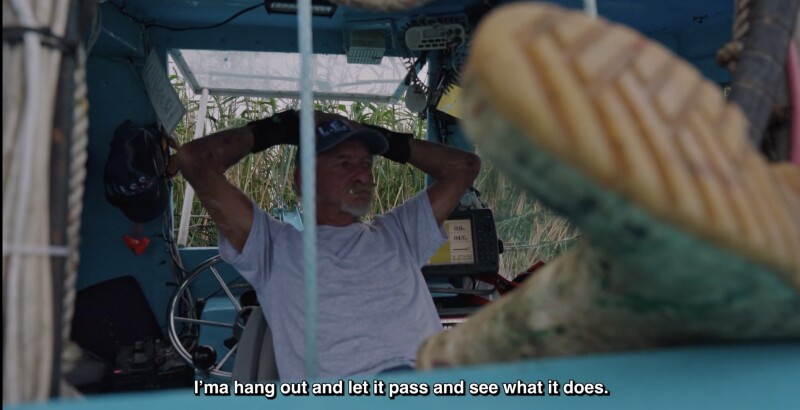
In one scene that could be a positive metaphor for the future, Acy, facing a squall, finds safety in the marshes and calls his wife. “Yeah, it’s going to get bad here for a little while,” he tells her. “I’m just going to hang out and let it pass.”
.png.small.400x400.png)

