


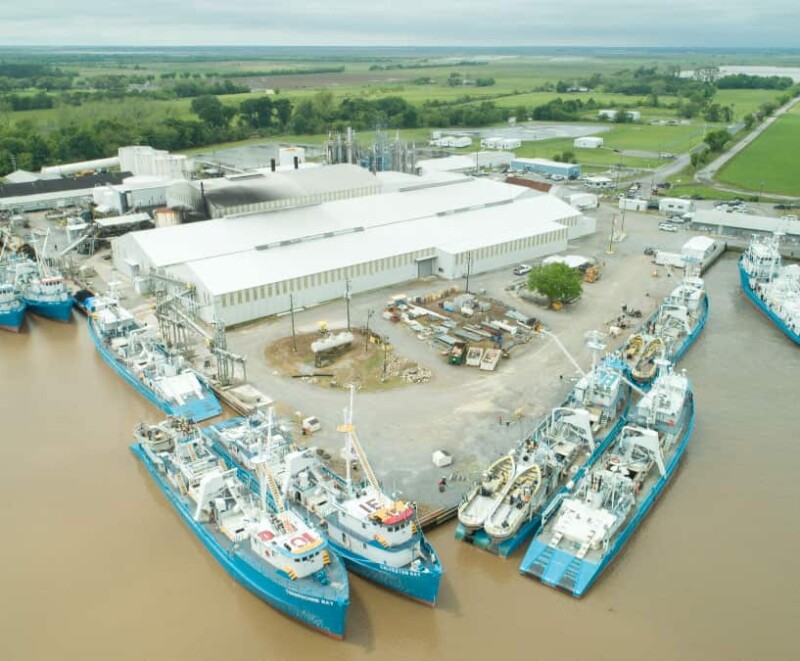
The Gulf menhaden fishery has secured recertification from the Marine Stewardship Council (MSC), reaffirming what industry leaders say is a track record of strong stock health, low bycatch, and science-based management.
According to a March 30 release from Ocean Harvesters and Westbank Fishing, the recertification follows a multi-year independent audit and confirms the fishery continues to meet MSC’s standards for sustainability, ecosystem impact, and oversight.
Originally certified in 2019, the fishery underwent the full reassessment required every five years, including third-party review, public comment, and the opportunity for objections. MSC certifications are valid for five years, with annual audits to ensure continued compliance.
The MSC, an international nonprofit that sets widely recognized sustainability benchmarks, evaluates fisheries across a range of criteria– from stock status and bycatch levels to environmental impacts and management systems. According to the release, the Gulf menhaden fishery addressed all conditions set during its initial certification, demonstrating “continuous, measurable improvement.”
““Achieving recertification against the MSC Fisheries Standard reflects strong, ongoing stewardship of the resource,” said Marin Hawk, senior manager of fishery partnerships for MSC in the U.S., in the release. “MSC certification is a long-term commitment requiring continuous improvement and accountability.”
Menhaden, a small, oil-rich forage fish found throughout the Gulf, Mid-Atlantic, and the Northeast, is a key link in the marine food web and a cornerstone of Louisiana’s working waterfronts. Harvested with purse seine gear, the fish are processed into fishmeal and oil used in aquaculture, livestock feed, pet food, human nutrition products and bait for other marine species.
Industry leaders pointed to the certification as validation of current practices. “This recertification is independent, rigorous, and grounded in science,” said Francois Kuttel, president and principal owner of Westbank Fishing, in the release. “Every step we take, from modernized nets to management and reporting practices, is independently verified and publicly accountable.”
The fishery is operated by two Louisiana-based companies- Westbank Fishing and Ocean Harvesters– working with processing partners Daybrook Fisheries and Omega Protain, which hold the MSC certificates on behalf of the fishery.
Beyond environmental benchmarks, the release highlights the industry’s economic footprint. Louisiana’s menhaden sector supports more than 2,000 jobs and generates an estimated $419 million annually, along with roughly $25 million in state and local tax revenue. The industry also purchases more than $62 million in goods and services across 32 parishes.
“This certification is not just about environmental performance—it’s about the people and communities that depend on this fishery,” said Ben Landry, vice president of Ocean Harvesters.
Recent stock assessments cited in the release show Gulf menhaden populations are not overfished, with spawning stock biomass more than tripling since the 1990s and fishing mortality declining significantly. The fishery is also described as one of the most tightly regulated in Louisiana, operating under both state and federal oversight.
A newly released, state-funded bycatch study further bolstered the recertification findings. According to the release, the study found the menhaden industry accounts for just 3.4 percent of red drum removals, with the remaining 96.6 percent attributed to recreational fishing.
The findings reinforce what the industry says is a limited ecological footprint, particularly compared to other user groups, and highlight the role of ongoing monitoring and reporting requirements.
Looking ahead, demand for fishmeal and fish oil—especially for aquaculture and animal nutrition—is expected to continue rising, placing additional focus on certified, traceable supply chains.
“Our ability to maintain this certification depends on a consistent commitment to data, transparency, and responsible management,” Kuttel said. “We’ve shown that when a fishery follows strict science-based standards, we can deliver both environmental and economic outcomes.”
With recertification in place, the Gulf menhaden fishery will continue under annual MSC audits over the next five years, with industry leaders positioning it as a model for balancing production, sustainability, and accountability.