

Longline fishermen in Southeast Alaska are embarking on a new program to advance use of artificial intelligence technology in their fishery monitoring program, thanks to a $485,000 grant from the National Fish and Wildlife Foundation.
The plan announced by the Alaska Longline Fishermen's Association (ALFA) in Sitka on July 28 calls for partnering with the Pacific States Marine Fisheries Commission (PSMFC) and Canada's Archipelago Marine Research Ltd. to enhance Archipelago's FishVue AI tool and train it for the Alaska sablefish and halibut fixed gear fisheries.
The project will focus on increasing efficiency and lowering the fleet's overall observer cost. "Many small boat fishermen prefer EM systems over human observers, so increasing the usefulness and effectiveness of EM should have direct benefits to our members and Alaska's fixed gear fleet in general," said Lauren Howard, policy coordinator for ALFA.
Archipelago, based in Victoria, British Columbia, is an industry leader in fisheries electronic monitoring. The firm works with the fishing industry, non-government organizations (NGOs) and regulators to implement sustainable practices through at-sea and dockside observer programs, electronic monitoring technology, and marine environmental services.
ALFA, Archipelago and PSMFC also have EM expertise in the Gulf of Alaska where the project will be based.
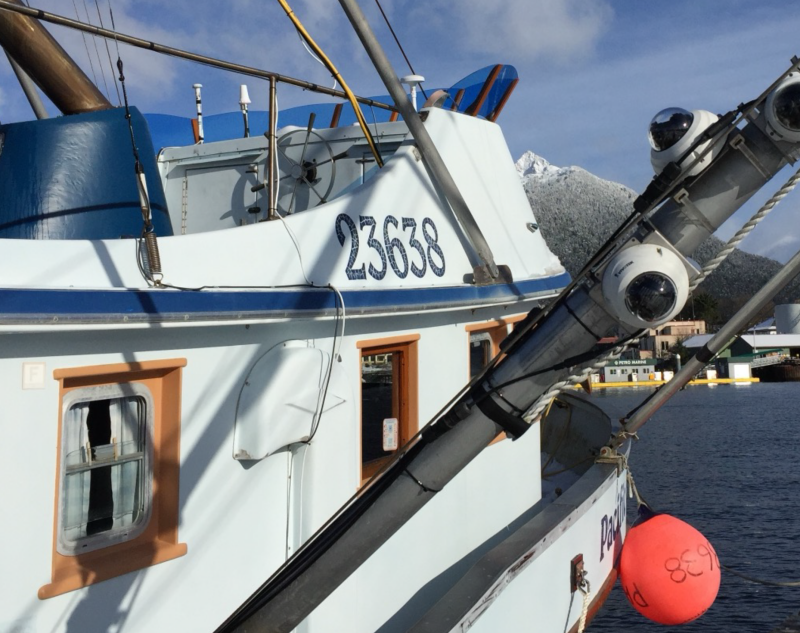
The plan calls for ALFA staff to contact vessels in the halibut and sablefish fixed gear fishery that currently have EM systems onboard their vessels to invite their participation in the project. EM video footage from fixed gear boats will be used for training the AI.
Gord Snell, president and CEO of Archipelago, hailed the project as a testament to what's possible when community-focused organizations come together with a shared commitment to innovation.
“For over a decade, ALFA and Archipelago have worked side by side to build practical, effective monitoring programs," Snell said. "Now, with the introduction of AI-assisted data review across these fleets, we’re taking another major step forward. This project will expand the use of Archipelago’s industry leading FishVue AI technology to over 300 vessels in North America and ensure that modern monitoring tools are not just theoretical—they are actively supporting fishing communities and improving fisheries management in Alaska,” he said.
This project addresses the NOAA Fisheries Electronic Technology Implementation Plan 2021-2025 priority to “test integration of machine learning and artificial intelligence algorithms into EM review protocols.” It also addresses the NFWF priority of “modernizing data management systems to reduce costs and improve consistency, interoperability, quality, and/or usability of information collected using e-technology.”
On Jan. 23, the government published Executive Order 14179, “Removing Barriers to American Leadership in Artificial Intelligence.”
Caren Brady, senior program manager at PSMFC, said efficiencies gained through the use of AI protocols could lead to improved cost-effectiveness and faster turnaround times for video review, which then would open up the possibilities to apply this EM technology to more vessels and additional fisheries sectors.
"Effective monitoring is a key to sustainable fisheries and our ability to fish for generations to come," she said.
ALFA also plans to collaborate with OnDeck AI, in Vancouver, Canada. OnDeck AI was also awarded a NFWF grant, for its project to build Universal Species ID.
OnDeck's AI method automatically classifies any species in electronic monitoring footage across all gear types, cameras, and conditions. The company is already a working partner in the New England, Southeast, West Coast, and Alaska regions of NOAA Fisheries, alongside EM companies, industry associations, and NGOs such as ALFA. Beyond current electronic monitoring, this technology will further enable automated review of all maritime data from underwater, surface, and aerial footage, advancing fisheries and marine conservation holistically while making monitoring more affordable and accessible for the fishing industry, ALFA officials said.
.png.small.400x400.png)