For Dominic Canonico and Tucker Johnston, stepping off the deck wasn’t about leaving the merchant marine life behind; it was about finding a way to stay in the fishing community.
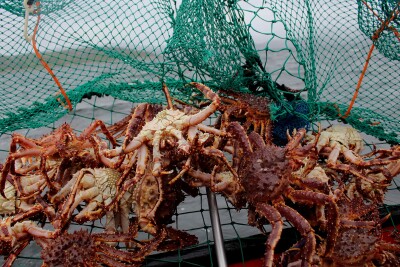
Both Freeport, Maine, natives, the pair came up through Maine Maritime Academy (MMA) and spent years in the Alaska catcher-processor fleet, working as engineers in one of the world's toughest fisheries. Long trips, hard seasons, and rebuilding engines at sea were part of the job. So was the time away from home.
For Canonico, the shift shoreside came down to something simple. “Having children,” he said. “When we found out we were having our second, I said it’s time to find something to do at home.”
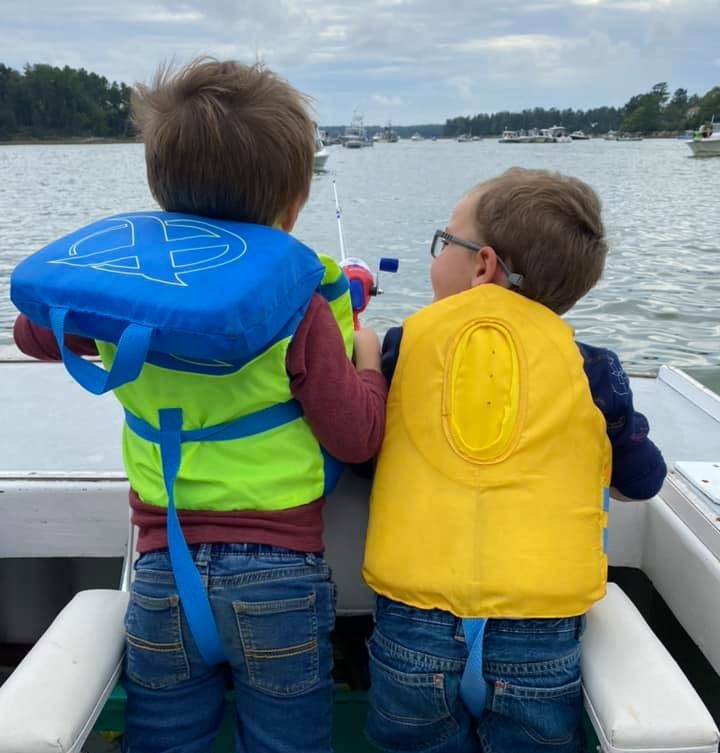
He remembered the moment clearly. His oldest son was getting older, beginning to understand when his dad was gone. “It just got harder for me to leave,” he said. “It’s hard to leave the family.”
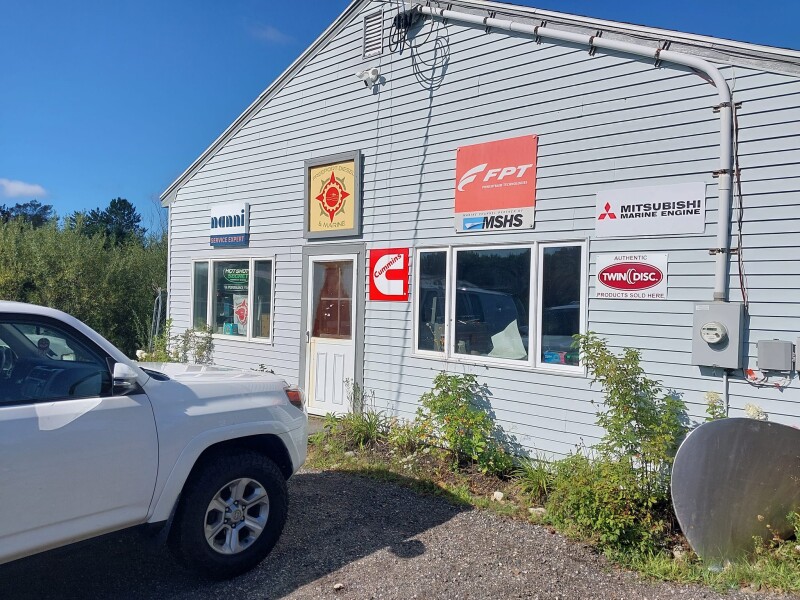
Not long after that, in 2019, Canonico and Johnston bought their current building, spent the next year renovating it, and opened the doors to Freeport Diesel & Marine in early 2021. That’s when Canonico stopped shipping.
A shop rooted in history and hands-on work
Before it became Freeport Diesel & Marine, the building had a different life. Freeport Manufacturing Company, run by Harry Davis, wasn’t marine-focused at all. It was a general machine shop – fabricating parts out of metal or plastic for whoever walked through the door. Canonico knew the place well. He'd worked there from 2006 through 2011 while attending MMA.
“When he was ready to sell the building, we decided to buy it,” Canonico said.
They kept some of the original machinery, folding fabrication work into their new operation – but the focus shifted squarely to the marine industry they came from. Ownership of a shop like this had been in the back of their minds, but it wasn’t always the plan.
“I didn’t actually have a plan to stop shipping out,” Canonico said. “I fully planned on doing 20 years at sea…but then kids came along.”
What started as rebuilding engines for themselves while at home slowly turned into something bigger. “We weren’t planning on doing customer work,” he said. “But, we were all in at a certain point.”
Starting up in uncertain times
Opening a business in 2021 came with its own set of challenges, but in many ways, the timing worked in their favor.
“The Maine coastal community continued on,” Canonico said. “Everyone was still lobstering. Tugboats were still going.”
Because the shop was new, there wasn’t the same shock others felt. “It really started pretty slow,” he said. “If we were in business five years before... it would have been a lot different.”
In those early days, it was mostly Canonico holding things down while Johnston continued to ship out – sometimes 10 months a year – keeping one foot in the Alaska fleet and one in the growing business.
“Staying active in the Bering Sea fleet while co-owning the business isn’t something I do out of habit– it’s intentional,” Johnston said in an email interview with NF. “Working offshore keeps me connected to the real conditions our customers operate in. The Bering Sea is one of the most demanding environments in commercial fishing, and there’s no substitute for firsthand exposure to the weather, the pace, the pressure, and the consequences of equipment failure when you’re hundreds of miles from help.”
Today, the shop has grown to five full-time employees, plus part-time help, reflecting the steady demand from Maine’s working waterfront, primarily the lobster fleet.
Working day in and day out with Maine’s lobster fleet gives Canonico a front-row seat to the decisions fishermen are making and why.
Whether a boat gets a rebuild or a full repower often comes down to one thing: the season they had.
“If it’s a slow season, [lobstermen will] patch things together and just get by,” he said. “If it’s a decent season, people will definitely spend more money so they’re ready to go for the next year.”
Like most shoreside businesses tied to fishing, Freeport Diesel & Marine rises and falls with the fleet. “The fishing industry is our primary income – lobstermen, groundfishermen.”
And right now, he's seeing a mix of approaches – some boats being rebuilt, others getting entirely new power, depending on timing, pricing, and confidence in the season ahead.
Technology moving forward – carefully
When it comes to engines, change is happening, but not overnight.
“You can’t really buy anything older mechanical anymore,” Canonico says. “Manufacturers are going towards newer, more efficient diesel engines.”
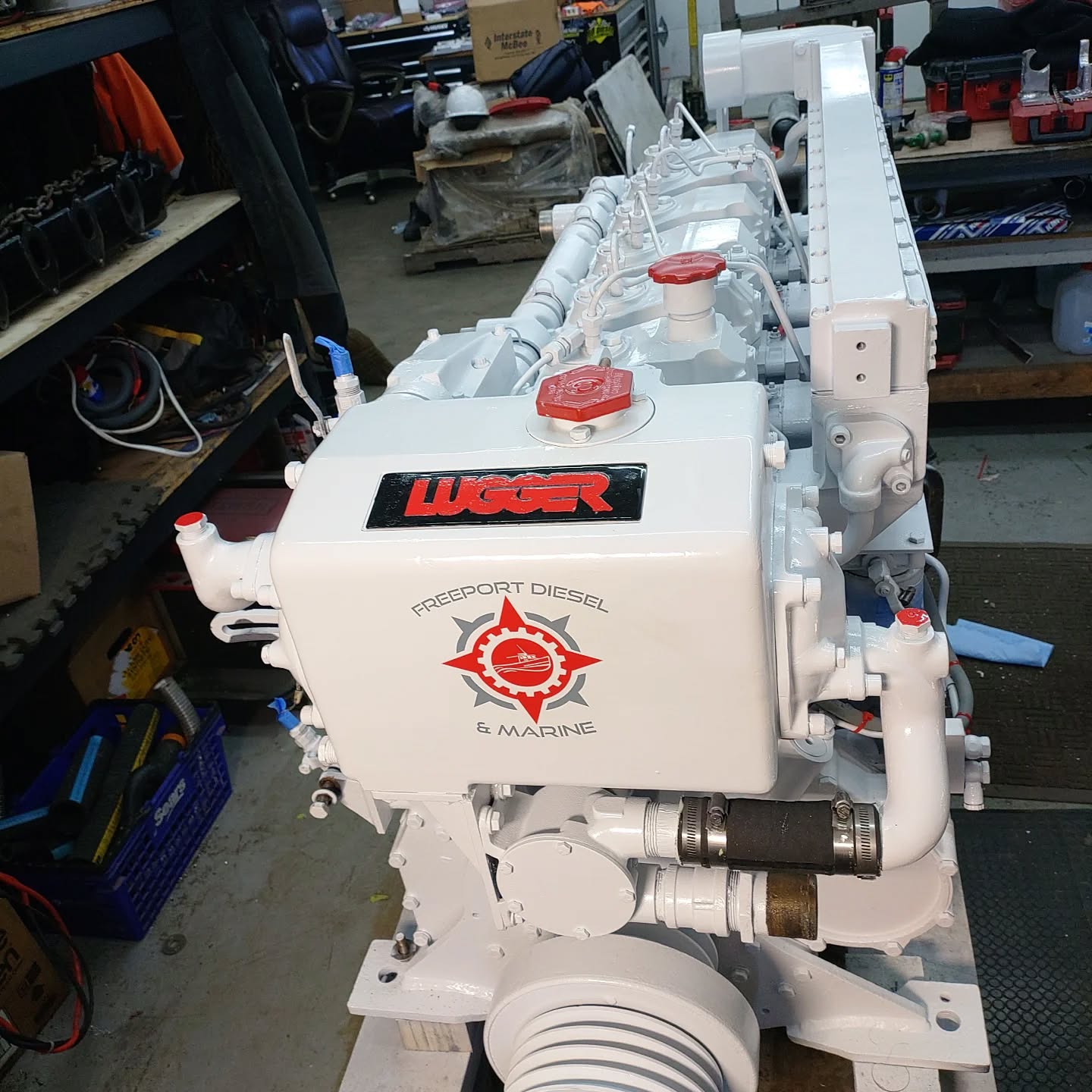
The shop’s bread-and-butter remains the Cummins QSL9, along with increasing work on FPT Industrial engines and Northern Lights generators – a brand familiar to fishermen up and down the coast.
But while efficiency is improving, adoption of new technology – especially electric or hybrid propulsion systems – remains cautious. “A lot of fishermen don’t like change that much,” Canonico said, especially if it risks downtime. “If there’s something that could cause an issue, they’re probably not going to do it.”
There’s interest, and even conversations around grant-funded projects, but the reality is simple: no one wants to gamble a season. “If they want that technology to take off, they’ve got to flip the bill first and let people try it,” he added.
Johnston is seeing that evolution play out differently depending on where boats are working. “On larger fishing vessels with crews of 50 to 170 people, the trend is real-time data collection that can be monitored and accessed by manufacturers,” he said. “Remote access for manufacturers to log in and work with the ship’s crew to solve problems is valuable–and often necessary with modern vessels that are so heavy with automation.”
That shift comes with tradeoffs. “The trend of automation, which comes with its goods and bads, increases efficiency in catch rates and propulsion, but it also brings new complex systems for crews to learn, additional maintenance, and the need for onboard connectivity and servers,” Johnston said. “With computer monitoring on engines, trends can be picked up sooner, engines can be tuned for better efficiency, less fuel burn, and longer life.”
Back home in Maine, the pace is different. “Maine’s fleet has been slower to adopt heavy automation, partly due to vessel and crew size, shorter trips, and continued reliance on diesel for heavy-duty work,” he said. “But fuel efficiency is still a major priority.”
Looking ahead, Johnston sees a middle ground forming. “The future of engine technology will likely be a balance between innovation and tradition,” he said. “As operators look to reduce costs, increase efficiency, and lower environmental impact, we’ll see more hybrid, electric, and predictive maintenance technologies — along with improvements in fuel and engine design tailored to each region’s challenges.”
Extension of the community
Despite the shift ashore, neither Canonico nor Johnston has stepped away from the water. “It’s definitely still a passion,” Canonico said. “We spend all of our time on the water in the summer. Working in the industry hasn’t hindered me from wanting to be on my boat.”
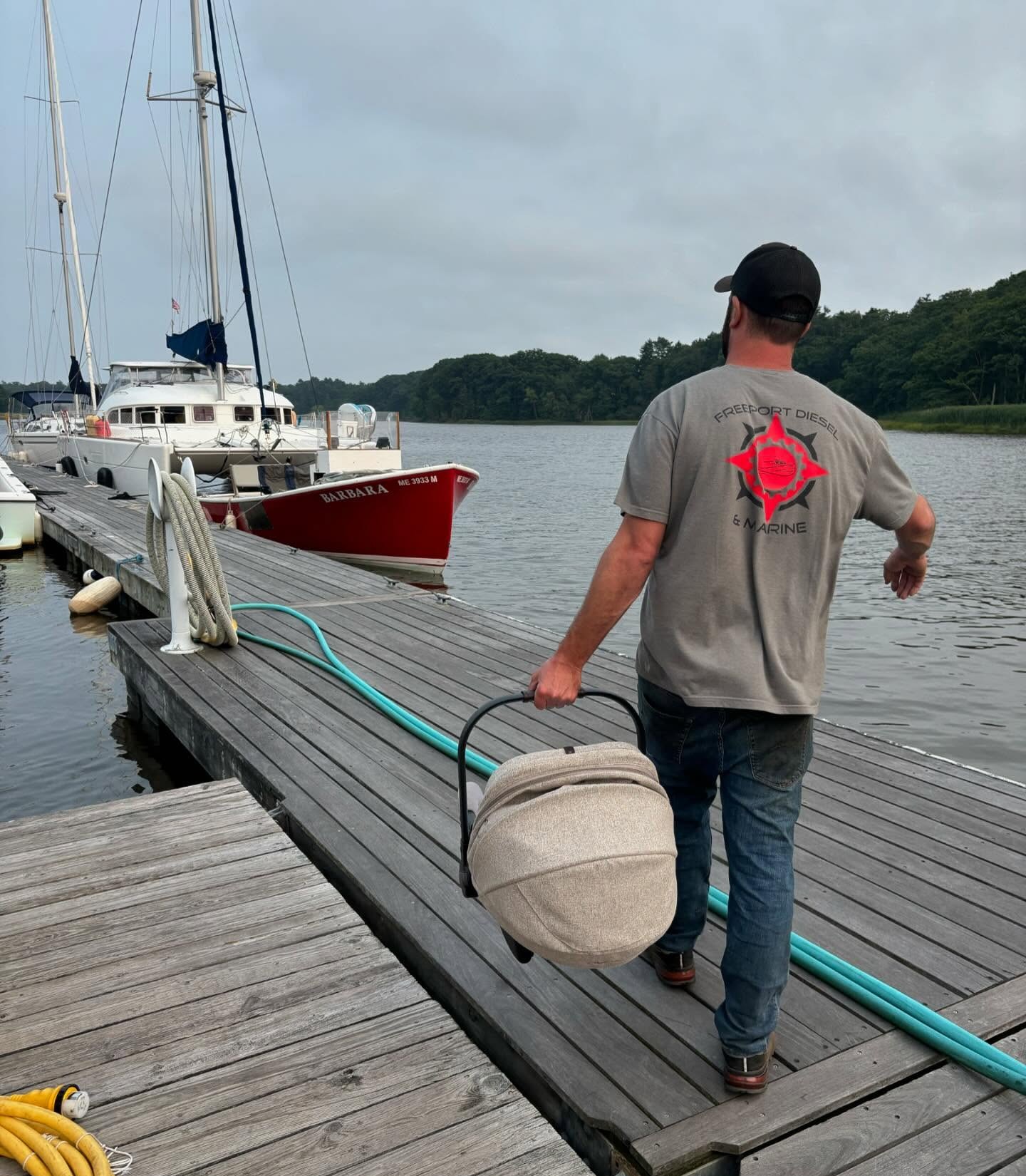
It shows in the way they run their business – less like a shop, and more like an extension of the waterfront community. Canonico and Johnston make an effort to show up and race at as many of the Maine Lobster Boat Races as possible.
From traveling to boatyards across Maine and New England to working dockside with customers, the job is as much about relationships as it is about engines. “I like the networking aspect of it,” Canonico said. “Having resources all around the state and New England is wicked helpful.”
That connection to the fleet is something Johnston sees as essential to the shop’s identity. “When we design, install, or troubleshoot a system, we’re not thinking about how it looks on a bench – we’re thinking about how it will perform at 3 a.m. in heavy weather with a tired crew trying to keep a trip on schedule,” he said. “When we recommend a solution, it comes from lived experience, not theory.”
As the fleet continues to age and fewer young people enter the industry, Canonico shared that he’d encourage anyone to jump in. That mindset carries through the shop, where mentoring younger workers has been part of their job since shipping out, and a way to keep the industry going.
While the business continues to grow – including plans for a larger inland shop space – its foundation remains the same: industry helps industry stay on the water. At the end of the day, Freeport Diesel & Marine isn’t just a shop; it’s a continuation of a life spent on the water, driven by the same mindset that keeps fishermen going back out each morning.