

Three Kodiak, Alaska-based commercial fishing firms and their manager have been fined over $1 million for multiple violations of the Clean Water Act, U.S. Coast Guard officials announced on Friday.
Coast Guard officials in Kodiak said the court entered default judgments on Wednesday, July, 30, against company manager Corey Potter and F/V Knot EZ LLC, Aleutian Tendering LLC, and Alaska Tendering Company LLC, and imposed a civil penalty of $1,182,265 for the violations.
The Justice Department had filed the environmental enforcement case on Oct. 24, 2024, on behalf of the Coast Guard against Potter and three of his related companies.
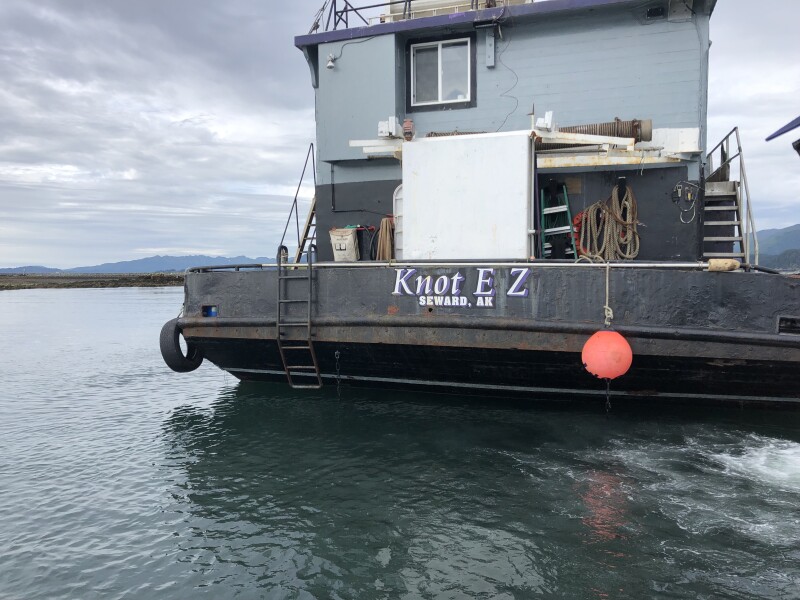
The case stemmed from the Coast Guard's July 2022 discovery of the defendants' practice of discharging oily bilge waste from the engine room of their tendering vessel, Knot EZ, into coastal waters while operating in the Gulf of Alaska and the Bering Sea. Engine room bilge is known to contain a mixture of fuel, lubricating oils, water and other wastes, the Coast Guard said. The Knot EZ is a U.S.-flagged fishing tender homeported in Kodiak.
The defendants had contracted with fish processing firms to ferry supplies to fishing vessels in Bristol Bay at the southeastern portion of the Bering Sea and then pick up and deliver fish from those vessels to processing plants on the coast.
The Coast Guard said when they responded to a distress call and oil spill, as the Knot EZ was sinking at anchor at Kodiak Harbor, that they found the defendants had set up an illegal discharge system and were regularly pumping the vessel's oily bilge waste overboard at sea on a daily or near daily basis to avoid suspending business operations and repairing the heavily leaking hull of the vessel.
When finding the oil discharge in Kodiak Harbor and the degraded condition of the vessel, the Coast Guard, through its Captain of the Port order authority, determined that the vessel was a "substantial threat to the safety of the waterway and the marine environment" and "not fit for service at sea."
Subsequent investigation identified a pattern of illegal oil discharges and related violations of the Coast Guard's longstanding pollution control regulations throughout the summer fishing season. The vessel was taken out of service and removed from the ocean.
The Coast Guard's complaint also included claims for violating the regulatory requirements to provide sufficient capacity to retain all oily bilge water onboard the vessel and to install dedicated piping to properly transfer oily bilge waste to a shoreside facility for disposal.
After efforts to negotiate resolution of the violations with the defendants failed, the government filed the complaint last year in the district court. When the defendants failed to respond or appear, the government proceeded to secure the final judgment entered by the court, the Coast Guard said.
Capt. Christopher Culpepper, commander of the Coast Guard's Sector Western Alaska and U.S. Arctic, said the enforcement action reinforces the importance of safety and pollution prevention measures within this fleet of fishing vessels. “The defendants’ illegal pollution practices and endangerment of their own crew could have been readily prevented through proper operation and maintenance of the vessel," he said.
Section 311(b) of the Clean Water act makes it unlawful to discharge oil or hazardous substances into or upon waters of the United States or adjoining shorelines in quantities that may be harmful to the environment or public health.
The Coast Guard has promulgated spill prevention and pollution control regulations under the Clean Water Act for vessels and other facilities. Overboard discharges of oily mixtures has long been illegal under federal law. Kodiak Harbor provides an oily bilge water disposal program at its docks.
Clean Water Act penalties paid for oil discharges and related pollution prevention violations are deposited in the federal Oil Spill Liability Trust Fund managed by the National Pollution Funds Center. They are used to pay for federal response activities and compensate for damages when there is a discharge or substantial threat of discharge of oil or hazardous substances to U.S. waters or adjoining shorelines.