

A routine lab exercise at the University of California, Santa Barbara, has turned into a discovery that could bring real changes to the West Coast crab fisheries.
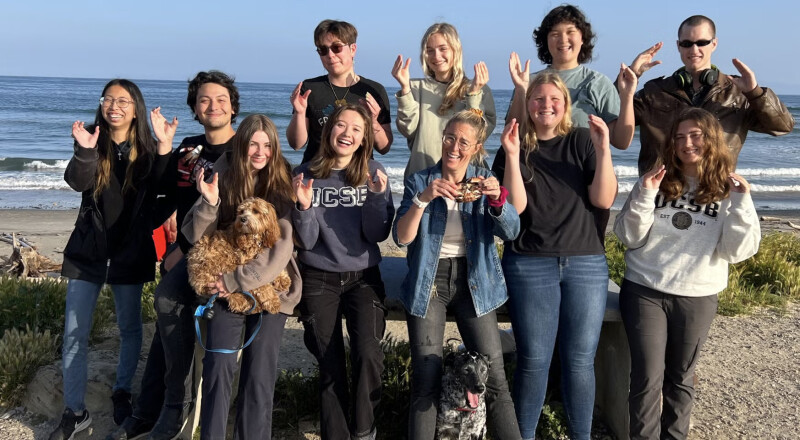
After returning to campus in late 2021 after the COVID-19 pandemic, a group of undergraduate students working in parasitologist Armand Kuris’ lab stumbled upon something unusual while examining crab egg masses: a moving “egg” that turned out to be a nicothoid copepod- a tiny crustacean known to prey on crab eggs. The finding marked the first recorded observation of this type of egg predator on the Pacific Coast.
The research, recently published in the Ecology journal, documents the copepod’s presence on multiple commercially important species, including yellow rock crab, Pacific rock crab, and red rock crab. The discovery was driven largely by undergraduate researchers, who spent two years collecting crabs from local waters with help from fishermen and monitoring them in a seawater lab.
While nicothoid copepods have been documented in Atlantic waters for more than a century, their appearance has historically been sporadic, with populations noted and then disappearing across parts of Europe through the 20th century. Their emergence in California raises new questions about their origin and potential spread.
Unlike traditional parasites, these copepods target a crab’s reproductive output rather than the adult animal itself. Adult females embed within the egg masses carried by female crabs, feeding directly on developing embryos. Researchers observed that infestations can be significant, with some crabs carrying large numbers of juveniles in their gills and brood areas.
Because crab embryos develop in a highly structured way, even partial predation can result in nonviable offspring. Combined with the copepod’s rapid life cycle– roughly 20 days – and evidence of repeated “autoinfection” within the same host, the species could have measurable impacts on recruitment if populations expand.
The presence of the copepod on three commercially harvested rock crab species had raised early concerns among researchers about broader fishery impacts. Of particular interest is whether the species could affect Dungeness crab, one of the most valuable fisheries on the West Coast, though that question remains unanswered.