

Bristol Bay sockeye salmon harvests of 41.5 million fish for 2025 exceeded the forecast by 18 percent, and with catches of Chinook, chum, and coho salmon, put the season's exvessel harvest value at $215.3 million.
That total was 7 percent above the 20-year average of $200.7 million, and those prices may not include incentives for icing, bleeding, floating, or production bonuses, the Alaska Department of Fish and Game said in the annual Bristol Bay season summary released on Sept. 25.
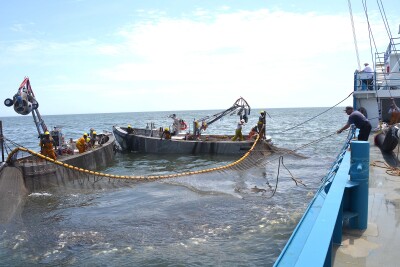
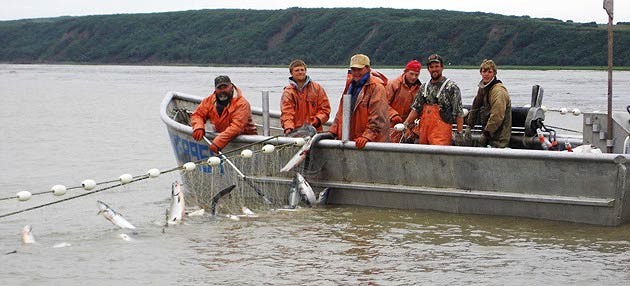
Bristol Bay Regional Seafood Development Association officials, who are already planning their 2026 marketing campaign, said that the average weight of the drift gillnet caught red salmon was 5.1 pounds.
The overall nationwide demand for all Alaska salmon has been upbeat.
"We are hearing positive reports from industry about demand for Alaska salmon," said Greg Smith, communications director for the Alaska Seafood Marketing Institute (ASMI) in Juneau. Smith attributed the demand " to efforts of fishermen, industry, ASMI, and good brand and marketing work." Retail buyers are interested in the health and nutritional aspects of Alaska salmon and supporting Alaska and American fishermen, he said. "There were very strong reports about demand for sockeye, even with a very healthy harvest this year. We hope that strong demand will increase revenues throughout the supply chain from processors to fishermen; that this continues and leads into next year as well," he said.
The 2025 inshore Bristol Bay sockeye run of 56.7 million fish was the seventh largest inshore run since 2005, and this was the 11th year in a row that the total inshore run exceeded 50 million fish.
The exvessel value was estimated using price information from final operations reports for each species and numbers and average weights from preliminary fish ticket numbers, ADF&G said.
Sockeye catches overall were 23 percent above the recent 20-year average of 33.6 million fish for all Bristol Bay districts.
Age composition of the sockeye harvest was roughly on forecast, with 38 percent 2-ocean fish and 61 percent 3-ocean fish returning. The 1.2 age class and 1.3 age class contributed 27 percent and 58 percent, respectively, of the total harvest.
Chinook salmon harvest and abundance in Bristol Bay continued to be low, with the kings harvested incidentally during the directed sockeye fishing periods. The preliminary total Chinook harvest of 6,148 fish was 82 percent below the most recent 20-year average of 33,469 fish, the report said.
The preliminary Bristol Bay chum harvest of 589,433 fish was below the recent 20-year average of one million fish and the preliminary coho salmon harvest of 25,788 fish was below the recent 20-year average of 94,269 fish, with the Egegik District accounting for the most coho caught, a total of 10,798 silvers this year.
Pink salmon in Bristol Bay are predominantly an even-year species. Their harvest, incidental to the sockeye fishery, totaled 256 fish.