


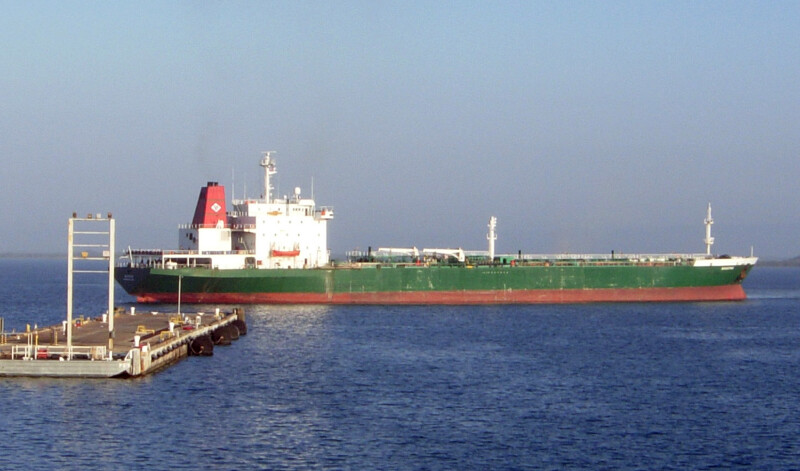
Oil has become the blood of the world’s economic circulatory system, and as the recent war in Iran has made crystal clear, if the oil doesn’t flow, then the impacts are immediate and severe. Just as fuel prices were hitting lows not seen in years, in March of 2026, they virtually doubled overnight. According to a lengthy blog by oil analyst Roger Wood—writing for Time Trex—the oil supply chain is an “infinitely complex, highly integrated, and strategically vital cyber-physical network.”
Wood points out that the architecture of the global supply chain relies on the “synchronization of upstream extraction capabilities, midstream logistical infrastructure, and downstream refining processes.” The oil wells, pipelines, refineries, and distribution networks, he notes, all depend on “fragile maritime trade routes and vast terrestrial pipeline networks.”
For fishermen making decisions about everything from which fisheries to gear up for to what engine to repower with, and whether it is time to think electric, understanding where the global supply chain is going is vital. No one has a crystal ball, but Wood’s blog appears to offer some valuable insights.
Wood notes that while the U.S. now leads the world in production, pumping more oil out of the ground than the next two, Russia and Saudi Arabia, combined. “However,” Wood writes. “This localized domestic abundance masks critical structural fragilities within the nation’s distribution architecture. These vulnerabilities include geographically isolated regional markets, severe regulatory bottlenecks such as maritime protectionism, extreme meteorological risks concentrated along the Gulf Coast, and an escalating landscape of adversarial cyber threats targeting legacy operational technology.”
The reasons that the U.S. cannot achieve oil sovereignty and prices insulated from global events, Wood explains, begin with geography. West Coast refineries get oil primarily from Alaska and Asia, Wood notes, because it is impractical to build pipelines over the Rocky Mountains. The Gulf Coast refineries receive more than 50 percent of domestic production of light sweet crude, and most of the imports of heavy sour crude preferred for making the diesel fuel that fishermen depend on, but production can be stalled when hurricanes hit.
Another problem, Wood cites, is the Jones Act. “The economic friction imposed by the Jones Act on the modern domestic oil supply chain is staggering,” he writes. “An American-made tanker capable of moving 300,000 to 650,000 barrels of crude oil costs between $100 million and $135 million, more than three times the price of a comparable, modern vessel built on the global market. Consequently, the operating rates to move crude oil domestically are artificially inflated. Shipping rates to move crude from the U.S. Gulf Coast to the U.S. East Coast run between $5.00 and $6.00 per barrel, whereas shipping crude across the Atlantic Ocean from Saudi Arabia or Nigeria to the East Coast costs approximately $1.90 per barrel.” Consequently, Wood adds, it is often cheaper for East Coast refineries and buyers to source fuel from foreign producers, particularly Canada, than to buy domestic crude and refined fuels.
Wood also illuminates the threats posed by cyber-attacks on the energy industry’s digital systems, particularly as the industry increasing relies on digital systems. “Today, the relentless drive for operational efficiency, remote monitoring, and predictive maintenance has resulted in deep IT/OT convergence, connecting legacy infrastructure, often plagued by unpatchable vulnerabilities, outdated proprietary software, and weak security controls, directly to the internet,” Wood writes.
For U.S. fisheries and other diesel reliant industries, awareness of how the supply system works can inform tough decisions. No one has a crystal ball, but Wood’s blog offers a good snapshot of the playing field.