




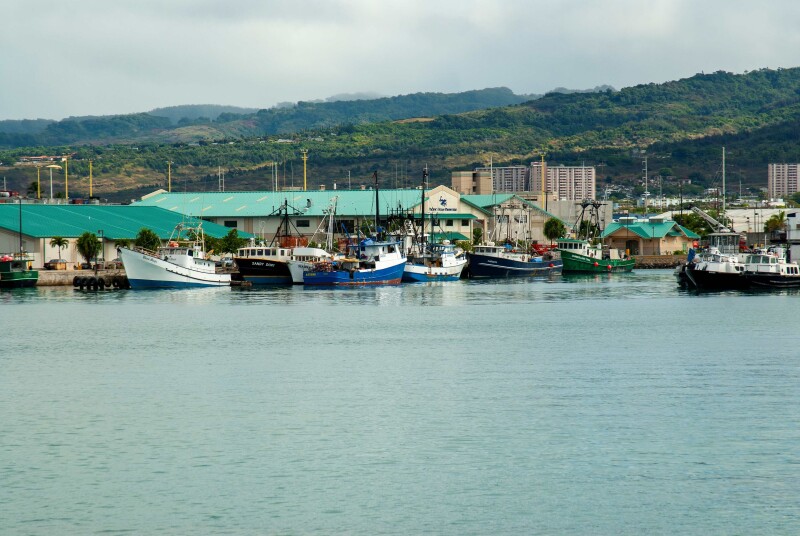
The Western Pacific Regional Fishery Management Council (Wespac) will add two leaders from the Hawaiʻi longline industry to its ranks next month, a move supporters say brings extensive fisheries expertise to the council but one that conservation advocates argue further tilts the federal advisory body toward commercial fishing interests. According to a recent report by Civil Beat, the appointments come as the Trump administration continues efforts to expand commercial fishing access in federally protected Pacific waters.
Eric Kingma, executive director of the Hawaiʻi Longline Association, was appointed to one of Wespac's at-large seats, while Roger Dang was reappointed to the council's second open at-large seat. Dang owns interests in multiple longline vessels operating in Hawaiʻi's longline fleet. Both appointments take effect Aug. 11.
Josh Green nominated Kingma and Dang, along with two other candidates, and both he and longtime Wespac executive director Kitty Simonds cited the pair's extensive experience in seafood, fisheries management and policy.
The appointments follow recent actions by the Trump administration to reopen portions of the Papahānaumokuākea Marine National Monument and two other Pacific marine monuments to U.S. commercial fishing. Kingma and Dang were among industry representatives present at the White House in June when President Donald Trump signed the proclamation beginning that process.
Conservation groups have challenged both the monument reopening and the latest Wespac appointments. Civil Beat quoted former Hawaiʻi Department of Land and Natural Resources director William Aila as saying he was disappointed the appointments did not provide more balance between fishing, conservation and Native Hawaiian cultural perspectives on the council.
"I think it's really the function of any government advisory panel to provide balanced advice to the decision-makers," Aila told Civil Beat. "That is clearly not the case before us now."
Only one of Wespac's 13 voting members currently comes from the environmental community.
The report revisited longstanding criticism over Wespac's financial management. A 2021 federal Inspector General audit identified $1.24 million in questionable spending between 2010 and 2019 from a sustainable fisheries fund. Federal fisheries officials later determined more than $800,000 had been mishandled and directed the council to repay the funds. Federal officials recently told Congress the repayment process remains ongoing, though a full accounting has not yet been provided.
Supporters of reopening monument waters argue the move could help reduce the United States' reliance on imported seafood. Wespac and Commerce Secretary Howard Lutnick have said expanded access aligns with the administration's goal of increasing domestic seafood production.
The Hawaiʻi Longline Association has also maintained that existing federal management under the Magnuson-Stevens Fishery Conservation and Management Act provides sustainable oversight and has argued longline vessels could help deter illegal fishing activity if allowed to operate within monument waters.
Conservation advocates counter that Hawaiʻi's longline fleet continues to reach its annual catch limits for species such as bigeye tuna despite existing monument protections. NOAA data showed the Honolulu-based fleet had harvested 36 percent of its 2026 bigeye tuna quota by May 18, with the allowable catch having nearly doubled in recent years.
"It's not like they're not making quotas because the areas are closed off to them," Aila told Civil Beat. "They're still making money. They're profitable. So why do they need to take the insurance fish that are part of the insurance policy and reduce that insurance? It makes no sense to me. It'll benefit them in the long run."
.jpg.small.400x400.jpg)
