




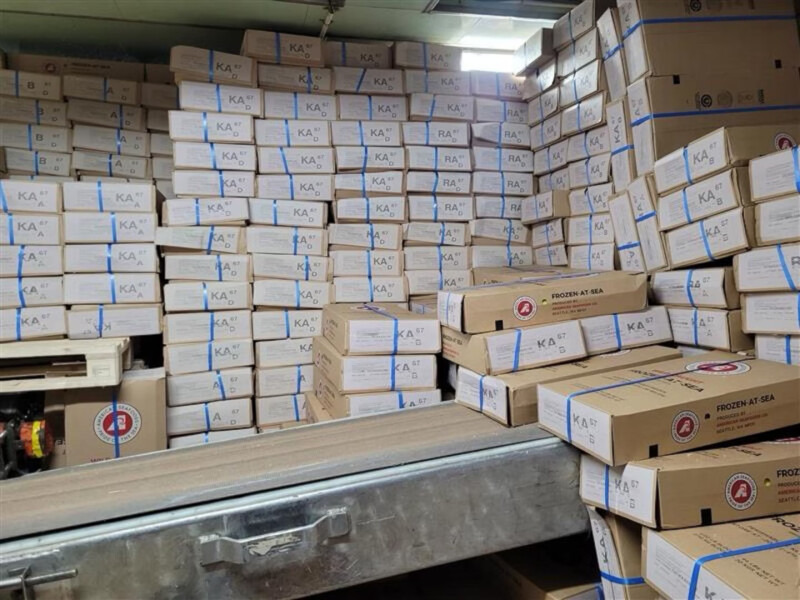
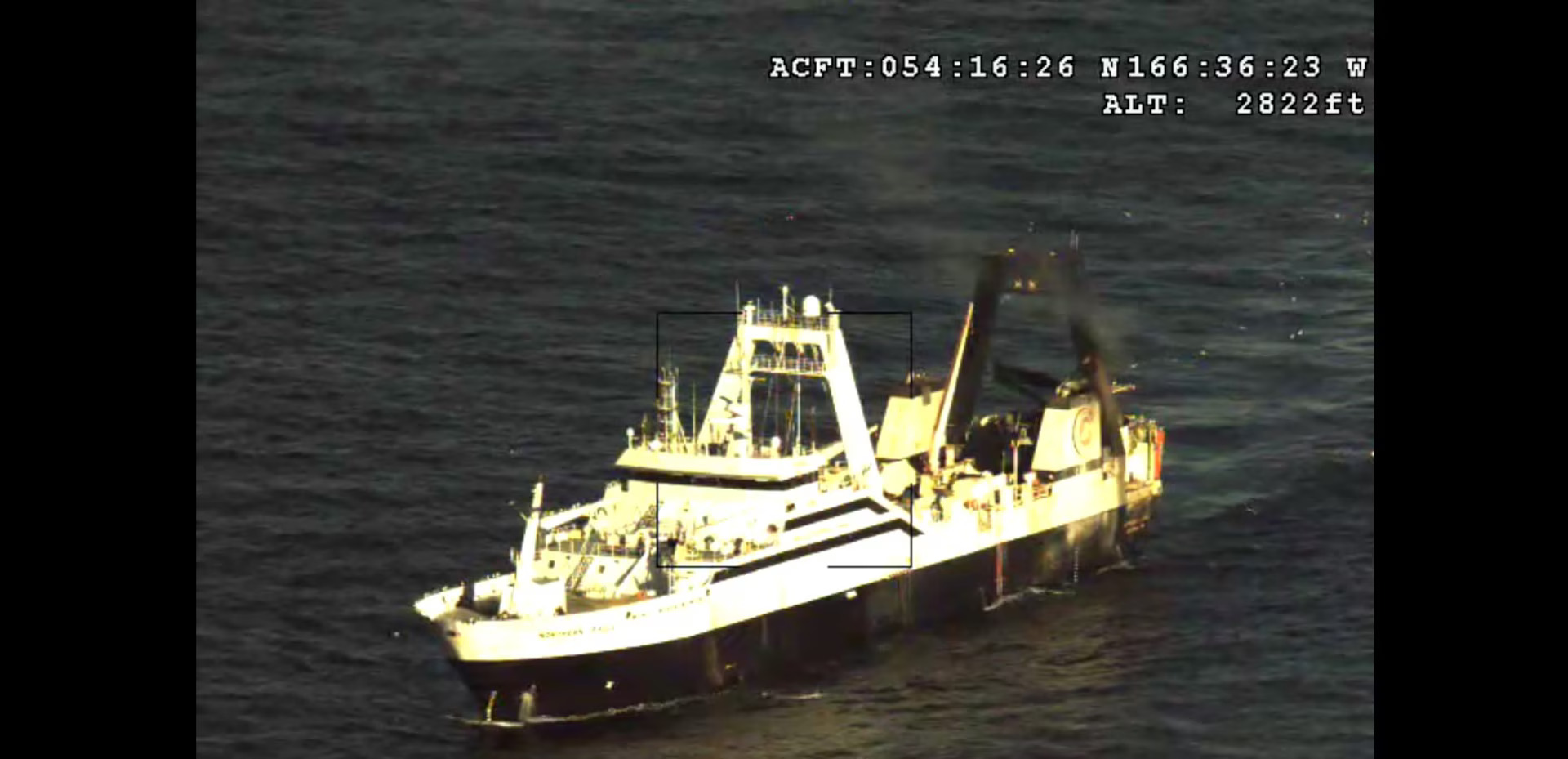
The crew of the U.S. Coast Guard Cutter Waesche uncovered significant reporting violations aboard a catcher-processor vessel in Alaska late last month, leading to the seizure of thousands of pounds of unreported pollock roe.
According to the Coast Guard, the boarding of the Northern Eagle took place March 26, about 15 nautical miles north of Dutch Harbor, after a pre-boarding audit by NOAA Fisheries’ Office of Law Enforcement flagged discrepancies between the vessel’s production reports and electronic logbook.
During the inspection, boarding officers reviewed the vessel’s records and found that reported production weights exceeded logged catch by 1,223 metric tons. The discrepancy ultimately led to the seizure of approximately 5.4 metric tons of unreported pollock roe, valued at more than $65,000.
“The integrity of fisheries data is paramount for the sustainability of our nation's living marine resources,” said Capt. Tyson Scofield, commanding officer of the Waesche. “This seizure highlights the Coast Guard's commitment to enforcing federal law with our partner agencies to ensure a level playing field for all fishermen who follow the rules.”
Further investigation revealed the issue extended beyond a single trip. Officials identified evidence from a prior voyage indicating the underreporting and offload of roughly 12.4 metric tons of pollock roe, valued at an estimated $150,000.
At the request of NOAA Fisheries enforcement personnel, the Coast Guard boarding team remained aboard the Northern Eagle as it returned to Dutch Harbor. During the offload, officials documented 11,524 boxes of pollock roe — 241 more boxes than had been declared in the vessel’s production report.
“As a cooperative enforcement partner, we collaborate closely with the Coast Guard to identify and address suspected and known violations at sea,” said Benjamin Cheeseman, assistant director of NOAA Fisheries Office of Law Enforcement, Alaska Division. “The Coast Guard's support was key to uncovering these violations on the water where they occurred.”
Rear Adm. Bob Little, commander of the Coast Guard Arctic District, authorized the seizure of the unreported product, which has since been placed in cold storage in Dutch Harbor.
The case remains under investigation, with the Coast Guard working alongside NOAA Fisheries’ Office of Law Enforcement on potential enforcement actions.
.jpg.small.400x400.jpg)
