




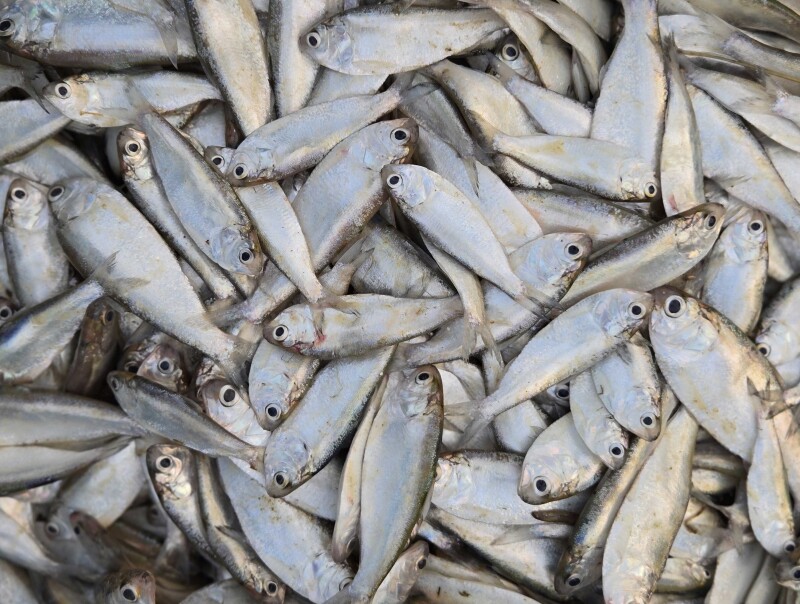
As Louisiana’s Department of Wildlife and Fisheries (LDFW) revisited its coastal buffer rules for the state’s menhaden fishery on Nov. 6, tensions between commercial and recreational fishermen again rose to the surface.
According to National Fisherman reporting from Nov. 3, recreational anglers planned to attend the Baton Rouge meeting in force, urging the Louisiana Wildlife and Fisheries Commission (LWFC) not to roll back the half-mile no-fishing zones established earlier in 2024. Those buffer zones were designed to limit where menhaden boats can deploy their purse seine nets, reducing bycatch of redfish and speckled trout, species that LDFW’s 2024 study found suffered heavy mortality during the menhaden season. The study estimated more the 240,000 speckled trout and 22,000 red drum were killed during that season.
LWFC voted 4-3 to approve a Notice of Intent to modify those buffer zones. As the Menhaden Fisheries Coalition (MFC) stated in their press release on Nov. 6, the vote reflected “a careful, science-first approach” that both “adds new protections and enlarges the total protected footprint, even as it makes targeted, common-sense adjustments where warranted.”
LDFW biologist Jason Adriance explained in the same MFC statement that the department “evaluated potential adjustments, met with stakeholders (including the recreational sector), incorporated extensive public comment, and then brought forward a Notice of Intent.” The proposed changes, Adriance said, would reduce the buffer from half a mile to one quarter of a mile in several stretches, but would increase the overall protected footprint by roughly 4.5 percent —from 264 to 276 square miles.
The vice president of public affairs, Ben Landry, for Ocean Harvesters, told MFC that the adjustments “are limited in scope and consistent with the science,” and emphasized that “this proposal … is not going to damage Louisiana sportsman’s paradise.”
Francois Kuttel of Westbank Fishing stressed that Louisiana’s comprehensive bycatch study found the menhaden fleet accounts for just 3.4 percent of statewide red drum removals, with 84 percent survival for red drum released, and the industry’s fleetwide standardization of hose-end cage gear estimated to save more than 6,300 red drum annually. He added that relying on large spatial closures to chase incremental bycatch reductions would require expansions so extreme they would “eliminate 80 percent of the industry,” whereas the adopted rule reflects a practical compromise that still increases total buffer area by about 4 percent.
And lastly, MFC release shared that Dr. Scott Raborn of LGL Ecological Research Associates, who conducted the recent bycatch study, told commissioners that on a per-set basis, the proposed relaxation from half a mile to a quarter of a mile would not increase bycatch. He corroborated Mr. Kuttel’s assertion, explaining that meaningfully reducing red drum bycatch via distance alone would require fishing in waters around 22 feet deep, at which point the menhaden fishery would forfeit roughly 80 percent of its catch—an impractical approach that is unworkable for management.
Conservationists push back
On the other hand, conservation and recreational groups strongly criticized the decision. A statement from the Theodore Roosevelt Conservation Partnership (TRCP) called the Notice of Intent “extremely disappointing for anglers, conservationists, and those who care about Louisiana’s coastal ecosystems and habitat.”
“Today’s decision is nothing less than the industry and their political allies backing out of that deal,” said TRCP’s director of fisheries, referencing the compromise reached in 2024 that set the original half-mile buffers.
According to TRCP, the rollback could allow industrial menhaden boats to again fish within a quarter mile of most of Louisiana’s beaches, reversing protections enacted after major fish-kill events in 2022 and 2023.
The coastal conflict mirrors East Coast debates where the Atlantic States Marine Fisheries Commission recently approved a 20 percent cut to the 2026 Atlantic menhaden quota. In both regions, fishermen say livelihoods are at stake while conservation groups argue that industrial harvest levels remain unsustainable.
In the Gulf, that dialogue is expanding into public forums. The MFC highlighted a recent Backwoods University episode where the host, Lake Pickle, spoke with Landry to share the industry’s perspective. “My job is not to tell anyone how to think,” Pickle said. “My job is to try my best to present both sides and let people make up their own mind.”
A 60-day public comment period begins Dec. 19 and ends Jan. 23 while the LWFC buffer zone revisions remain under review.
.jpg.small.400x400.jpg)
