

Getting vessels to convert to electric or hybrid power is kind of a chicken or the egg problem, according to Lia Morris, leader of the Marine Decarbonization program at the Island Institute in Rockland, Maine.
“Boats aren’t going to convert unless there’s infrastructure,” says Morris. “We wanted to see what that would look like, so we commissioned a study with Homarus Strategies and Haley Ward Inc. There are so many parts to the puzzle. We wanted to see what type of vessels and which ports along the Maine coast would be best for going electric.”
Noah Oppenheim, the principal at Homarus Strategies, has been at the interface of fisheries and fisheries policy for the past decade. He compiled a detailed report outlining the requirements for creating the charging infrastructure needed to support an increasing number of electric and hybrid boats in various use scenarios, including ferries, aquaculture, and commercial fishing.
Oppenheim and the research team looked at things like distance from the grid, number of boats that could be served, the likelihood that the boats in a harbor would want to use electric power, and whether the harbor lent itself to hosting the necessary infrastructure. “We scored the ports along the coast and created a map of the most viable locations,” he says, noting that the map of those towns is in the report.
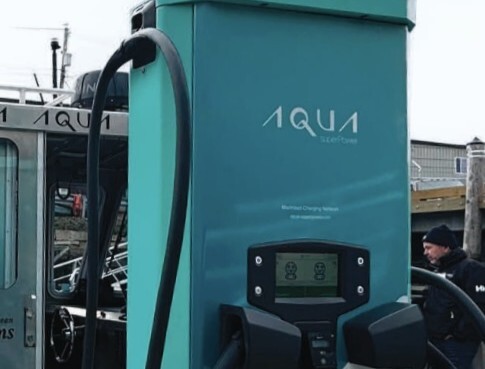
“We looked at what it would take to install power options ranging from level 1, which would be 120-volt trickle charge, to level 2—240 volts with a 7-hour charge time, to 480 volt fast charge, with an 80 percent charge time of 30 minutes,” Oppenheim notes that one of the best uses for electric power appears to be fully electric outboards in the aquaculture industry. “They’re operated at low speed and not used overnight, so they can charge at level 2 or even level 1.”
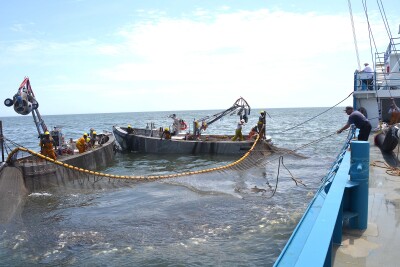
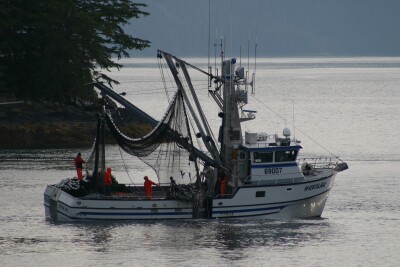
For commercial fishing vessels, the payoff for going electric might be higher in terms of decarbonization, but the infrastructure and conversion costs would require a much bigger investment. Oppenheim notes that the harbors that scored highest for commercial fishing are east of Penobscot Bay, but in ports like Stonington and Jonesport, most boats are on moorings. “We had some engineers look at it, and they came up with the idea of having a float with Level 2 charging. A few boats could tie up to that and charge overnight. Or if we went with Level 3, boats could charge fast while they unloaded lobsters and took on bait and fuel.”
The other part of the commercial fishing puzzle is getting fishermen to invest in hybrid conversions. Morris notes that $6 a gallon diesel is making conversion look more attractive, and Oppenheim points out that the cost of batteries—the most expensive feature of an electric system—is going down.
“We think we can create a market for conversions within the next ten years,” says Oppenhem, noting that while having full torque when getting onto gear might be a selling point, it wasn’t the biggest attraction for fishermen. “We did community round tables in Portland, Rockland, Ellsworth, and Machias, and hands down the fishermen responded the most to the quiet of electric. Hearing loss is a real issue.”
Oppenheim adds that while there are many reasons for going electric, he believes that decarbonization of the working waterfront has to happen. “It’s a moral imperative,” he says.