



In 2020, Menemsha, Mass. fisherman Nick Wilbur took a chance on burning vegetable oil in his 210-hp Cummins 6BT. “As long as you get your fuel clean, it works,” says Wilbur. “Filtering is the key. I can’t emphasize that enough.”
Although engine manufacturers like Cummins and Caterpillar are now building what they call future-proof engines, capable of being modified to burn alternative fuels, Wilbur ran his alternative fuel in an older mechanical 210-hp Cummins BT6. “I basically ran out and back for free,” he says. “And cut my fuel costs by about 30 percent.”
But it requires attention to many details such as filtering, temperature and potential mixing with diesel. “If you mess up, you can lose all your savings and end up with an expensive engine repair,” says Wilbur.
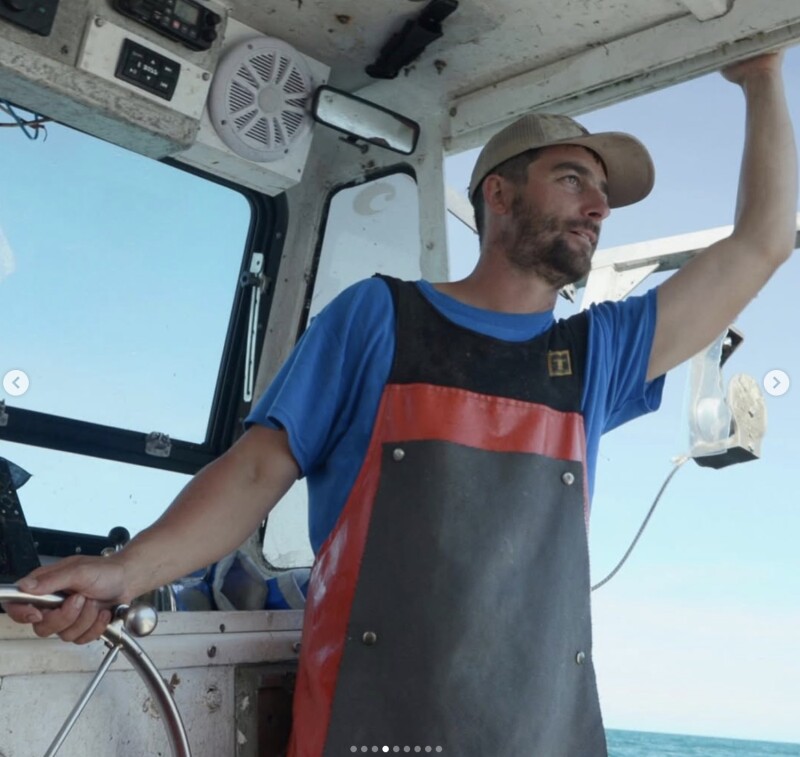
As noted, he often repeats this admonition on filtering. Wilbur starts with clean fuel. “I had a friend with a restaurant here on Martha’s Vineyard,” he says. “We would leave a 300-gallon-or- something IBC tote there, and he would fill it. The tank had a spigot about a foot up from the bottom, and that was our first step, letting everything settle and then emptying the tank from above that bigger stuff.”
The rest of the process involved centrifuging the vegetable oil through filters down to 1 micron, Wilbur explains. “If you don’t filter it really well, it can gum up your injectors,” he says.
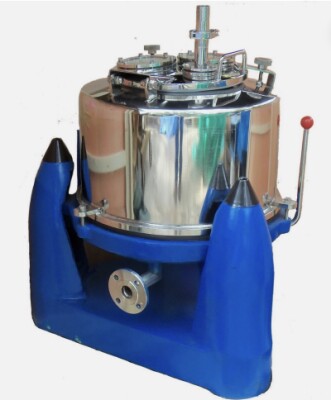
The next step is heating the vegetable oil. “At room temperature, the vegetable oil is not the right viscosity, and it needs to be really hot to burn well. So, I had a 100-gallon diesel tank and a 20-gallon tank for the veggie oil that was connected to the heat exchanger. You can also dilute it with diesel, but I would get it up to 180 degrees, and then I would start my engine and get it hot, and then as I steamed out at 2000 rpms, with the engine running really hot, I would ease it over from diesel to veggie oil.
"I had a 3-way valve system that was bulletproof. It didn’t matter too much if the diesel got into the veggie oil, but the other way around, you could have cold veggie oil in the diesel, and that could cause problems when you’re starting up.”
Once he got the hot engine burning 100 percent hot veggie oil, Wilbur points out that it would run faster and quieter. “I think the veggie oil lubed the engine better, so it ran quieter, and there was more power in it as a fuel than diesel,” he says. “I would steam to the grounds like that and then switch back to diesel while I hauled my gear.”
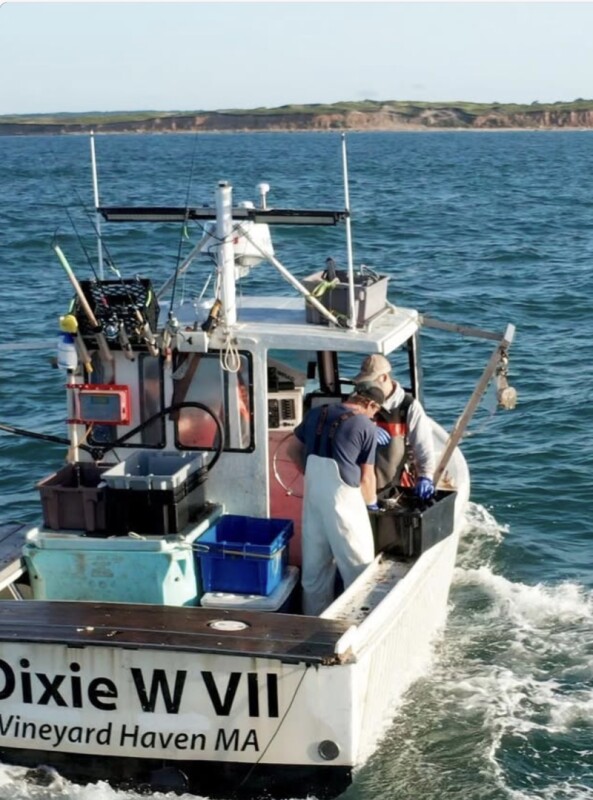
At the time, Wilbur had his system on a 25-foot BMH and fished traps of several sorts. “I lobster, trap conch, and fish. Conch is our bread and butter.” The conch fishery targets the channeled whelk, which was once regarded as a threat to other species such as bay scallops. As waters have warmed, many lobstermen like Wilbur have focused on conch fishing, making the highest-volume and most lucrative fishery on the island.
“With the fish traps, we target scup and black sea bass,” says Wilbur. “With sea bass, you can fish habitat traps, with no bait. To the sea bass, it looks like a safe place to hide, so it’s great. But when you fish habitat traps, you have to leave them there for a few days.”
Wilbur prefers to fish with baited traps, and he sees better results. “With baited traps, you can use the fish finder and set on fish, and then haul the traps after a 20-minute soak. We only fish 40 traps but might haul them 5 times in a day. We do all that running on diesel and then head back in on the veggie oil.”
With the importance of operating the system properly, Wilbur had a control panel made up to keep track of where he was in the process. “I had all the switches and lights so I wouldn’t make a mistake,” he says.
“On the way back in I would wean off the veggie oil as I got close to home,” says Wilbur, pointing out that this was another crucial step. “I would make sure to purge all the veggie oil out of the system. You never want to shut it down with veggie oil in the lines, the pump, or the injectors because when you start it up cold with that in there, you’re going to have problems.”
With all its complexities, it is not surprising that veggie oil as an alternative fuel has not caught on in a big way. But Wilbur notes that it’s all pretty straightforward once you understand it.
“I was really lucky to have a kind of a guru,” he says. “This guy named Tyler Chronister, who ran all his trucks on it, and he explained it all to me. There’s stuff on YouTube about how to do it, but not a lot. Which is funny, because Rudolf Diesel invented Diesel engines to run on peanut oil.”
One YouTube video Wilbur refers to chronicles the work of a Louisiana shrimper, Elwood Boudreaux, who, in 1979, figured out how to run his Detroit 671 on waste cooking oil. Boudreaux’s system was almost identical to Wilbur’s—filter and centrifuge the oil, heat it, and feed it to the engine. The difference was that Boudreaux and, eventually, almost all the shrimpers in Dulac, at that time, were running on nothing but used vegetable oil and reporting no issues with injector coking or other damage the Detroit had warned them about.
“I mean, Rudolf Diesel invented the diesel engine to run on peanut oil,” says Wilbur. Although he introduced his diesel engine at the 1900 World’s Fair, running it on peanut oil, Rudolf Diesel reportedly designed his engine to run on a variety of biofuels that he hoped would enable farmers to grow their own fuel.
Since his vegetable oil fuel experience, Wilbur has upgraded his vessel and his engine. “I bought a 36-foot Wayne Beal boat from a guy in Perry, Maine,” he says. “That had a Cat 3126, but I just replaced that with a 405-hp Cummins QSL9. I really don’t want to try and run vegetable oil with a common rail system.”
While Wlbur may be reluctant to run his Cummins QSL9 on homemade biofuel, Cummins reported in 2024 that many of its higher horsepower and midsize engines, including the QSL9, were approved to run on renewable diesels like HVO (Hydrotreated Vegetable Oil), FAME (Fatty Acid Methyl Ester), and other renewable fuels. Caterpillar, MAN, Wärtsilä, and other manufacturers are also advertising biofuel compatibility for most of their engines. Cargil, Chevron, and other companies are refining these blends, which are more frequently available on the West Coast and Gulf Coast, less so on the East Coast.
Unfortunately, HVO and FAME are generally more expensive than diesel fuel. Wilbur achieved his savings by recycling used cooking oil – essentially making his own fuel as Rudolf Diesel intended. He recommends it for anyone running an older mechanical engine who wants to offset rising diesel prices.
“With diesel hitting $6 a gallon here on the island. It’s looking more and more like a good idea,” he says. “If I could do it with the engine I have now, I would.”