




Transboundary rivers flowing from Canada into Southeast Alaska yield harvests of millions of salmon with an annual value of over $225 million, an economic driver that fishermen contend needs further environmental protection.
Data compiled by the Alaska Seafood Marketing Institute (ASMI) notes that the region holds a high, consistent salmon biomass driven by healthy Alaska stocks, with the Gulf of Alaska, which includes Southeast Alaska, containing roughly one-third of all North Pacific salmon.
Whether collaborative efforts of the governments of Alaska and British Columbia are providing sufficient protection, given the growing number of mines on the Canadian side of the border, continues to raise concerns from fish harvesters and environmental entities in Alaska.
Alaska officials, meanwhile, contend that the Bilateral Working Group, a formal coordination process established in 2015, is addressing existing and potential pollution issues. The group meets twice annually via teleconferences and has ongoing exchanges of technical data in a transparent process, according to the state's commissioners of fish and game, environmental conservation, and natural resources.
"While Alaska does not permit Canadian mines, Alaska agencies do have clear authority to monitor and protect Alaska waters, review technical data, and press for transparency and accountability through this process," the agencies said in comments released on March 5.
Salmon Beyond Borders, an Alaska-based campaign working with fishermen, businesses, communities, and others, alongside tribes and First Nations on both sides of the border, does not share that confidence.
On March 3, Salmon Beyond Borders commended a recent letter by Alaska Republican Sens. Lisa Murkowski and Dan Sullivan urging the Trump administration to reinstate what they describe as large Canadian mines polluting the transboundary waters.
"Canada is hinging its economic future on the industrialization of the glacial salmon rivers flowing from the Yukon and British Columbia into Alaska, with more than 100 mines and tailings dams in some stage of development, operation, exploration or abandonment along these and other charged rivers," said Heather Hardcastle, who grew up commercial fishing at the mouth of the Taku River and serves as an advisor to Salmon Beyond Borders.
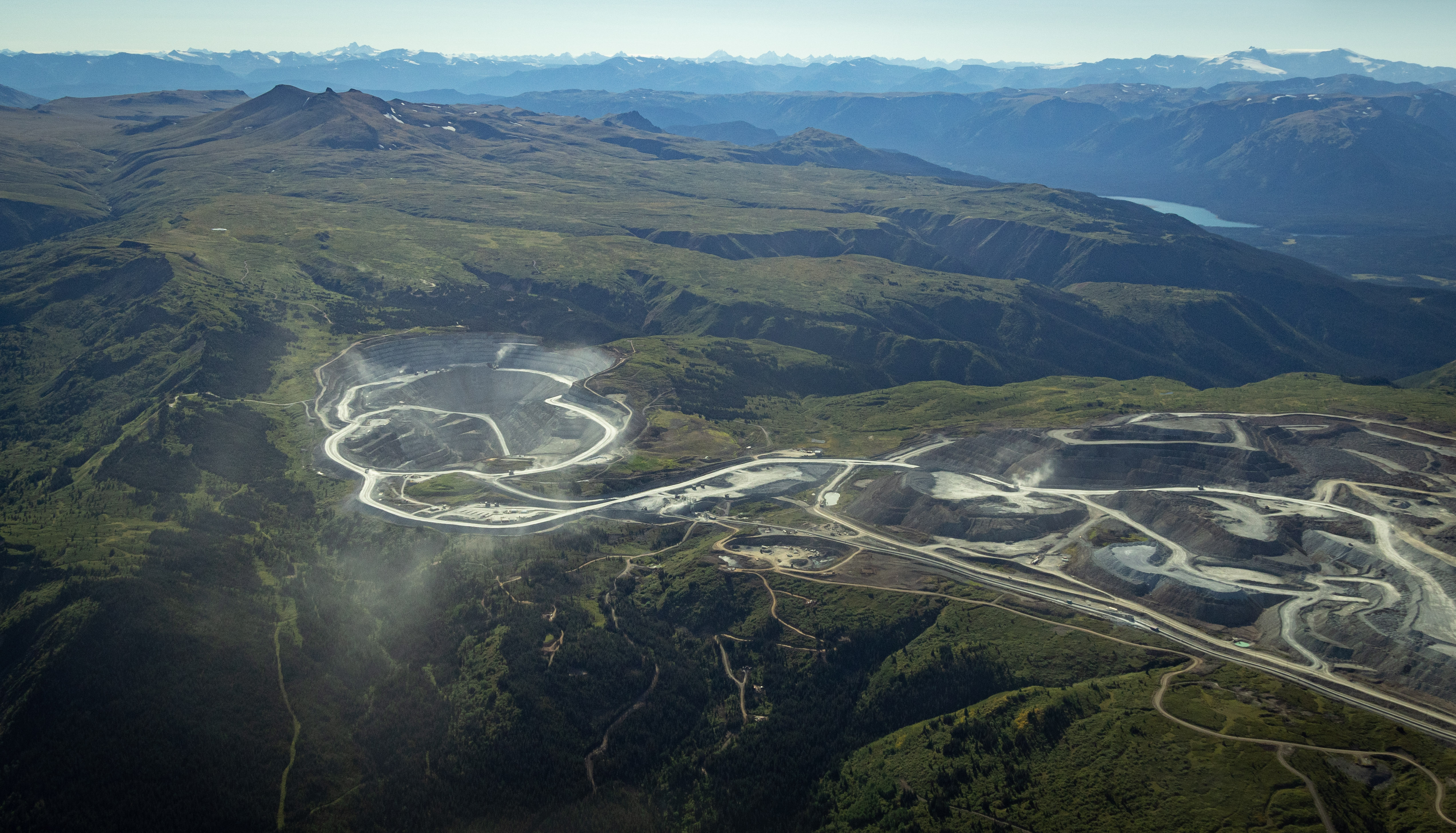
"Four Canadian mines are already contaminating the Yukon, Taku, Stikine, and Salmon Rivers with cyanide, acid mine drainage, selenium, and heavy metals — and the state of Alaska and the U.S. federal government are letting them get away with it," Hardcastle said.
The Alaska congressional delegation has sent roughly a dozen letters in the last 12 years to the administrations of four U.S. presidents asking for the federal government to achieve binding protections for the Taku, Stikine, Unuk and Salmon river valleys, Salmon Beyond Borders said.
Their latest letter, of Feb. 26, demands the cleanup of
's Tulsequah Chief Mine and other abandoned Canadian mines that they say continue to pollute the transboundary waterways. They would deny Canada U.S. taxpayer investment in its mines and processing facilities until Canada commits to the cleanup of these abandoned mine sites.
The senators also urged Secretary of State Marco Rubio, Secretary of Defense Pete Hegseth, the Environmental Protection Agency, and Department of Energy to ensure Canadian transboundary mines post the full amount of money needed for mine clean-up prior to operation, as required in Alaska.
The Central Council of Tlingit and Haida Indians in Juneau also offered kudos to Murkowski and Sullivan for their letter. "These rivers are not political chips," said Central Council President Richard Peterson. "The traditional homelands and waters of Southeast Alaska sustain salmon, our economies, and way of life. Any solution must include binding enforceable protections, not voluntary agreements or information sharing alone."
Tribal demands include formalized indigenous government-to-government participation in transboundary mining oversight, monitoring, and dispute resolution. "We need enforceable protections and a permanent seat at the decision-making table," Peterson said.
"Alaska has carefully examined B.C.'s dam safety and bonding requirements and determined them to be comparable in scope and enforceability to Alaska's own standards," said Sam Dapcevich, special assistant to Environmental Conservation Commissioner Randy Bates. "Alaska's engagement since 2015 has contributed to tangible progress on legacy issues and updates to B.C. mining codes," he said.
The U.S. Geological Survey operates multiple "supergages" that automatically collect water quality data, complemented by field visits at approximately three-month intervals, he said.
The last virtual teleconference of the Bilateral Working Group was held on Oct. 21, 2025. The date of the spring 2026 meeting has yet to be announced.
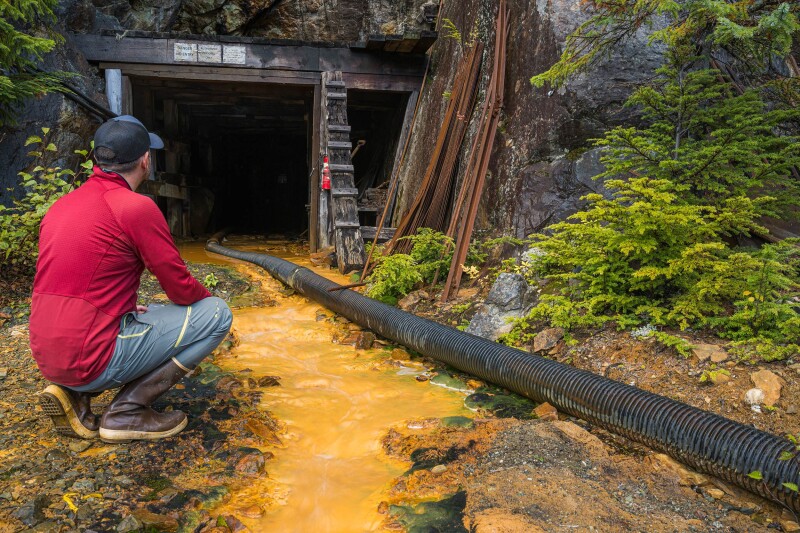
One big issue continuously before the group is the ongoing acid mine drainage being discharged from the Tulsequah Chief mine, which operated in B.C. from 1951 to 1957. Over the years, various companies have attempted to restart the mine, most recently the Chieftain Metals Corp. in 2016.
Alaska officials said the weather in the Taku region is notoriously challenging, often creating weather windows and conditions that make for difficult and unpredictable work and travel during the field season.
"Current fieldwork is focused on addressing data gaps and identifying potential pollutant sources from historic activities," they said. "While it is premature to speculate on final costs or a specific completion date, Alaska continues to engage closely with B.C.'s regulators to ensure transparency and accountability as remediation progresses."
Alaska officials also said they have secured public information sessions for Alaskans, with the next session anticipated this spring and a site visit tentatively planned for the summer of 2026.
.png.small.400x400.png)

