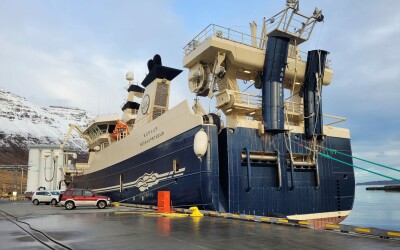


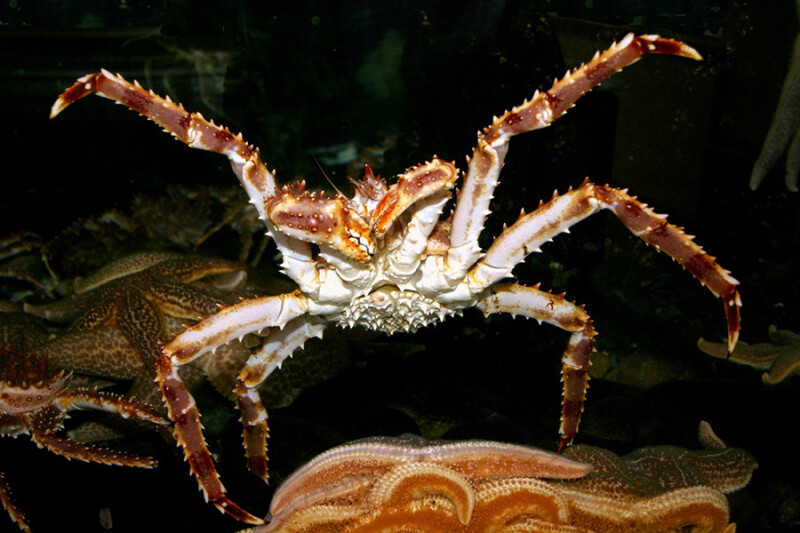
Federal fisheries managers plan to consider new options in 2027 to reduce bottom contact of pelagic trawl gear on red king crab populations in the Bering Sea and Gulf of Alaska.
Members of the North Pacific Fishery Management Council assigned council staff during their June meeting in Vancouver, Wash., to develop a discussion paper on potential regulatory measures to reduce bottom contact of pelagic trawl gear in areas currently closed to non-pelagic trawl gear.
The goal is to reduce the uncertainty associated with unobserved crab mortality and to improve existing fishing practices, in light of depressed red king crab populations and changing ecosystems, council staff said.
Such measures could include a maximum bottom contact rate over which gear-seafloor interactions may occur, a swept-area cap at a vessel, sector or Bering Sea cooperative level, and/or pelagic trawl gear modifications, technologies or operational standards.
Such measures would build on current protections for closed areas and reduce seafloor contact from status quo conditions rather than eliminate it entirely. Options would recognize that some bottom contact is necessary to effectively catch
Considerations by the council would include potential effects on bottom contact, catch per unit effort (CPUE), fishing time, effort displace, and tradeoffs that may result in changes in prohibited species catch.
Council members also endorsed continued research on pelagic trawl gear innovation, including the pollock industry's experimental pelagic gear modification project, and research on crab habitat and distribution to improve understanding of fishing interactions with crab resources in support of future management decisions.
In a second motion on pelagic trawl issues the council recognized the pollock industry for implementation of voluntary, dynamic spatial closures in 2026 to avoid Bristol Bay red king crab. Council members requested that similar measures continue during the 2027 pollock A season.
The council's decision to put the issue on a future meeting agenda for further action came after several days of testimony from fisheries, environmental and research groups, including the Bering Sea Fisheries Research Foundation.
"Bering Sea crab stocks are not fully recovered and continue as a mixed bag in terms of resource status, but we are encouraged by recent efforts to collaborate further, across sectors, and with new research and academic partners," said Scott Goodman, executive director of the Bering Sea foundation, in written testimony.
The Alaska Longline Fishermen's Association urged the council to initiate an analysis to establish an enforceable performance standard.
That standard includes alternatives that limit seafloor contact and require monitoring, prohibit trawling for pollock and rockfish in areas closed to bottom trawling unless the vessel can prove that the gear is not in contact with the seafloor and manage vessels that cannot meet an effective bottom contact performance standard as mobile bottom contact gear for purposes of management, area access and enforcement, said ALFA's Linda Behnken.