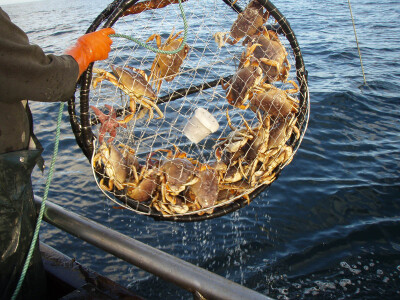


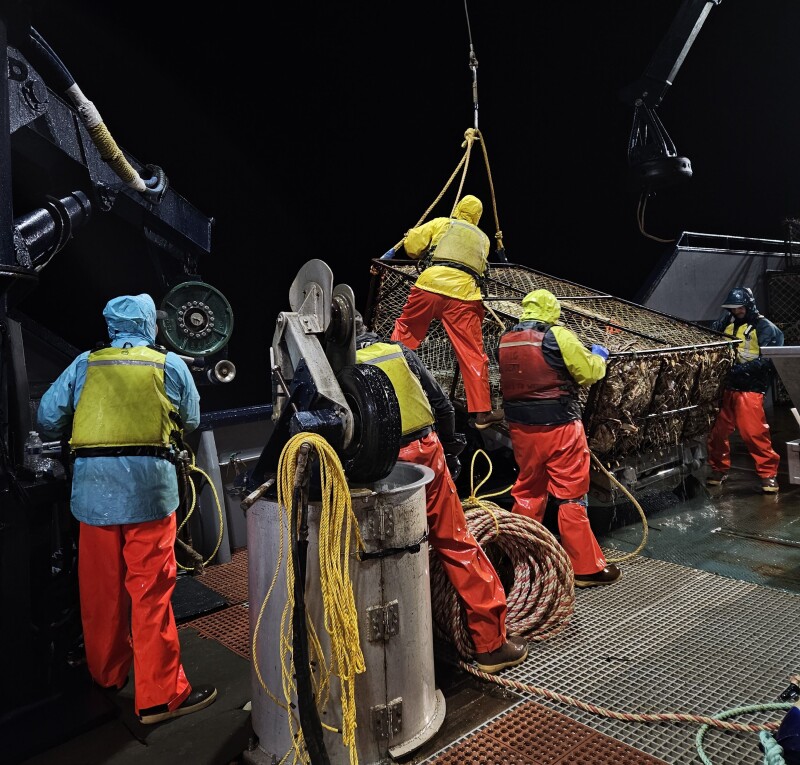
Just a few years ago, Alaska’s crabbers were staring down one of the darkest chapters in their fishery’s history. The Bristol Bay red king crab, snow crab, and bairdi seasons had been closed or severely restricted, vessels sat idle at the docks, and the fleet that once helped define Alaska’s working waterfront was struggling to hold on.
But this year, as the Bering Sea fleet looks out over a brighter horizon, there’s cautious optimism that the tide is finally turning. “We’ve been through an epic storm these last few years,” said Jamie Goen, executive director of Alaska Bering Sea Crabbers (ABSC). “But Alaska’s Bering Sea crabbers are coming out the other side and are optimistic for the future.”
A remarkable comeback
Between 2019 and 2021, NOAA, the National Oceanic and Atmospheric Administration’s bottom trawl survey estimated that roughly 10 billion snow crab disappeared. Now, in 2025, about 7 billion have returned, a rebound that Goen calls “one heck of a comeback.”
The turnaround wasn’t just by luck. It came through hard decisions and scientific collaboration. “When crab stocks tanked, managers tightened things up, cutting exploitation rates on red king and snow crab,” Goen explained. “At the time, it hurt. But looking back, it was the right call. Stocks are rebuilding, and we’ve learned to appreciate that extra precaution.”
Bristol Bay red king crab have stabilized, and snow and bairdi harvest levels have doubled, with western bairdi now at their strongest in more than 20 years. Meanwhile, a new mariculture project and coordinated habitat surveys are exploring how to boost red king crab recruitment and identify prime areas for releasing hatchery-reared juveniles.
Science, innovation, and local knowledge
Research and industry cooperation have played a critical role in the recovery. With funding championed by Sen. Lisa Murkowski, R-Alaska, a three-year Bristol Bay red king crab mariculture project is now underway on St. Paul Island, raising larvae from fertilized eggs and releasing them back into the bay. The Bering Sea Fisheries Research Foundation continues to work alongside ADF&G, the Alaska Department of Fish and Game, and NOAA on winter-spring surveys and tagging projects to improve data on crab movement and health year-round.
At the same time, fishermen themselves are contributing to the science. “Every year, ABSC polls crab skippers after the season to collect their observations and perceptions of crab health,” Goen said. “Local knowledge matters, and managers are using that information to set better harvest levels.”
Projects like Oceanography on Deck, which equips crab vessels with temperature and depth sensors, are also helping scientists track how crabs respond to changing bottom conditions- a key step in preparing for future climate variability. This data will help both scientists and fishermen understand how crab respond to changing conditions.
Policy wins and persistent challenges
The progress at sea has been matched by policy efforts on shore. Goen and the ABSC team have pushed for faster disaster relief, noting that while farmers often receive aid within months, fishermen have historically waited years. “We’re working on that too,” she said, citing participation on the Ocean Modeling Forum to explore new models for fishery insurance.
Recent federal action has provided additional tailwinds. Work by Sen. Dan Sullivan, R-Alaska, to ban Russian seafood imports and advance the FISHES Act has helped level the playing field for U.S. crabbers. “The ban on Russian seafood imports helped tremendously by getting us a strong and fair price to weather those low harvest years,” Goen noted.
President Trump’s executive order on seafood competitiveness has also eased regulatory burdens by removing unnecessary reporting requirements, saving time and money for many in the fleet.
Still, challenges remain. Scientists have been monitoring changes in snow crab maturity and the lack of a strong recruitment pulse for red king crab for more than a decade. “We need those little crab to keep the fishery alive for the future,” Goen emphasized.
A seat at the table and a steady course ahead
For Goen, who now holds a seat on the North Pacific Fishery Management Council, having the crab fleet’s perspective in the room marks a pivotal step toward long-term stability. “Rebuilding crab stocks and keeping family fishing businesses strong- that’s the goal,” she said.
It’s a goal built on lessons learned during the hardest years, when seasons were canceled, boats were laid up, and relief took too long to reach those who needed it most. In 2024, Goen called for systems that support fishermen themselves — not just the fish and that philosophy continues to shape ABSC’s approach today.
“Fishermen are some of the most resilient people out there,” she said. “But without systems in place to support them, it’s hard to keep moving forward. It’s time we match that resilience with action.”
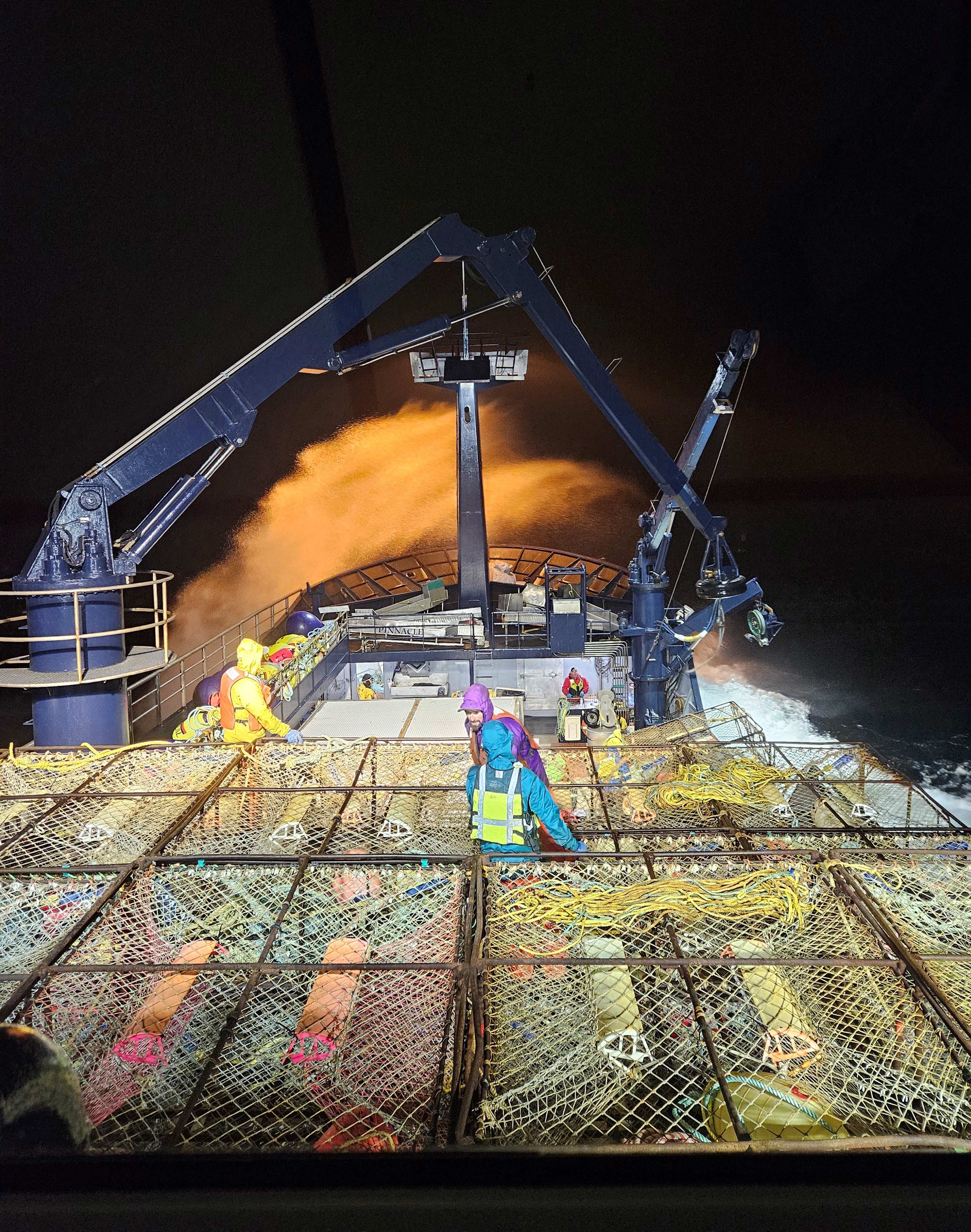
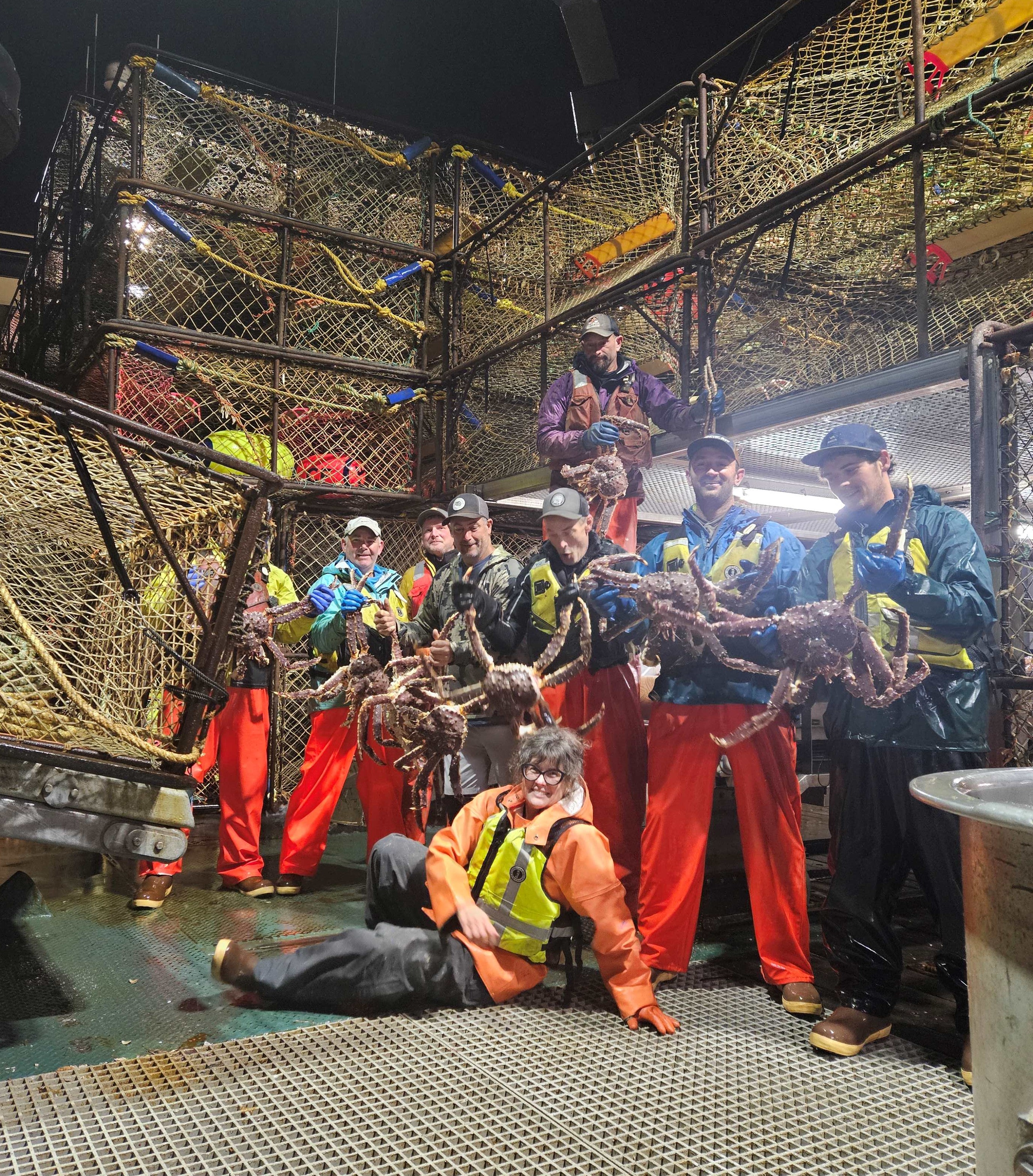
As Goen reflected after fishing out on deck last month on the cold Bering Sea, she was reminded of what makes up this fleet: perseverance. “Fishing isn’t just a job; it’s a way of life,” she shared. “As crabbers, we’ve faced the hard seas and found a way through. Now, with a little breathing room after the storm and a bright horizon ahead, it’s time to keep the throttle steady and steer toward a stronger future.”