

Scientists at the Alaska Fisheries Science Center (AFSC) in Juneau are increasingly using artificial intelligence to better track fish as climate changes, says Bob Foy, science and research director.
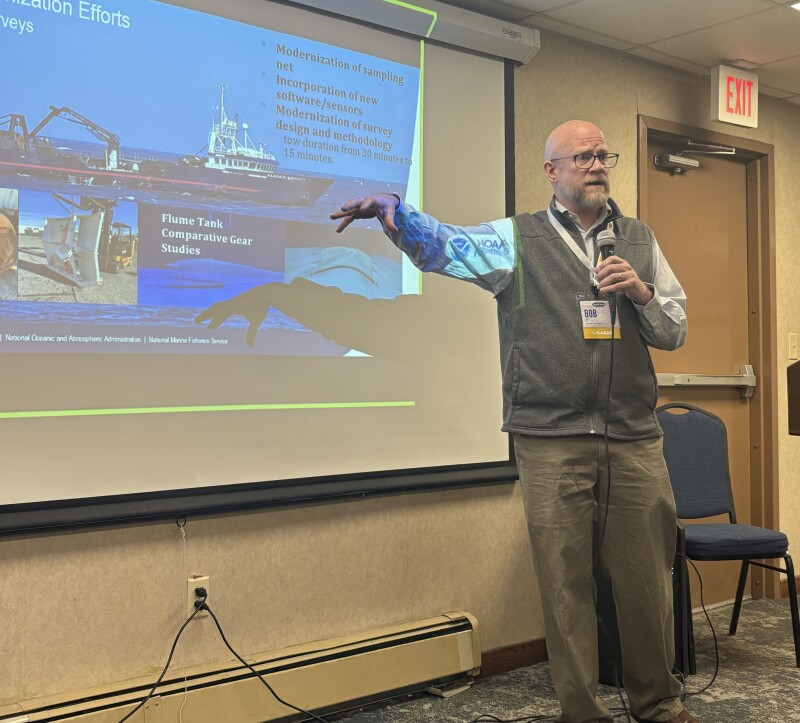
"We've been using AI for decades," Foy said. "It is getting better and better," he said on Thursday, April 16, while presenting on NOAA-AFSC data collection modernization at 2026 ComFish Alaska in Kodiak, the state's annual largest fisheries and trade show.
All this is a process of doing more with less, as AFSC works to better monitor fisheries and make abundance surveys better.
"Things are changing in the ocean so fast that now is the time to change the gears, he said. "We are changing survey design. Some of it is AI and it is getting better," he said, as AFSC spreads its research efforts over about 100,000 square nautical miles, not including the Arctic.
Foy, who formerly led a shellfish assessment program for NOAA Fisheries at Kodiak, said researchers are now putting cameras inside of nets to study species, while leaving the back of these nets open so as may fish as possible survive.
Drones are also being used to determine the presence of fish of varied species, but drones still don't answer everything, he said.
Genetic technology is being used to better understand population structures, including subgroups of cod and why they are important, to distinguish where each fish comes from and which river, because it is very important to know which rivers these fish are coming from, he said. Using eDNA technology to improve stock assessment estimates is also important, he said. "I can take a scoop of water and tell you which fish were there and how many just came through that water."
AFSC is also using such technologies in bottom trawl surveys in the Gulf of Alaska and longline surveys in the Bering Sea, Aleutian Islands and Gulf of Alaska, including collection of otoliths, the microscopic calcium carbonate crystals found in the inner ear of fish, to show how many fish there are and how many are new. "Aging is hugely important and there is a lot of aging going on," he said.
AI and other advanced technologies are being used to estimate fish age with greater efficiency and predictability for pollock, Pacific cod, northern rockfish, yellowfin sole, sablefish and other species.
AFSC is also continuing studies of ocean temperatures and their impact on algal blooms and zooplankton, and optical tools in the water to identify species and how fat they are, including zooplankton. "We can tell how many will show up in ensuing years in part based on how fat they are," he said.