
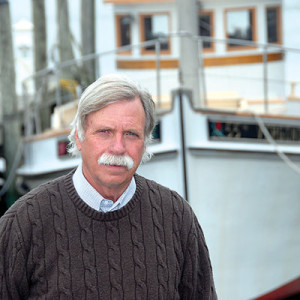
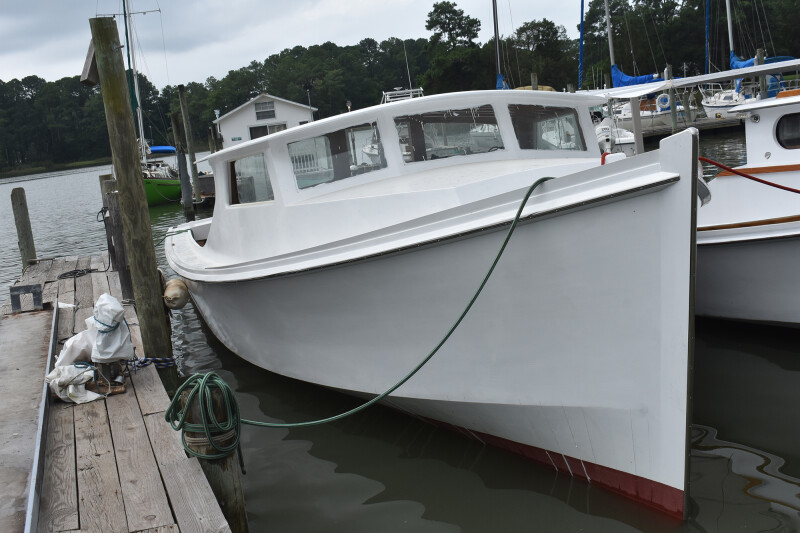
Longtime Va. boatbuilder Bruce W. "Bill" Keeling III launched his 43’x12.5’x3’ classic Chesapeake Bay deadrise wooden boat at Hudgins Horn Harbor Marina in Port Haywood, Va. in July.
The 78-year-old Keeling built the boat for himself at his boat shop in Bohannon in Mathews County, Va. The new deadrise is traditional in just about every sense, except for its pilothouse.
The house on the new boat demonstrates the range of Keeling’s craftsmanship — from building James River shad bateaux in the 1970s, to traditional Chesapeake Bay deadrise workboats in the 1980s, and later, restoring Elco motor yachts in the 1990s.
The boat reflects Keeling's years of work and deep understanding of wooden boatbuilding. The pilothouse has a pleasing, finished look with a more rounded, sweeping profile than that of a traditional deadrise workboat. The back of the house is made from western red cedar that had been left over lumber from a windmill restoration 30 years ago, said Keeling.
Keeling plans to use his new boat for whatever he pleases — whether cruising or clamming in Virginia’s hard clam fishery. The boat has the house, platform, and work space to do either comfortably.
“I want to go down the inland coastal waterways, and this boat is big enough and has a shallow enough draft for a comfortable trip,” he said. “I also want to go patent tonging for hard clams again, but I don’t know whether I have the energy to do it. She’s a good boat for either.”
Keeling is a traditional boatbuilder in that he comes from a commercial fishing heritage. In his time between building boats, he worked the water.
Among Keeling’s first large deadrise commercial fishing boats was one that he built for himself in the mid-1980s to go patent tonging for hard clams. He worked her until 1996 when he went full-time boatbuilding.
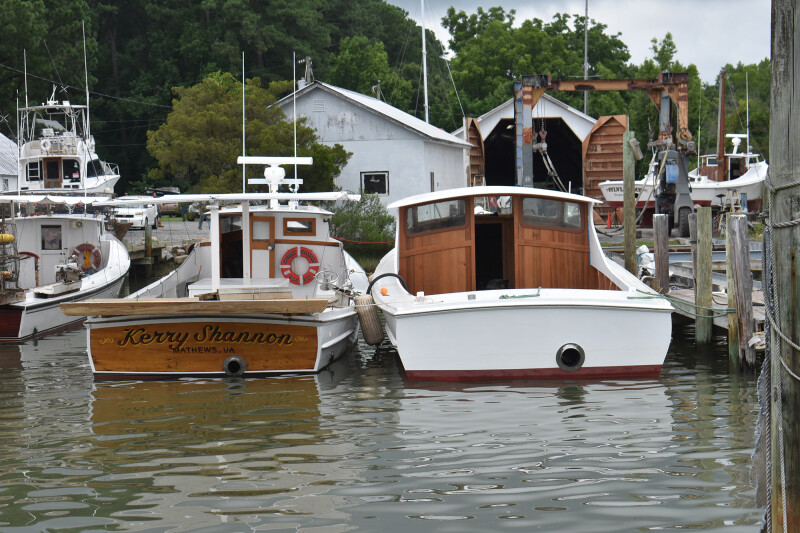
Today, that boat is named the Kerry Shannon, and coincidentally, she was at the yard at the same time as the new boat's launching. The two Keeling boats were placed side-by-side.
The new boat’s structural elements, including its keel, horn timber, stem, etc., are built from west coast fir, while its sides are North Carolina white cedar (juniper), and its bottom planks and frames from Virginia spruce pine.
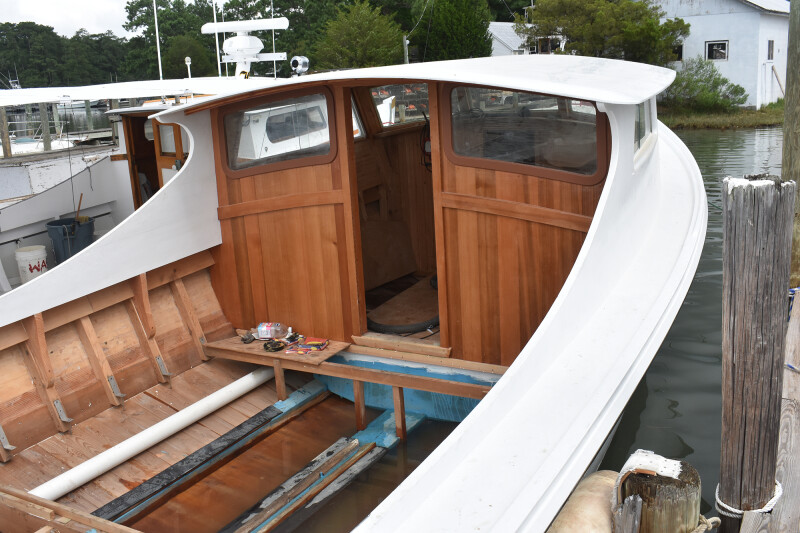
The engine has yet to be installed, but the boat will be powered by a 500-horsepower Cummins six-cylinder diesel engine, with a 2:1 Twin Disc reduction gear, working through a 2” stainless steel shaft, with a 28”x28” prop that Keeling found in the scrapyard. Keeling has fabricated many aspects of the boat at the yard, including the stainless steel wet exhaust piping — another scrapyard discovery.
Hudgins Horn Harbor Marina is a yard that caters to commercial fishermen and wooden boats. At the yard in July, wooden deadrise boats were up on the hard, inside the boat shop, and in the water, waiting in line for maintenance.
A 25’ deadrise built by the Deltaville Maritime Museum was in the boat shop, while a Grover Lee Owens-built commercial fishing round stern named the Sylvia Ann was up on the hard. The boats Peggy and Emmett H were in the water getting spit-shined for the upcoming 2025 Chesapeake Bay Buyboat Rendezvous cruise in September, among numerous other wooden boats at the yard.