

Woods Hole Oceanographic Institution (WHOI) Sea Grant has awarded $1.6 million to four new research projects targeting pressing challenges facing Massachusetts' aquaculture and fisheries industries, including soft-shell clams, oysters, and black sea bass.
"Each of these projects addresses a question we're hearing directly from those working on the water: how to keep shellfish beds open, how to manage emerging fisheries, how to improve aquaculture practices, and how to restore oyster reefs more effectively," said WHOI Sea Grant Director Matt Charette. "This is science driven by real needs, with outcomes that will directly benefit coastal communities."
The awards come out of WHOI Sea Grant's 2026–2027 biennial research competition. Here's a look at the four funded projects:
Keeping Clam Flats Open — Soft-shell clams are among Massachusetts' top 10 fisheries, but Plum Island Sound's typical harvest was cut by more than half in 2023 after an unusually wet year triggered repeated bed closures from bacterial contamination. Researchers from Northeastern University and the Mass. Division of Marine Fisheries will use molecular techniques, community science sampling, and machine learning to track contamination sources and improve shellfish sanitation monitoring.
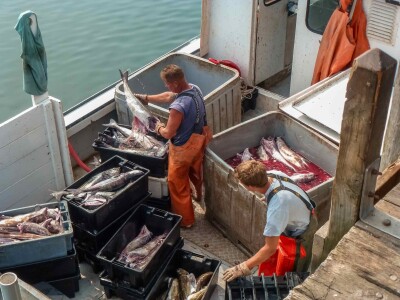
Black Sea Bass Moving North — Black sea bass landings in Massachusetts have risen steadily over the last decade, with changing ocean conditions expected to push the fishery further into the Gulf of Maine. UMass Amherst researchers will use acoustic telemetry and genetic analysis to better understand the species' migration and inform sustainable management.
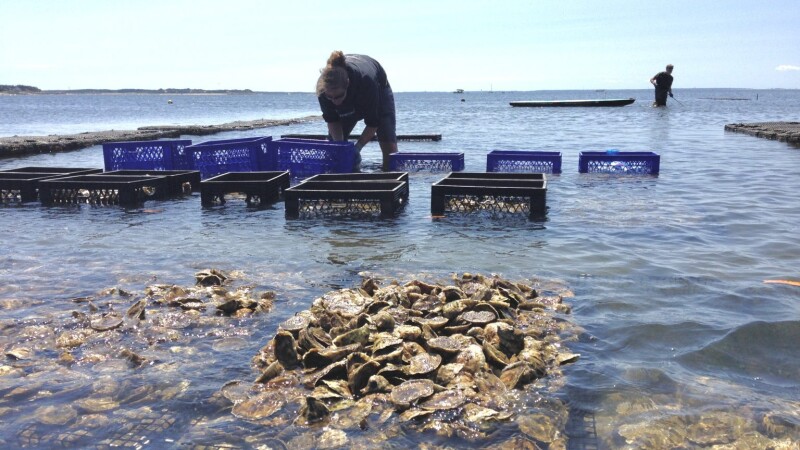
Oyster Overwintering — Extreme temperatures, storms, and ice make New England winters a hazard for farmed oysters. Researchers from UMass Dartmouth and UMass Lowell will study how different winter conditions and husbandry practices affect oyster growth, survival, and disease to help growers make better decisions.
Reef Soundscapes for Oyster Restoration — The Eastern oyster supports a $30 million annual aquaculture industry in Massachusetts. WHOI researchers will explore whether specific underwater soundscapes can boost oyster settlement rates and support reef restoration efforts in New England waters.
All four teams will share findings directly with the fishing and aquaculture communities over the next two years.