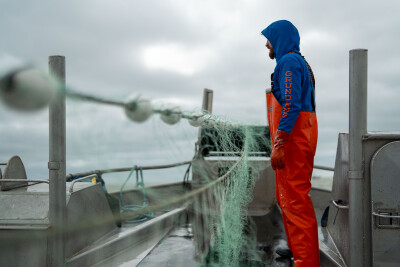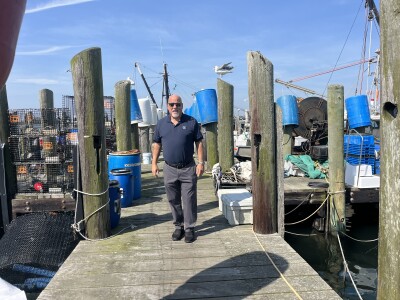


The Notus Echo shellfish detection system hit the market in 2023 and was adopted quickly in the Pacific Northwest pandalid shrimp fishery. Irish shrimp fishermen also started using it. But in Newfoundland, where Notus is based, the Black Eagle — a 65-foot shrimp, crab, and groundfish boat — first put the innovative shrimp sensor aboard for the 2025 season.
“We made four trips with it so far,” says the Black Eagle’s skipper, 25-year-old Jake Payne. “It’s making a big difference.”
Based in Carmanville, on Newfoundland’s north shore, the Black Eagle fishes Northern shrimp (Pandalus borealis) in the summer, making four to six-day trips, depending on the weather. “We’re fishing what we call the Basin, in about 250 fathoms,” says Payne.
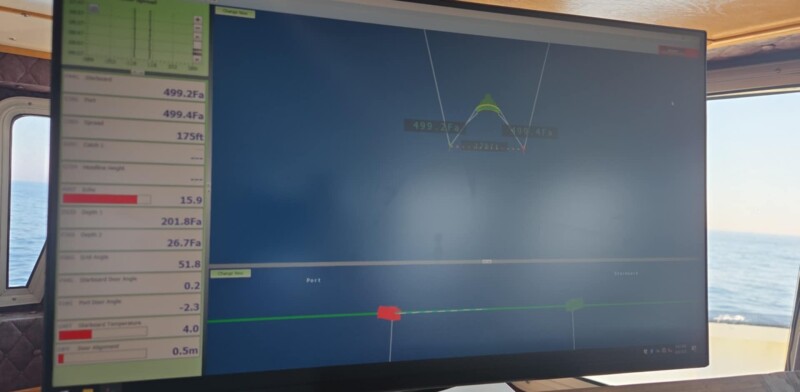
“We usually make seven-hour tows, but I’ve been paying attention every minute to the Echo graph and learning to understand the readings from the sensor," Payne continues. "After two days, I could tell the boys within a few hundred pounds how much we was getting. And it showed me where we was getting them. I like to see numbers up around 20. When you see the numbers start to drop, you know you ain’t getting any, so you can haul back. If you don’t have the Echo, you tow for seven hours, but you might only be getting shrimp for three hours.”
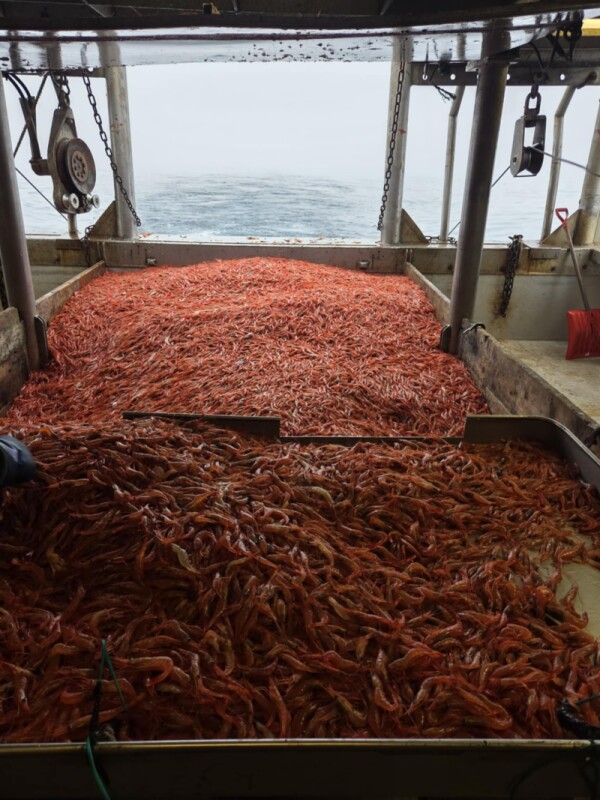
Payne reports that with the Echo, he was easily outproducing the other boats fishing shrimp in the same waters, because he could make shorter tows and stay on shrimp. “Sometimes I might only tow for four hours,” he says.
Because shrimp do not have bladders, they don’t show up on sounding machines. Until Echo became available, shrimp fishermen had no idea where in a seven-hour tow they were catching shrimp. The Echo works by monitoring the sound of shrimp hitting the grate used to deflect bycatch out of the net. The sensor transmits an acoustic signal to a hydrophone on the boat, letting the skipper know when shrimp are going into the net.
While the early Notus Echo units required users to put a paravane over the side to pick up the acoustic signal from the sensor on the grate, according to Payne, the hydrophone on the Black Eagle is located near the sounder transducer in the engine room. “We just drilled a hole, put in a through-hull fitting to run the wire through, and put the hydrophone in a stainless steel casing to protect it from the ice when we go sealing,” Payne says.
“Another thing it’ll do is tell you the angle of the grate, so if you see that angle change, you know you have a rock or something in the net and you can haul back and get that out,” he adds.
More than halfway through the shrimp season, Payne has seen the payoff from having the Notus Echo in the net. “We’re looking to get in three more trips before September. We’ll have 300,000 if we can do that,” he says.
He notes that with the Echo, he’s catching more shrimp for the amount of time he’s fishing and fuel he’s burning. “And it’s less wear and tear on the gear. You’re not dragging a full cod end along bottom when you don’t have to.”