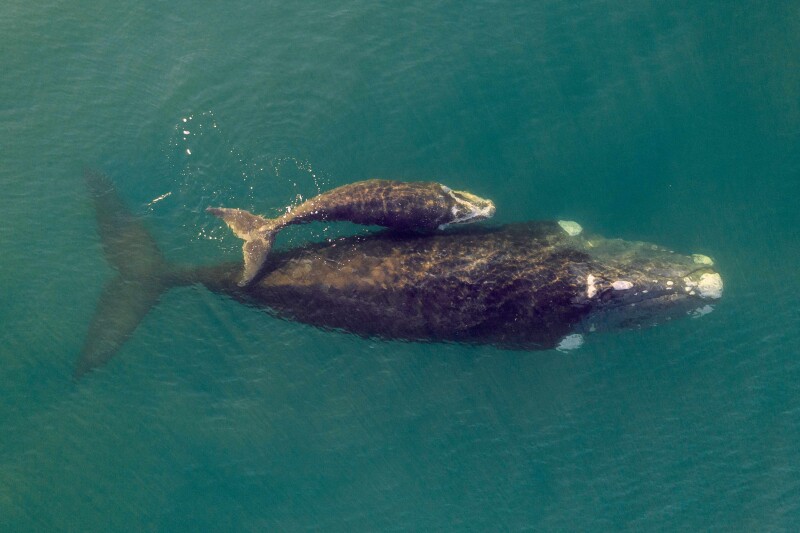
Researchers surveying the Southeastern U.S. coast this winter have documented 21 North Atlantic right whale calves, offering a rare bright spot for one of the most endangered whale species, according to an article by The Atlanta Journal-Constitution.
The sightings represent the largest number of identified mother-calf pairs in 15 years, according to NOAA Fisheries. The calving season, which runs from mid-November through mid-April, may have additional calves yet to be documented.
Jessica Thompson, a senior wildlife biologist with the Georgia Department of Natural Resources, told the Atlanta Journal-Constitution. “We’re excited. We have hope that as long as other protections… are in place that these whales will continue to reproduce and give birth to calves and be able to recover.”
Only about 380 North Atlantic right whales remain, with roughly 70 reproductively active females, according to the report. The species has also been under an ongoing “unusual mortality event” since 2017, meaning approximately 20 percent of the population is sick, injured, or killed each year.
For more than two decades, state wildlife agencies in Georgia and Florida have conducted aerial surveys as the whales migrate south from Canada to calving grounds that stretch from North Carolina to near Cape Canaveral, Florida. The core calving area lies off the Georgia coast, around Savannah and Brunswick.
This season, researchers have also observed encouraging behavioral changes. Many mothers are giving birth every three to four years- closer to a natural reproductive cycle than the seven- to 10-year gaps seen in recent decades- suggesting improved access to food, Thompson said. Survey teams have also documented groups of whales socializing, “playdates” between multiple mother-calf pairs, and rare “calf swaps,” behavior that has been seen only infrequently.
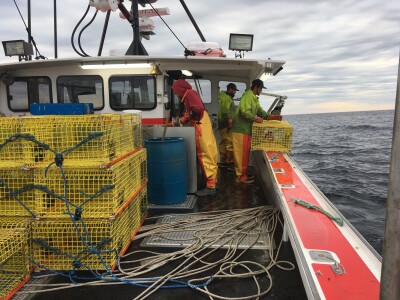
Despite the optimism, threats remain acute. Vessel strikes are the leading cause of death for right whales, and more than 85 percent have been entangled in fishing gear during their lives, scientists told the Atlanta Journal-Constitution. Thompson urged boaters to stay alert in heavily trafficked waters, emphasizing that these coastal areas are the species’ only known calving grounds.
“The more people that are aware of these amazing whales and that these are their only known calving grounds, then we can protect them in their critical habitat,” she said.