"PicoICE technology is arguably revolutionary,” says Dan Strickland. “The two tests which have been performed with it (in both cases with less than perfect support) have resulted in a plant manager in False Pass, and a processor in Kodiak, echo each other by saying ‘These are the best fish I've ever seen come into this plant.’”
Strickland wants the fleet and processors to know about this. “It has revolutionized Norwegian fishing and Icelandic fishing, brought them better paying and expanded markets, and I believe this technology is the key to impacting Alaskan fisheries in the manner that the State Task Force, the processors, and the fishermen have been calling for.”
Early in 2025, the Joint Legislative Task Force Evaluating Alaska’s Seafood Industry released a report that particularly emphasized improving the quality of Alaskan seafood, among other recommendations. As Alaska salmon compete with farmed salmon and Russian wild salmon, which are harvested differently than in Alaska’s wild fisheries, Strickland insists that PicoICE can bring the quality of Alaskan salmon up to the level the market is demanding. He’s also working with pot cod fishermen, Vojta Novak, who targets the lucrative European cod market.
“I want to deliver the best fish I can,” says Novak, who put the PicoICE machine aboard his 109-foot crabber, the Seabrooke, which was once featured in Deadliest Catch. “The thing is, you can’t just put the machine on your boat,” he says. “You have to change half the boat, you have to have a buffer tank, and storage tank. You can’t just put the fish in the hold, you have to have totes, lots of totes.” Novak notes that the cost of setting up a functional system on board can be equal to the cost of the machine itself. But while the initial cost can easily get into six figures, particularly for the PicoICE 2120 which produces up to 80 tons of slurry ice per 24 hours, Strickland points to a return on investment in one to two years. “And we can back that up,” he says.
Novak increases his returns by shipping direct to customers in the Czech Republic, where they see the difference. “They tell me all the time, best fish they ever saw,” he says. “Even fishermen say this. I sent some to Seattle and they are saying, ‘Send more!’”
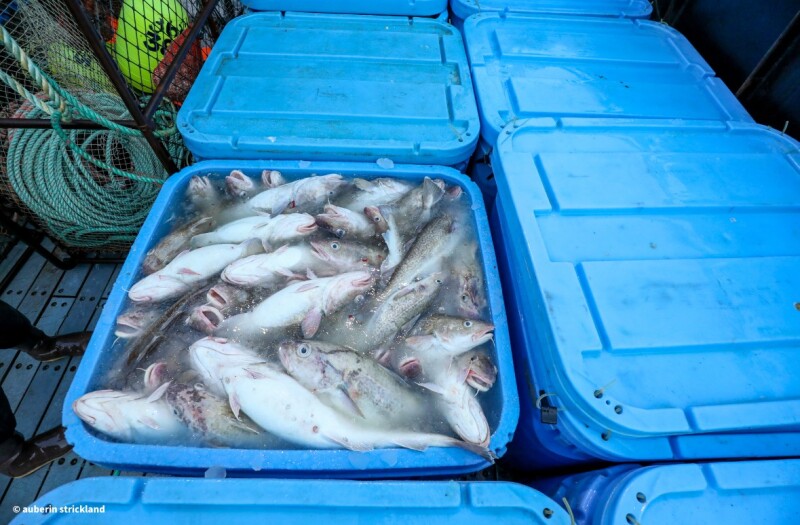
According to Novak, the first 30 to 60 minutes after bringing fish aboard are critical. “We empty the pot, bleed the fish right away, and put them in a bleeding tank with PicoICE for 20 to 30 minutes and bring the temperature down. Then we put them in a tote with PicoICE in the hold. We fish 4 to 5 days and bring them in and gut and process them in Kodiak.”
But there are a lot of parameters that need to be fine tuned, Novak points out. “You have to be careful not to freeze the fish. PicoICE at 28.5 to 29 degrees is good. The salinity of the water and how much sand is suspended in the water are all things we have to consider. But the system is good, we just have to keep getting better at all the steps, and we can get the quality people want.”
Novak notes that the market is changing in that many people are willing to pay for quality and the knowledge that the fish they are eating come from a well-regulated fishery. He and Strickland believe PicoICE can help fishermen supply the products those seafood consumers are looking for.