A new Pacific tuna fishery has opened for commercial harvesters in the eastern Gulf of Alaska, with the required commissioner's permits to be available from the date issued through Dec. 31.
"The decision to create the commissioner's permit was based on requests from the commercial fleet to target Pacific tuna, given the large presence of tuna in our waters outside of Sitka," said Rhea Ehresmann, leader for the Region 1 groundfish project for the Alaska Department of Fish and Game (ADF&G).
Ehresmann said sport harvesters have told ADF&G there is a large body of blue warm water around 60 degrees Fahrenheit located over 10 miles off Cape Edgecumbe outside of Sitka.
"It is very exciting; we are hoping to see some tuna harvested in the Sitka area," she said on Monday, Sept. 25. "It sounds like the tuna are a bit farther offshore, around 10-plus miles from Cape Edgecumbe around the 1,000-fathom line, though the Pacific tuna are swimming and caught much closer to the surface."
ADF&G announced the new fishery on Sept. 12 and is already receiving applications for commissioner's permits, Ehresmann said. Applicants must also have a valid Commercial Fisheries Entry Commission (CFEC) vessel license and miscellaneous saltwater finfish interim use permit for the gear type used for directed fishing.
ADF&G does not have a total allowable catch or harvest limit on the fishery at this time, but the sport fishery has harvested quite a few albacore tuna using rod and reel and we did have one skipjack tuna harvested in a Sitka harbor a few weeks ago, she said.
Pacific tuna species are not currently covered under a federal fishery management plan in Alaska waters and are therefore managed by the state. However, because this is a new fishery for Southeast Alaska there is no existing state management plan in place for Pacific tuna.
Pacific tuna caught as bycatch in the salmon troll fishery may be retained using the fisher's CFEC salmon troll permit card, but salmon troll harvesters must also apply for a commissioner's permit, Ehresmann said. The permits are also valid for Pacific tuna retained as bycatch during open salmon troll fishing periods that occur from the date the commissioner's permit is issued through Sept. 30.
The presence of Pacific tuna in the Gulf of Alaska is highly dependent on ocean temperatures. Tuna species like albacore prefer warmer waters between 58F and 64F, which are not common in the Gulf. When warmer currents or eddies move into the region they can bring tuna with them, but this is sporadic,
Exploratory commercial fishing for albacore took place in Alaska waters as early as 1949, which Alaskan trollers landed considerable tonnage at Ketchikan. This initial interest was driven by the possibility of establishing a tuna fishery to supplement existing ones.
In recent years warming ocean temperatures have brought small, short-live windows of opportunity for harvesting tuna. In 2022 warm water drew albacore tuna to waters near Craig, leading to successful sport and limited commercial catches by power trollers.
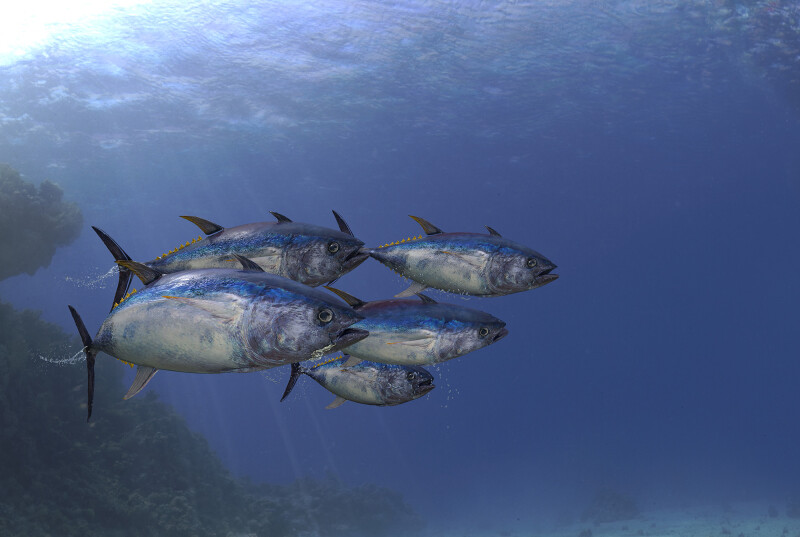
Albacore tuna typically range from 20-30 inches long and 10-30 pounds, but they can grow larger. Skipjack tuna typically grow to about three to four feet in length and can weigh up to 70 to 75 pounds, but those commonly caught by anglers are smaller, often between five and 22 pounds.
Tuna are considered a highly migratory species and they are explicitly excluded from the groundfish Fishery Management Plan for the Gulf of Alaska.