

A series of community-driven education projects supported by NOAA Fisheries is helping bridge the gap between seafood producers and the public, highlighting how domestic aquaculture supports working waterfronts, food security, and healthy coastal ecosystems.
Nine projects funded through the eeBLUE Aquaculture Literacy Mini-Grants Program wrapped up in July 2025. The program is a collaboration between NOAA and the North American Association for Environmental Education, designed to strengthen public understanding of sustainable seafood and aquaculture through hands-on learning and local partnerships.
Across the country, the projects paired informal learning institutions with aquaculture businesses and NOAA experts to reach diverse audiences- from students and teachers to chefs and coastal residents. Through farm tours, classroom programming, podcasts, and culinary events, participants learned how seafood is grown, why ocean health matters, and how domestic aquaculture contributes to the U.S. seafood supply.
In Florida, the Hatchery to Habitat project focused on the role of aquaculture in ecosystem health and local economies. Led by Tampa Bay Watch Discovery Center in partnership with NOAA’s Southeast Fisheries Science Center and the Mote Marine & Freshwater Aquaculture Research Program, the initiative produced an interactive exhibit highlighting local growers, conservation aquaculture, and sustainable seafood practices. The exhibit included an educational game exploring seafood origins and is expected to reach more than 40,000 visitors annually, despite delays caused by back-to-back hurricanes, according to NOAA.
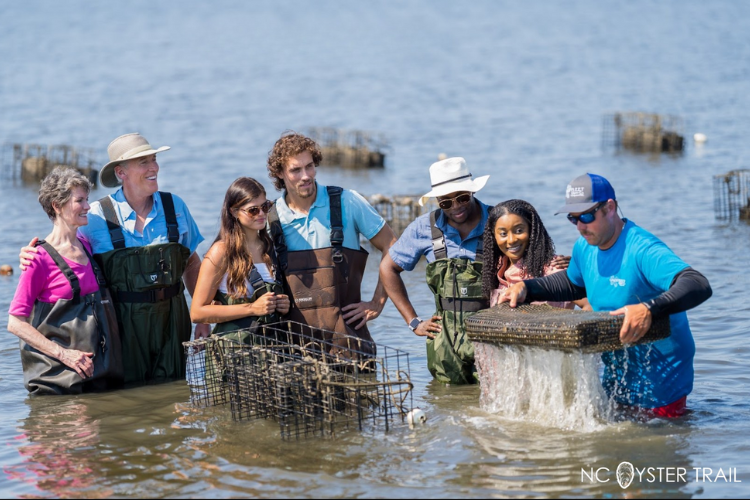
North Carolina’s Oyster Trail project expanded educational outreach statewide with updated resources, grower storytelling, and teacher workshops centered on shellfish farming. Led by North Carolina Sea Grant with partners including the North Carolina Coastal Federation and the North Carolina Shellfish Growers Association, the effort featured a traveling oyster exhibit with professional photography and stories from growers, hatcheries, and wild harvesters. Displayed at 15 events, the exhibit reached an estimated 3,000 viewers and included workshops at Carteret Community College’s aquaculture lab.
In South Carolina, the Cultivating Conservation project gave students and adults hands-on exposure to oyster aquaculture. Working with the South Carolina Sea Grant Consortium and Charleston Oyster Farm, high schoolers from the South Carolina Aquarium’s Teen Conservation Crew learned about wild and farmed oyster production and their benefits to water quality and ecosystems. Adult programming included events featuring oyster shucking, farm tours, and discussions with farmers, chefs, and resource managers. Subsidized transportation helped expand access to participants who might not otherwise attend.
On the West Coast, Tide to Table, Farm to Food connected aquaculture with NOAA Fisheries’ West Coast Regional Office, the Northwest Fisheries Science Center, and Jamestown Seafood. The project introduced the “Merroir Wheel,” a tool showing how farmers' practices, location, and species influence seafood flavor. The initiative grew from four planned events to 24, engaging audiences from grade-school students to professional chefs. One partnership led a high school culinary team to win local and statewide competitions using farmed sablefish.
The projects, altogether, demonstrate how aquaculture education can strengthen public understanding while supporting the future of U.S. seafood communities. To read the full article, visit NOAA Fisheries.