

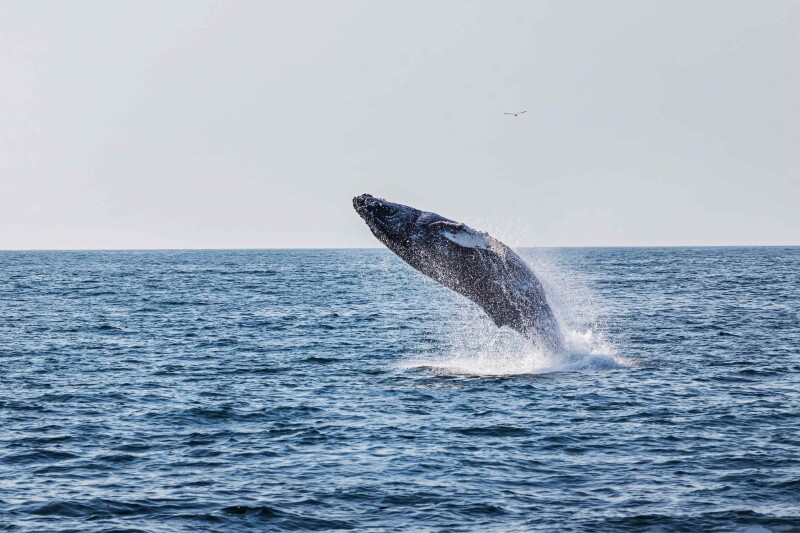
The National Marine Fisheries Service (NMFS) has begun efforts to prevent often deadly entanglements of Pacific humpback whales in fishing nets.
NMFS announced on Oct. 31 the establishment of its West Coast Take Reduction Team to address the incidental mortality and serious injury of California, Oregon, Washington, plus the Central America/Southern Mexico and mainland Mexico stocks of humpback whales in the Washington, Oregon, and California sablefish pot fishery.
The team is tasked with developing consensus recommendations to reduce incidental mortality and serious injury in this fishery to levels approaching zero mortality and serious injury for each stock within five years of implementation of the plan.
The team's first meeting is scheduled for Nov. 20, to be held virtually.
The announcement stems from a 2023 federal court opinion by U.S. District Judge James Donato, who said NMFS "cannot indefinitely delay developing a take reduction plan while continuing to authorize ... permits for the incidental take of endangered and threatened humpback whales."
The case was brought by the Center for Biological Diversity.
According to NMFS estimates, the sablefish pot fishery kills or seriously injures about three humpback whales every two years. On average, about 25 humpback whales are entangled annually off the U.S. West Coast. More than half the entanglements are not traced to a specific fishery.
NMFS is mandated to issue a final take reduction plan within 13 months, but there are several steps to take before then, said Kristen Monsell, oceans legal director for the center. "The team must meet and send recommendations to NMFS within the next six months. Then NMFS will issue a draft take reduction plan for public notice and comment before issuing the final plan.
Monsell said that the Trump administration reduced the scope of the team from including other West Coast pot fisheries that entangle humpback whales to address only the sablefish pot fishery, which was the subject of the lawsuit. A week earlier, the federal court also upheld the agreement deadlines despite the government's request for a pause during the federal government shutdown.
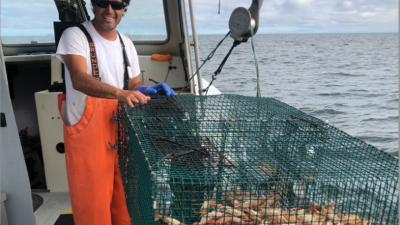
The sablefish fishery uses two-mile strings of 30 to 50 pots. To make fishing with pots safer, the Center has urged NMFS to require a transition to new ropeless or pop-up gear.
Most trap and pot fisheries use static vertical lines that can wrap around whales' mouths, fins, or tails, wounding them and depleting their energy, often drowning them as they drag heavy traps and rope. Pop-up traps use bags or buoys on coiled ropes triggered by remote or time-release sensors to float the traps to the surface, eliminating static entangling lines.