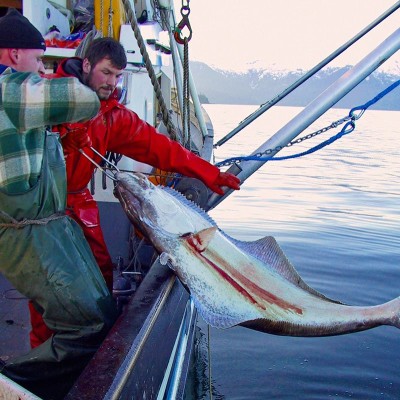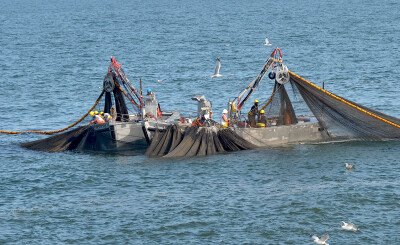
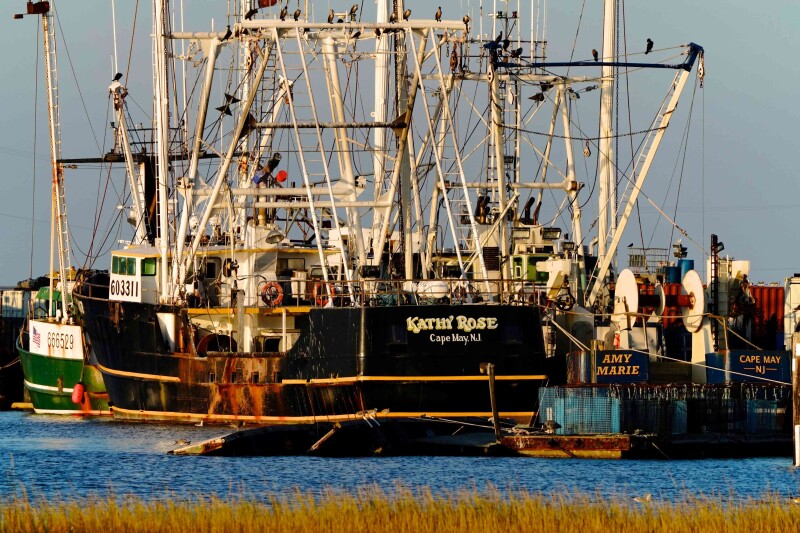
Following their victory before the U.S. Supreme Court in 2024, commercial fishers from New Jersey are asking the U.S. Court of Appeals for the First Circuit to vacate a NOAA Fisheries rule requiring them to pay out of pocket for at-sea monitors.
“Forcing fishermen to pay the salaries of government regulators watching them conduct their work is backward,” New Civil Liberties Alliance (NCLA) Senior Litigation Counsel Kara Rollins said in a statement. “The regulation unlawfully places the government’s financial responsibilities onto the governed and without congressional authorization.”
The lawsuit centers on the Industry-Funded Monitoring (IFM) rule introduced by NOAA Fisheries in 2020. The rule requires commercial fishers in multiple fisheries – Atlantic herring, squid, butterfish, and Atlantic mackerel – to pay out of pocket for at-sea monitors to be present on their vessels and observe their operations.
The fishers claimed the requirement would be devastating to their business, with monitors reportedly costing more than $700 per day. According to the NCLA, that cost can eat up any profit the fishers made in a day, and over a multi-day trip, costs could become exorbitant.
The commercial fishers filed suit, and the case – Relentless, Inc. v. Dept. of Commerce – wound its way through the federal court system, with judges relying on a Supreme Court precedent known as the Chevron deference in rejecting the fishers’ lawsuit. The doctrine effectively requires judges to defer to government agencies’ interpretation of ambiguous statutes, and in this case, judges deferred to NOAA Fisheries’ interpretation that it was authorized to require the commercial fishers to pay for the at-sea monitors.
After the Court of Appeals for the First Circuit ruled in favor of NOAA Fisheries, the fishers petitioned the U.S. Supreme Court to take up their case and make the unusual move of overturning the 40-year-old Chevron deference. The court did agree to take up the case along with a similar case, Loper Bright Enterprises v. Raimondo, and in June 2024, the Supreme Court justices overturned the Chevron deference in a 6-3 vote.
U.S. Supreme Court Justice John Roberts wrote in his opinion that the precedent was irreconcilable with the Administrative Procedure Act. Courts have the expertise to evaluate statutory ambiguities, he added, not regulatory agencies.
However, the Supreme Court only ruled on the legal question of whether the Chevron deference should continue; it remanded the case back to the U.S. District Court for the District of Rhode Island to rule on the actual NOAA Fisheries rule requiring commercial fishers to pay the at-sea monitors on their vessels.
Roughly a year later, the district court again ruled in NOAA Fisheries’ favor, allowing the rule to stay in place. The NCLA appealed to the U.S. Court of Appeals for the First Circuit, and with the Chevron deference obsolete, they are hopeful the court will finally vacate the rule.
“Almost all previous Courts have only upheld this regulation by deferring to the agency,” NCLA Senior Litigation Counsel John Vecchione said in a statement. “To allow it to continue when they have admitted Congress did not clearly give these powers to the agency is error, and we trust the First Circuit, guided by the Supreme Court, will see it that way.”
“If the government can force fishermen like our clients to pay for all the monitors a federal agency wants to put on board, even when Congress has not authorized them, they’re going to need a bigger boat!” NCLA President Mark Chenoweth added. “Without Chevron’s thumb on the scale, ordinary rules of statutory interpretation cannot possibly support upholding this rule.”
This article is republished with permission from Seafood Source.