
Eastern Boat Works of Milton, N.H., builds a pretty tough boat, as Chesapeake Bay oysterman Ronnie Bevans can attest to.
Bevans is one of the largest oyster growers in the Commonwealth of Virginia and owns a fleet of boats that he uses in his large and diverse oyster business. As part of that fleet, he owns two 21-foot fiberglass boats built by Eastern Boat Works and uses them year-round to inspect his oyster beds and as icebreakers in winter.
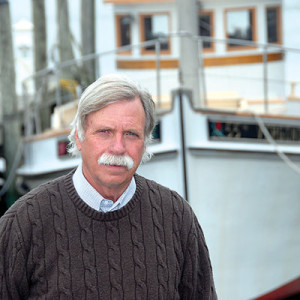
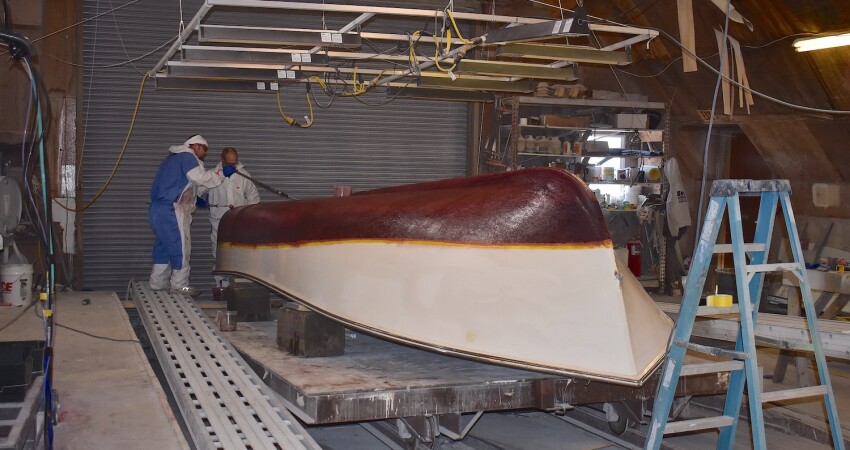
Larry Jennings of Jennings Boatyard Inc. in Reedville, Va., is putting a new bottom on one of the 21-footers. “These are tough boats,” says Jennings, a fiberglass boatbuilder himself. “Ronnie uses them in the winter to break up ice in creeks so when he is weather-bound on his deepwater beds he can get to oysters in the shallow water beds,” said Jennings. “The rest of the year he uses the boats to monitor oyster growth on his beds and maintain oyster ground stake markers.”
The 21’ x 8’ fiberglass, round bilged Downeast-style boat is powered by a 150 hp outboard and used as an icebreaker by Bevans to drive up on the ice to crack it – then going back and forth to break the ice up.
The boat has a shallow skeg with a rounded chine that contributes to it being able to slip up on the ice, says Jennings. “If Ronnie used a standard deadrise skiff the V in the bow would cut into the ice and hinder it from going up on top of the ice. The object is to get a portion of the boat up on the ice to allow the weight to aid in cracking the ice,” he says.
On the boat’s bottom, Jennings is installing four layers of chopped strand mat fiberglass and four layers of 1708 biaxial fiberglass cloth fabric with 3/4 oz. mat backing, all coated with vinyl ester and polyester resin. She is also going to get a new paint job.
Breaking ice to harvest oysters is not a new concept. Historically, owners of Chesapeake Bay oyster packing houses kept inshore creek beds stocked with oysters so in extended weather-bound situations oystermen could reach creek beds close by to fill orders and keep oyster shuckers working.
Some grounds were located close enough to shore that hand tongers could walk out on the ice, cut a hole, and tong up oysters standing on the ice. There were also numerous styles of wooden icebreaking skiffs, some with metal coffins covering the stem line and along the bottom and sides, in an attempt to keep the ice from damaging the boat.